Showing posts with label Book reviews. Show all posts

13 July 2023

Did Adam and Eve Eat an Apple?

It sometimes happens that author makes sweeping claims that simply are not true. One often finds such a claim in history text books: namely, the claim that the Emperor Constantine made Christianity the official religion of the Roman Empire in A.D. 313. This is simply false. Constantine made Christianity legal in A.D. 313 with the Edict of Milan, but it was the Emperor Theodosius I who made Christianity the official religion in A.D. 380. Another claim that turns out to be untrue is frequently made in theological texts: namely, that the fruit eaten by Adam and Eve was historically associated with an apple.

I have been taught this by numerous professors in different classes for a number of years and - up until recently - I accepted it as true because the argument seemed to make sense. The usual claim is that ancient authors - and especially medieval authors - either mistranslated one Latin word for another or enjoyed playing with a Latin pun: malum means "apple" and malus means "bad." The bad fruit, then, turned out to be an apple. But it turns out this is not true.


In his recently published book, Temptation Transferred: The Story of How the Forbidden Fruit Became an Apple [Chicago: The University of Chicago Press, 2022, 181 pages, $27.42], Azzan Yadin-Israel convincingly argues that the fruit of the tree in the Garden of Eden was not associated with an apple until the twelfth century, beginning in - of all places - France, and not because of Latin but because of French: pom originally meant "fruit" generally, but came to mean "apple" specifically.

Yadin-Israel demonstrates his argument by examining early Jewish, Christian, and Islamic commentaries on the account found in Genesis which usually describe the fruit as a generic fruit or specifically as a fig, but also grapes, a pomegranate, wheat, and even a banana. The text is supported by numerous color and back and white images of sculptural and manuscript depictions of the temptation of Adam and Eve. Additionally, he supports his argument with 361 end notes and a 18 page Inventory of Fall of Man Scenes the reader may consult to verify his thorough research.

While not for everyone, this book will be an enjoyable and intriguing read for those with a somewhat nerdy theological interest, as well as those interested in linguistics, philology, and etymology.

I first learned of this book through episode 217 of the Gone Medieval podcast, "Origins of the Forbidden Fruit Myth."

03 January 2017

A book you should read: The Proverbs of Middle-earth

The best commentators on the great J.R.R. Tolkien's legendarium of Middle-earth cause you to return to The Hobbit and The Lord of the Rings with a newfound ability to detect something you had previously overlooked and in this way help you find greater enjoyment in Tolkien's works. David Rowe is just such a commentator.

Clearly the fruit of a great erudition and of a devoted love, Rowe's recently released The Proverbs of Middle-earth (Oloris Publishing, 2016 [$18.00, 234 pages]), masterfully explores the "more than four hundred proverbial sayings" placed on the lips of the peoples of Middle-earth by the Professor (63). By deeply delving into the profundity of dwarves, elves, ents, men, and hobbits, Rowe uncovers for us a great treasure, helps us understand each of these races from within, as it were, and in the process helps us understand ourselves in a clearer light.

In his brief forward to this book, Dr. Peter Kreeft says he is "as pleased as a pickle that I was sent this wonderfully Socratic book" (v), a book that "is really an act of anthropology" (iv). Whenever you find an enthusiastic endorsement from Dr. Kreeft, you know you are in for a treat, and this book is no exception!

Rowe begins his exploration of the proverbs of Middle-earth with a rather scholarly - though still readable - consideration of what a proverb is and is not. "Proverbs," he says, "are vessels of transmission, the ships in which wisdom sails" (ix). Because Middle-earth is filled with proverbs, Rowe rightly suggests that
What we quickly discover is that Tolkien did not merely create hundreds of erudite, apposite, and funny sayings - however great an artistic achievement that is - he also invented entire wisdom traditions in which these sayings belong. Just as different contemporary nations often have contrasting perspectives, so each civilisation of Middle-earth has a distinct worldview or philosophical culture. Each of these becomes apparent when we look through the lens of their proverbs: the national character and philosophy of each of Tolkien's cultures - from the small-minded pragmatism of rustic Hobbits tot he disciplined dignity of Gondor - has been written into their wisdom traditions. Tolkien's legendarium is founded on details such as these; its world created from the bottom-up, and therefore richly rewarding to those who take the time to dive in and investigate the depths (xiii). 
Of particular delight, are two of Rowe's three appendices in which he lists the proverbs (and those who speak them) in The Hobbit, The Lord of the Rings, and the appendices to The Lord of the Rings, first in chronological order and second by the peoples of Middle-earth.

I would provide you with summaries of his explorations of the proverbs of each of the peoples of Middle-earth, but I do not wish to rob you of the joy of discovery that comes with the reading the chapters without quite knowing what to expect.

Let me simply say that in The Proverbs of Middle-earth, Rowe brilliantly shines a light on an important aspect of Tolkien's writings hitherto largely unexplored. He helps us to see that "in the well-feigned history of Middle-earth, what is offered to us is wisdom and truth: not a simple lesson to learn, but over seven thousand years' worth of learned lessons to apply" (174). 

As he leads us through these learned lessons, Rowe takes us by the hand and guides us along the paths of wisdom and truth and opens for us a new and unexpected adventure.

12 November 2015

A helpful book for marriage preparation

As discussions continue as to what pastoral care the Church can and should offer to couple preparing for marriage and to help strengthen families, Smenos Publications has published a Father Joseph Briordy's Marriage and Family in Sacred Scripture: Biblical Foundations for Catholic Tradition.

This succinct book of just fifty-four pages is written in a simple but not simplistic style and, as such, should be accessible to everyone.

Father Briordy begins with a brief reflection on the proper interpretation and application of Scripture, particularly noting that while Jesus endorsed "the law of God, he criticizes merely human law (4, emphasis original).

With this perspective in mind, he explores the Catholic anthropology - the view of man - as found in the Creation accounts. He discusses the differences between man and woman, the purpose and meaning of sexuality, the effects of sin (so often ignored today), the natural law and obligations incumbent on everyone, and the view of the family in both the Old and New Testaments. Of particular interest is his discussion of a covenant and of the wedding feast of the Lamb in relation marriage between men and women.

With numerous quotations and references from the Bible and from Benedict XVI and others, this book lays out the Catholic and true understanding of marriage and the family as expressed in the Word of God clearly and compellingly. It will be a useful book for couples in proximate preparation for marriage and also for a book club or Bible study group.

26 October 2015

The Art of The Lord of the Rings, a review

Anyone who has read J.R.R. Tolkien knows that he has a particular style to his writings, both in the quality of the words he utilizes and in the order in which he places them. Every author has a style of writing particular to him or her; that of Tolkien is even more so, and those who have read it can detect it with ease. As it is with Tolkien's writing, so it is with Tolkien's art.


Reading the multi-volume work of Christopher Tolkien, The History of Middle-earth, one gains great insight into the mind of the professor and the world of which he is the sub-creator. Simply learning the way in which Tolkien both discovered and told the story of the Ring of Power is fascinating in itself. Reading the various modifications to the story is especially helpful in understanding this development.

Looking at Tolkien's art can also help us in this understanding because, as Wayne G. Hammond and Christina Scull write in the Introduction to their recently released book, The Art of The Lord of the Rings by J.R.R. Tolkien (London: HarperCollinsPublishers, 2015), behind Tolkien's words "were the author's mental pictures, and some of these found expression first, or as well, in drawings - pictorial renderings, chiefly landscape or architecture, as well as maps, plans, and inscriptions" (10).

In this large and impressive volume which happily arrived today, Hammond and Scull "aimed to publish every illustration, map,  piece of formal calligraphy, and design Tolkien produced for his earlier book, and (with one possible exception) we appear to have succeeded," at least of those known to remain in existence (13). As loving and knowledgeable curators, they have presented the existent art of Tolkien in, more or less, the order in which it would accompany his life's work, with helpful explanatory notes, quotations from Tolkien's writings, and, of course, identifying captions. What is more, they
...have reproduced Tolkien's pictures as large as possible, but have no enlarged to excess, if at all, pictures which in the original are very small, so as to present them without distortion. In this same respect, we have shown sketches made within a manuscript in the context of the manuscript. Although we have aimed throughout for accuracy of colour, we have slightly darkened some sketches, the better to see faint pencil-work. There are natural variations in background tones - Tolkien used a variety of papers, from white to black, sometimes blank pages or parts of pages of student examination scripts. All of the reproductions in this book have been made from the original art, with only a few exceptions as noted, chiefly where the original art no longer exists (14).
This volume is a fitting way to celebrate the sixtieth anniversary of the publication of The Return of the King and is sure to delight anyone who, like Tolkien, is a hobbit in all but size. It will be a good aid to conversation sitting on the coffee table to be admired and will also be perfect to curl up with on the couch on a quiet evening again and again.

17 August 2015

A book of apologetics by Saint Thomas More

On my recent flight across the Pacific Ocean, I finished reading Saint Thomas More's Dialogue Concerning Heresies (New York: Scepter Publishers, Inc., 2006), an intriguing account of a dialogue More had with the servant of a friend concerning the teachings of Martin Luther, William Tyndale, and other Protestants.

After the conversation, the servant was to return to his master and relate what More said. In case the servant either misremembered or misrepresented More's responses, he decided to write out the conversation and sent it to his friend.

It was a fascinating read because More, who was beheaded in 1535, provided early, substantial, and logically irrefutable responses to many of the Protestants objections about the Sacred Scriptures, the veneration of Saints and relics, the role of the Blessed Virgin Mary, and numerous other objections besides. He even discusses the personality of Luther in various places.

Because the book is the record of a conversation, it is not organized explicitly according to a thematic structure (which is perhaps its only downfall), but reads in the manner of an actual conversation, with a back-and-forth between More and the servant. The servant first asks More's opinion about a certain topic (as instructed by his master); after More makes his response, the servant expresses his agreement, asks additional questions, or makes his own objections, each of which furthers the conversation along and to which More responds.

This is a book that should be in the hands of anyone involved in or interested in the work of apologetics. The answers More provides are not very different from those in more contemporary works, but they are often more thorough and often more blunt.

05 May 2015

An invasion that never was

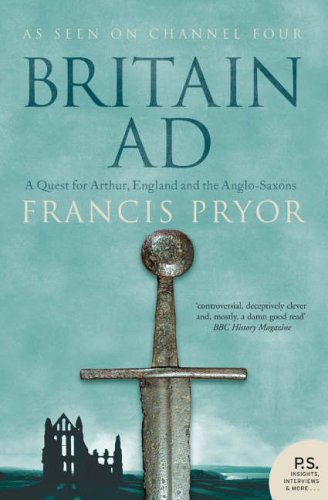
This afternoon I finished reading a book about "evolving identities, origin myths and the use or abuse of archaeology and history," Francis Pryor's Britain AD: A Quest for Arthur, England and the Anglo-Saxons (233). Though the author seems to have an aversion to the use of the Oxford comma and did not find King Arthur (which was not a surprise in itself), I found the book thoroughly intriguing and recommend it to you, even if you have no immediate interest in the topics it concerns. Interest in the historical period aside, how can you not enjoy a book whose author's writes sentences such as these: "Over the centuries Britain has produced its fair share of religious innovations, ranging from the Celtic Church to Quakerism. Generally speaking the official Church greeted them as one would welcome a scorpion to one's trousers" (144-145)?

Ever since I discovered the legends of King Arthur and the Knights of the Round Table as a boy, I have been fascinated by that period of British history known pejoratively - and incorrectly - as "the Dark Ages," which is why I first picked up the book. Beginning with the notion that "the fundamental attitudes underlying human society take a long time to change," Pryor examines and refutes the claim of an Anglo-Saxon invasion of the east of England in the 5th century that completely changed the people and landscape of the British isle, an invasion accepted without question by historians and archaeologists alike (xviii).

Pryor brings his experience and expertise as a prehistoric archeologist to the excavations of Roman, post-Roman, and Anglo-Saxon England, as well as the few documents which have come down to us, and arrives a jarring conclusion:
I am in doubt that archeology is the only means by which the Dark Ages can become fully illuminated. There is a huge amount of exciting new work taking place, and the more we discover, the more it becomes apparent that the fifth and sixth centuries were never truly Dark. There was no no population collapse, the countryside never reverted to woodland, field systems continued in use, towns quite rapidly appeared and then stayed for good. Yes, there were major social and political changes, and, yes, we can see the effects of real raiding in the Viking depredations of the mid-ninth century, that were followed by the collapse of long-distance trade. But where is the evidence for such happenings in the 'Dark Ages,' when communication with mainland Europe and the Mediterranean was a regular occurrence, by both land and sea (234-244)?
After examining the written records and comparing them with the archaeological evidence of landscapes, graves, clothing, skeletons, towns, fortifications, etc., Pryor says, "I can see no convincing archaeological evidence for 'Dark Age' chaos, disruption and turmoil" (96). Why, then, have so many archaeologists and historians held so firmly to the notion of an invasion, even ignoring available evidence to the contrary?

Pryor suggest the answer may have something to do with the nineteenth, a claim that at first seems odd until you seriously consider the biases with which people - even historians - write:
The Victorian era was a time when the previously separate strands of history and science came together in a form of both pseudo-history and pseudo-science which today we would simply label as racist. This doctrine held that human beings came in physically, mentally and intellectually distinct races, the 'purity' of which would be threatened by mixing with the blood of another race. This was of course a fundamentally flawed doctrine, which would have appalling consequences in the twentieth century.

Different races were ascribed different characteristics. Celts, for example, were hot-headed and emotional, while the German or Teutonic race, which included the English, thanks to those Anglo-Saxon migrations, was the best of the lot: rational, loyal, artistic, inventive, etc., etc. (152).
What does this have to do with the post-Roman Britain? The answer is both obvious and disturbing:
When Victorian ideas about the characteristics and purity of races were allied to the 'culture-historical' approach, archaeologists and historians believed they could provide a solid academic basis for English Teutonic origins. That is why manifestly unreliable sources such as Gildas were pressed into service. Gildas' shortcomings were ignored because he was saying what people wanted to hear. These then were the forces that lay behind the circular argument that has bedevilled the study of fifth- and sixth-century Britain for over a century (153).
Rather than attributing everything to the Anglo-Saxons and their supposed supplanting of everything that came before them, Pryor convincingly suggests the possibility of a continued memory, even going back to prehistory:
Surely it is not unreasonable to suggest that many of the ancient themes that we find in the Arthurian tales could have been current for much longer than was once believed, and that they found their way into the literature in ways that recall Mallory's adoption of the legend of the Holy Blood, which was already an old cult when he encountered it. Mallory, Geoffrey of Monmouth and other contributors to the Arthurian tale were seeking to flavour their stories with an air of antiquity, so it would have made good sense to seek customs that were known, or believed, to have had ancient roots (219).
The fundamental attitudes underlying human society do quickly change; rather, they are passed on and utilized in perhaps new ways, while retaining something of the ancient memory, even after the origin is lost and shrouded in time.

Pryor's work is not a "revisionist" history, but rather a reading of history as it actually was, as best as it can be read. He challenges the generally accepted history not because he disagrees with it on principle (which he does), but because there is simply no archaeological evidence to support the theory of the Anglo-Saxon invasions and plenty of archaeological evidence to disprove the theory. His book is a timely reminder for us to question the evidence presented before us and not simply to accept someone's story based solely on the word of the teller.

10 April 2015

Medieval Monsters: A review

When I first learned of the publication last month of Medieval Monsters by Damien Kempf and Maria L. Gilbert (London: British Library, 2015), I knew it was a book I wanted to have in my collection. I was happy to find a copy during my recent holiday to Scotland.

Filled with stunning images from manuscripts housed at the British Library, this little book is sure to be a delight. This is a book that can be enjoyed by the expert in medieval legends and by one only vaguely familiar with them.

Kempf and Gilbert begin by briefly explaining what medieval men and women meant by monsters and what they believed about them. Following this explanation are a series of images of certain monsters, together with an explanation of what was thought of each particular kind of monster. The range of monsters discussed in the book is diverse, from the Panotii to Pygmies to Cynocephali to Sirens to unicorns and werewolves, to name just a few.

Curiously, though the book has an introduction of sorts, there is nothing resembling a conclusion at all; consequently, the book ends rather abruptly and unexectedly. Despite this drawback, the book is a must have for those interested in manuscripts, monsters, and/or months. The images alone are well worth the cost of the book.

Be sure to follow Damien Kempf on Twitter (@DamienKempf) for marvelous medieval images.

28 February 2015

The Hobbit Party - A book that does not feel quite yet finished

Yesterday morning I picked up a copy of The Hobbit Party: The Vision of Freedom That Tolkien Got, and the West Forgot by Jonathan Witt and Jay W. Richards. Ignatius Press published the book a few weeks ago and I've wanted to read it since I learned of its publication.

From the advertisements I heard for the book, I took it to be something like a political vision extracted from the legendarium of J.R.R. Tolkien that would provide the framework for a new political party based on the running of things in the Shire (which appeals to me greatly), one that might be able to contend with the ideologies and political parties of our present day (none of which greatly appeal to me).

In this hope I was disappointed, but perhaps my expectations were too high (this is often a problem for me). The Professor, after all, did not set out to write a political philosophy at all but rather to put forth, as he wrote, a critique of "Death and the desire for deathlessness" (Tolkien to C. Ouboter, Voorhoeve en Dietrich, April 10, 1958). 

Because of its largely thematic approach to exploring The Hobbit and The Lord of the Rings (as well as others of Tolkien's works), and possibly because of having two authors, this is a book that does not feel quite yet finished, almost as if it were a collection of essays simply put into a book without a thorough effort to blend them into a unified whole. The themes explored by the authors are varied and far-reaching: government, farming, the common good, power, Big Brother, freedom, evil, just war, greed, capitalism, socialism, distributism, localism, and, of course, death (to name but a few).

All this being said, however, the book is not without merit.

Rather than putting forth a political vision based on Tolkien's thought, Witt and Richards set out to use Tolkien's thought to bolster a political vision that includes small government, individual freedom, a good use of the land, and the principle of subsidiarity, a task at which they are successful. In this endeavor, and given the current political situation in the United States of America that has been unfolding now for more than a decade, particularly in the form of ever-increasing regulation of seemingly every aspect of life, the book is both timely and needed. Perhaps most remarkable of all, their arguments never descend into partisan attacks but remain at an elevated level so as to set forth a world view with which to make principled - not partisan - political decisions.

In their reflections on the power of the ring and the force it exerts on those who desire it (on everyone, that is, except Tom Bambadil), Witt and Richards rightly conclude,
The lesson is old and oft forgotten: even well-intentioned leaders are tempted to annex to themselves more and more power in their efforts to fight evil and improve the lot of their people. In such cases, the potential for good lies in plain sight, while the danger of unchecked power seems distant, abstract, and quite manageable. What distinguishes the wise leaders of The Lord of the Rings is their ability to see past this illusion (73).
While acknowledging that "there is no unique form of government that will ensure" a freedom properly to a civilized people (103), Witt and Richards propose a few aspects of such a freedom gained from a thoughtful reading of Tolkien:
  • "A free and therefore lawful society, at a minimum, will never force a person to choose among alternatives all of which commit him to some intrinsic evil, such as violating the rights and dignity of himself or another" (102).
  • "People in a free society will have broad freedoms in the market" (102).
  • "...a richly free society allows its people to pursue freedom for excellence; it encourages rather than discourages them to pursue their own calling and passion" (102-103).
  • "We know empirically that a free economy, of all the options, best coordinates the gifts and needs of a diverse population" (103).
The authors are right to note what others frequently miss, that Tolkien's "thought taken as a whole is quite pluralistic" (155), but that Tolkien still "beat the drum of small government when the rest of the world was running headlong into arms [sic - there are other similar errors throughout the book] of Big Brother" (154).

Were I editing The Hobbit Party, I would have taken the authors' Epilogue and made it the Forward. Doing so would have given a fuller sense of purpose and direction to the text of the book.

In their Epilogue, Witt and Richards suggest that what Tolkien called the work of "reenchantment" begins
...by rejecting not just an ideology but a subtle process, long at work among Western democracies, that leads by slow degrees from a free Shire to a place where creative energy and opportunity give way before the twin opiates of false equality and an all-embracing administrative bureaucracy (187).
This is a good summary of the overall argument of The Hobbit Party, but to put it even more succinctly, the authors are right to assert that "what [Tolkien] consistently opposed was democracy put in the service of socialism and the tyranny of the majority, and he tended to fear the worst in such matters" (189). There is every reason to have the same fear regarding the current situation in the U.S. - and elsewhere - today.

At the same time, though, if I were editing The Hobbit Party, I would take the Foreword by James V. Schall, S.J. and make it the Epilogue.

In his Foreword, Father Schall rightly suggests that "the reading of Tolkien at any adult age makes you young again. But it also makes you wonder if you are wise, with the kind of wisdom we find in Bilbo, Frodo, Sam, Gandalf, and the forces of good that populate Gondor and the Shire" (9). Such a statement, turned into a question, would be a good end to The Hobbit Party and an excellent way to motivate the reader to ask himself if he also has the political wisdom of Tolkien.

Yet, as I said earlier, this is a book that does feel quite yet finished. Although Witt and Richards do not create a new political party - the Hobbit Party - the political thought they highlight in their book could well lead to the creation of such a party, a political party based on the freedom inherent in the dignity of the human person. Let us hope the book will soon be completed.

14 May 2014

Sometimes it seems a book chooses you, rather than you it

This past weekend I returned to my beloved city of Assisi to join in the celebrations of Calendimaggio 2014, a medieval festival for which the City of Peace is known, in which the upper part of the city competes against the lower part of the city (I'll have a separate post on this later today or tomorrow).

As I was leaving the city late yesterday afternoon, I stopped in one of the local shops to have a look around and stayed much longer than I expected talking with the shopkeeper and arrived at the train station after my intended train departed. Since I had almost another two hours before the next train left for Rome, I took a little walk to visit the International Franciscan Bookstore in the piazza of the Basilica of St. Mary of the Angels build over the Portiuncula which has a very good selection of English books.

Browsing through the offerings, I told myself that I had enough "books to be read" sitting on my shelves as it was and that I did not need another book at this book. Still, as I was about to leave the store for a bite to eat as I awaited the train, the cover of one small little book caught my attention that I had earlier overlooked.

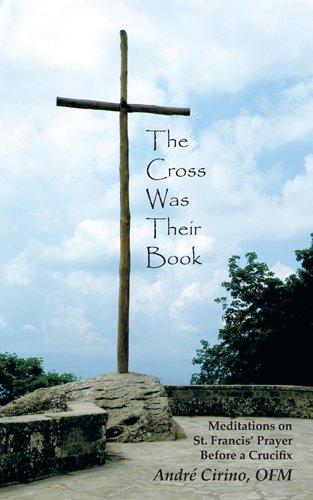
The cover of The Cross Was Their Book: Meditations on St. Francis' Prayer Before a Crucifix, by André Cirino, O.F.M. (Phoenix, Arizona: Tau Publishing, 2009), shows a photograph of a simple cross that stands at Mt. LaVerna where Saint Francis of Assisi received the stigmata in the year 1224.


I visited the holy mountain when I attended Quincy University in, I believe, 1998 while on a Franciscan Pilgrimage Experience and have been longing to return every since. However, the mountain is, as it were, off the beaten path.

The image caught my attention because I think I took the same picture those many years ago and because this weekend I will meet a group of alumni pilgrims from Quincy University in Assisi to go with them to Mount LaVerna. Thinking it might be good to read it before my little pilgrimage (it is only 78 pages, including the end notes), I sat down to read it yesterday and was very much impressed with it. Before I return to the Diocese of Springfield in Illinois for a time this summer, I think I will use this book to make a private retreat in Assisi after I have taken my exams. You may find it helpful, as well.

In his introduction to the book, Father André explains the organization of the book:
This book centers on five themes found in this Prayer Before a Crucifix, namely, the themes of Light, Faith, Hope, Love and the Will of God. These themes animated Francis' prayer whenever he sat before a crucifix and they would have been for him a deep well from which to draw living water that nourished his meditation. So I have expanded each theme with one or more stories from the Franciscan sources which help illustrate the topic under consideration accompanied by my own reflection or meditation on each one (8).
Each of the five principle chapters concludes with suggested passages of Scripture to take to prayer and two questions for meditation.

Saint Francis' Prayer Before a Crucifix is one of my favorite prayers and I make use of it often. You might consider memorizing it, as well (it's very short):
Most high, glorious God,
enlighten the darkness of my heart
and give me right faith,
certain hope,
and perfect charity, sense and knowledge, Lord,
that I may do
Your holy and true command.
Amen.

02 November 2013

A book you should read: The Global War on Christians

In his new book The Global War on Christians: Dispatches From the Front Lines of Anti-Christian Persecution, John L. Allen, Jr. discusses what he says "is in many ways the greatest story never told" (243).  This is, he admits, a bit of an exaggeration because the real "problem in the global war on Christians is not that no one is reporting what's happening.  It's rather that far too few people are paying attention" (27).

Despite various news outlets reporting on instances of Christian persecution, most people in the West (and throughout the world) are unaware that:
  • 100,000,000 Christians "worldwide presently face interrogation, arrest, torture, or even death" (4);
  • 100,000 Christians were killed per year between 2000 and 2010 (4);
  • since the death of Jesus, 70,000,000 Christians have been killed for their faith in Christ;
  • of those, 45,000,000 - 50% - were killed in the 20th century [the 1900s] (32-33); 
  • between 2006 and 2010, Christians were persecuted in 139 countries (34);
  • 80% of religious persecution today is against Christians (9); and,
  • in Africa, Asia, and the Middle East, Christian persecution has increased 309% since 2003 (36).
Throughout The Global War on Christians Allen relates individual instances of such persecution and provides an overview of the current situation in Africa, Asia, Latin America, the Middle East, and Eastern Europe, often even breaking down his overview by country.

As I read the book I knew many of the stories already because I had either written about them on this blog or at Persecution Watch.  I felt conflicted, both because I knew so many of the stories and because there were many more I did not know.  He is right to describe this war as "the world's best-kept secret" (15).

Longtime readers of his column in the National Catholic Reporter will be aware of Allen's ability to cut to the heart of an issue, to separate and distinguish with clarity and objectivity.  He brings this same skill to The Global War on Christians, repeatedly examining questions to determine where the war is being fought:
The mere fact that Christians are harmed someplace does not ipso facto mean they were harmed because they are Christian.  It's equally fallacious both to dismiss religion as a casual factor and to privilege it over to others.
At the same time, a one-sided focus on the motives of the perpetrators of violence can also produce a badly skewed picture.  When someone is threatened or harmed, there are usually two questions to ask: First, what are the motives of the attackers?  Second, did the victim make choices that placed himself or herself at risk, and if so, why (13)?
These two questions must be asked in examining this war because, as Allen rightly notes, "to ignore threats against Christians because they're not explicitly is, therefore, to miss the forest for the trees" (14).  It is clarity of thought that has gained Allen the respect of many.

Throughout the book, Allen discusses why the war on Christians is so little known, what it is and what it isn't, and what forms it takes in various places.

We might well ask why he decided to write this book when so many others have not written on this important reality.  The answer is quite simple: "there's something so precious about faith in Christ and membership in the church that, when push comes to shove, ordinary people will pay in blood rather than let go" (21).  Allen has told their stories well.

Why should you read this book?  Because the truth is always important to investigate and because "the stories of the martyrs have a deep spiritual resonance, and when people are exposed to them, they often come away changed" (266).

24 May 2013

The Fall of Arthur: A Review


I have remarked here on occasion of my love of the legends of King Arthur and the Knights of the Round Table that I first discovered as a young boy.  Still today I take delight in these stories and am always eager for more, particularly as regards the quest to discover the man who lay at the foundation of the legends.

When some weeks back I first learned of the coming release of an alliterative verse poem by J.R.R. Tolkien titled The Fall of the Arthur, excitement grew in my heart because I knew the brilliance of his version of Sir Gawain and the Green Knight.  Tolkien was a master at taking ancient metrical patterns and making modern English fit to them.

His The Fall of Arthur is sadly incomplete, despite the urging of R. W. Chambers who, on reading the incomplete poem wrote to Tolkien, urging him, "You simply must finish it."  How I wish he had finished it!

The poem itself consists of but five cantos and covers the betrayal of Mordred, Lancelot and Guinevere, and the circumstances that would lead to the terrible Battle of Camlann, though The Fall of Arthur ends rather abruptly, too abruptly and at a moment where it lifts the heart ever more into its tale.

It seems to me that the poem is best read aloud, but even when read quietly one cannot help but feel as though he were in the presence of a great hall, sitting round a fire with a mug of ale, enraptured at the tale of wandering minstrel telling of the glorious and tragic days of the King whom Tolkien calls the "lord of legions,     light in darkness (I.106-110).

Over the last several days a discussion has begun on the list serve Arthurnet about what it is that still brings such great passion to the Arthurian legends.  The Fall of Arthur continues in this great tradition and presents us with a thoroughly Christian Arthur who carries as his emblem "a white lady in holy arms / a babe bearing born of maiden" (IV.127-128).  But, as in other tales, Arthur is not simply a Christian monarch, but a representation of Christ, another Christ, if you will, a true Christian, who is "a king of peace kingdom wielding / in a holy realm besides Heaven's gateway" (V.10-11).

When King Arthur returns to confront Mordred and set right his treachery, "he would pass in peace pardon granting / the hurt healing and the whole guiding, / to Britain the blessed bliss recalling" (V.44-45).    Here I cannot help but recall Aragorn, in whose hands are healing.  What is more, Tolkien speaks of those who "their king betraying, Christ forsaking" (V.16).

It is, I think, this hope of a kingdom restored, of mercy given and justice done, that elicits such passion even these many centuries later, centered on the person of Arthur who is betrayed by those dearest to him but who does not betray them in return.

Hope is a common theme in the writings of Tolkien and it is not absent in this text.  In the middle of the poem we find these moving lines:
Ever times would change and tides alter,
and o'er hills of morning hope come striding
to awake the weary, while the world lasted (III.218-220).
Are not we weary who awaken each day to look for the coming of hope, for the coming of Christ?

Before I am called out on this interpretation, I know that Tolkien great dislike allegory in all of its manifestations where he could detect it, but he did allow for, and even encourage, what he termed applicability.  Consideration my interpretation here not as allegory, but as applicability, spurred on by a famous mosaic of Rex Arturus in the Cathedral of Otranto, in which Arthur is shown riding on a goat in the scenes of the Fall of Man:


I have yet to find an adequate explanation for the curious placing of this mosaic, though I do have my own thoughts (that Arthur is here depicted as a Christ-figure), which I first began to put down on paper when I was in the seminary.  It is a topic to which I shall have to return when I am soon in Italy, after visiting this Cathedral and seeing the mosaic with my own eyes.  And while I'm at it, I must also see St. Galgano's sword in the stone.

02 December 2012

What to learn more about The Hobbit?

This morning I finished reading Corey Olsen's Explore J.R.R. Tolkien's The Hobbit (Boston: Houghton Mifflin Harcourt, 2012), a book he hopes will engage his readers in a conversation that will help them learn more about the world of Middle-earth.

Olsen summarizes the book thus:
This book brings together the lessons I've learned int he classroom, experiences I've had through my podcast, and the love I've always had for Tolkein's work.  There is nothing I enjoy more than walking slowly through a great book with a group of people, taking the time to notice important details and keep track of themes that often slip by when you read on your own.  I hope that you too will enjoy the journey (4).
I, for one, thoroughly enjoyed the journey and felt quite at home and engaged in the classroom of this book.

One by one, Olsen walks us through all nineteen chapters of The Hobbit: Or There and Back Again, not as though taking us by the hand as one would a small child unfamiliar with Middle-earth, but as a companion and friend.

The style of his writing very much feels like a conversation, a dialogue, to which one listens with bent and eager ear.

Of particular interest to me was Olsen's fifth chapter, titled "The Turning Point", in which he explores with a most insightful analysis of the riddle game played between Gollum and Bilbo.  I do not wish to spoil the surprise for you; suffice it to say that he has opened before me an entirely new way of reading the riddles as if opening a window or door onto a wide horizon.

Through his observations, Olsen shows the interior unity of The Hobbit, a unity that might otherwise be overlooked.  His insights easily lead to a deepening appreciation of the beauty and the brilliance of Tolkien's achievement.

23 November 2012

A few books recalled

Some of you will remember that a short time ago I bought a book simply because the subtitle made me laugh: The Hobbit and Philosophy: For When You've Lost Your Dwarves, Your Wizard, and Your Way.

Despite a promising - and enjoyable - introduction cleverly peppered with many allusions and puns,  the rest of the book really has very little to do with such situations as when you've lost your dwarves, your wizard, or your way.

The book is written by a number of philosophers, nearly all of whom somehow seem not to have noticed that Tolkien's was not only Catholic, but that his faith very much shaped his conception of Middle Earth.  Too much of the book focuses on Taoism and not on Catholicism and so misses the real insights contained with Tolkien's subcreation.

Frankly, I don't really recommend this book to anyone seeking to delve more deeply into Middle Earth.

While I'm reviewing books, let me make a brief mention of two books that the Chancellor, knowing of my love of The Hobbit and The Lord of the Rings, kindly gave to me recently.

The first is Finding God in the Hobbit by Jim Ware and the second is Finding God in The Lord of the Rings by Kurt Bruner and Jim Ware.

While these took books deal with Christian themes, they also seem to have missed - or perhaps chose to ignore - Tolkien's Catholic faith one.  Bruner and Ware are Christian, but to which they denomination they adhere they give little indication, except for one reference to "Jehovah".

These short books can each be read in the space of an hour.  In both books, the chapters form reflections on a line or two from Tolkien's work.  Beginning first with a recap of the situation surrounding the brief quotation, Bruner and Ware follow the recap with a sort of mini homily and conclude with a "reflection" fit a church marquee.

These two books are not bad, but they are very simple and won't really help anyone delve more deeply in the many insights Tolkien offers us.

Better, I suggest, to stick with Matthew Dickerson's A Hobbit Journey: Discovering the Enchantment of J.R.R. Tolkien's Middle-earth.  Of the books I have read looking at the Christian and philosophical underpinnings of Tolkien's work, it is the best and more insightful.

30 October 2012

Two books on The Hobbit

J.R.R. Tolkien's dislike of allegory is legendary.  In his foreword to the second edition of The Fellowship of the Ring: Being the First Part of the Lord of the Rings, Tolkien wrote:
But I cordially dislike allegory in all its manifestations, and always have done so since I grew old and wary enough to detect its presence.  I much prefer history, true or feigned, with its varied applicability to the thought and experience of readers.
He wrote these words after a great many people were trying to make a one-to-one connection between the reality of our physical world and the world of Middle-earth, making such claims as "the ring is the nuclear bomb" or "the anger of the Ents is against industrialization."

These many years later, some wonder what the difficulty is with such claims.  To these questions, Tolkien responds:
I think that many confuse 'applicability' with 'allegory'; but the one resides in the freedom of the reader, and the other in the purposed domination of the author.
What is more, Tolkien rather bluntly states, "As for any inner meaning or 'message', it has in the intention of the author none.  It is neither allegorical nor topical.  As the story grew it put down roots (into the past) and threw out unexpected branches."  He did not write an allegory, but a feigned history.

Nevertheless, every reader is naturally drawn to connect to the world of Middle-earth and the adventures of hobbits, wizards, men, elves, and dwarfs.  This one Tolkien means by "applicability"; each reader is free to apply the tales to his own day and to read out of them - or into them - what he wishes.

This week I have happily read two new books exploring Middle-earth, both of which seek to apply the lessons of The Hobbit and The Lord of the Rings to our own day.

In a letter written to Father Robert Murray, S.J., who noted a "positive compatibility with the order of Grace" in The Lord of the Rings, Tolkien wrote that "The Lord of the Rings is of course a fundamentally religious and Catholic work; unconsciously so at first, but consciously so in the revision."

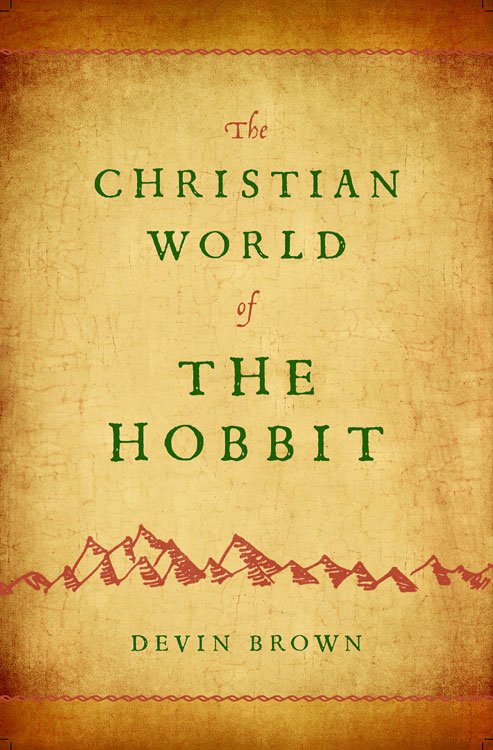
Though he spent only a small amount of time writing about Tolkien's Catholic faith, Devin Brown took this simple statement as the launching point of his The Christian World of The Hobbit.  The book itself is easily suited to a popular audience, even to those who - for whatever unfathomable reason - have not yet read The Hobbit.

In five chapters, Brown leads his readers in a consideration of the workings of grace and morality in The Hobbit, with a particular - and intriguing - focus on the growth of Bilbo Baggins from the moment he left his comfortable Hobbit hole to the moment he returned.

Brown summarizes his thesis in the final chapter of the book, saying,
The Hobbit is both a children's tale and something more.  The Providence, purpose, and morality in The Hobbit go against the grain of the modern mind-set.  In The Hobbit, Tolkien brings his readers into a world filled with meaning and purpose where they find stark contrasts between right and wrong.  The same audience who might scoff at the Christian worldview in a different context find themselves embracing it in The Hobbit.
I suspect he is quite right.

For those looking for a more scholarly exploration of The Hobbit, Matthew Dickerson's A Hobbit Journey: Discovering the Enchantment of J.R.R. Tolkien's Middle-earth provides a great deal of food for thought.

Both books are good, but I enjoyed Dickerson's much more, in no small part because it delves deeper into the morality of Middle-earth.  Exploring such important - and timely - issues as torture and war, freedom and responsibility, Dickerson's oft-repeated refrain is that for Tolkien, a military victory is less important than a moral victory.

In his introduction, Dickerson writes,
This book explores some of those truths that can be glimpsed in Tolkien's very successful works of fantasy literature.  They are truths that are as applicable today as when Tolkien lived and wrote.  The central question this book addresses is, What can we learn from hobbits and from their vision of the Good Life, and how does that apply to our own present situation?  In particular, we will look at the hobbitish pursuit and practice of peace, even in the midst of a world at war.  And we will start with the question of what actions war does or does not justify.
I had a difficult time putting this book down and recommend it highly.

28 August 2012

A book on the beach

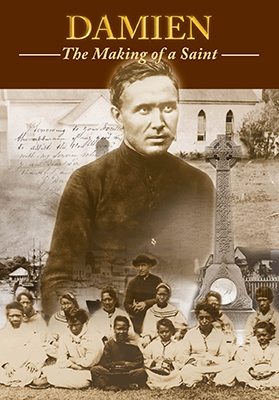
After a full and enjoyable day yesterday, I woke this morning feeling rather tired so I decided to take a quiet afternoon spent in a quiet spot on a quiet beach reading a book I picked up yesterday, Damien: The Making of a Saint.

It is a book unlike any other I ever seen.  It has a few pages of commentary by an anonymous editor, but otherwise is composed entirely of excerpts from the writings of Father Damien and those who knew him.  Scattered throughout the book are pictures of the Leper Priest and the settlements at Kalawao and Kalaupapa, his artifacts, and some of his letters that have survived.

The excerpts are arranged in a roughly chronological order to tell the story of the Hero of Moloka'i in a unique - and gripping - way.

If you don't yet have a book about Saint Damien de Vuester - and can't find a copy of The Heart of Father Damien by Vital Jourdain, SS.CC - this is the book for you.

12 July 2012

Spiritual wanderlust

In recent months there has been a growing interest in the ancient pilgrimage road to Compostela, Spain, the final resting place of Saint James the Greater, due in no small part to Martin Sheen's The Way:

If you haven't yet seen it, you really showed; it's a very powerful and moving film.

Being one who frequently suffers from a bit of wanderlust, I have often wondered what it might be like to make that pilgrimage across the Spanish countryside. The Way only increased this curiosity.

About the time the film came out a friend gave me Kevin A. Codd's To the Field of Stars: A Pilgrim's Journey to Santiago de Compostela, a very interesting book recounting one priest's journey on this holy road and the lessons he learns on the way, both simple and profound, and the people he encounters.

It is a easy book to read and is broken up into short chapters, each describing one day's journey toward Compostela.

Every pilgrimage, however great the distance, is not so much about the final destination and arrival, but about the journey undertaken by the soul towards God.  Every pilgrimage is really meant to help come to a deeper understanding of the final destiny of man, either with God or without him.

After Vatican Council II, there was much talk of the faithful as the "pilgrim people."  Certainly, we are the pilgrim people making our way - please,  God - toward the Lord even as we cry out to him each day, "Let us see your face, O Lord, and we shall be saved" (Psalm 80:4). But, as Father Codd rightly points out, "Once talk of being 'a pilgrim people' replaced being a people who actually walk as pilgrims we rather lost our way" (23).

Within the pages of the book he transcribes a poem he found along the way.  In part, it reads:
Pilgrim, who is it who calls you?
What unseen power attracts you?
Not the peoples of the camino
Nor their rural customs.

It is not history nor culture
Nor the rooster of the Calzada
Nor the palace of Gaudi
Nor the castle of Ponferrada.

All that is seen in passing,
And it is a joy to see it all,
Is still less than the voice that calls
The feeling that is yet so much deeper (76-77).
It is no small feat (pun intended) to actually walk the camino, for the full journey takes some forty days.  Nevertheless, my heart desires one day to walk that road that so many others have walked before me.

In truth, a pilgrimage can be made anywhere, so long as the destination is a sacred place.  You can choose to make a pilgrimage to a nearby shrine, a chapel with Eucharistic adoration, your parish church, or the grave of Father Augustine Tolton or one of the saints.

If we allow ourselves to become spiritual pilgrims if not physical pilgrims, we will learn the truth of that medieval phrase, Vocatus atque non vocatus, Deus aderit:
Bidden or unbidden, God is present.  That is exactly what I am coming to understand on this road: Like the star above me, seen or unseen, he is here.  Felt or unfelt, he is with me.  Attended to or not attended to, he is walking with me (142).

09 March 2012

A good book for children

As you likely know, on Saturday of next week, March 17, Holy Mother Church will observe the memorial of Saint Patrick.

As I made my way to back to Springfield from Tucson through the airport in San Franciscan, I stopped at what I think is the best airport book store I've ever found.  In it, on a table of various Irish-themed books, I found one by favorite children's author, Tomie dePaola: Patrick: Patron Saint of Ireland.

When I saw it, I decided to pick one up for my nephew.  It is a typical work by dePaola and contains a couple of stories from Saint Patrick's life about which I was unaware.  Now I wish I'd picked up another copy for myself; dePaola's books are great for reading to grade school students.  And older students, too, and even adults, especially The Clown of God.

24 October 2011

Read this book


The book is well written and though it delves into the deep mystery of the Eucharist, it is a readable book and flows easily, even for one unfamiliar with the Church's teachings on the Eucharist.

Pitre begins first with a discussion of the Last Supper and moves then to examine the messianic hopes of Israel and their connections to the Passover.  From their he moves to the worship of the Temple and back to the Last Supper.  I found his writings on the Bread of the Presence fascinating.

This will be helpful book for anyone seeking a deeper understanding of and faith in the Lord's Real Presence in the Eucharist and will be useful for catechists and preachers, as well, as they seek to unpack the Lord's words.

You can read a quick outline of the book here; that should whet your appetite enough to grab the book.

03 September 2011

The Dark Decade

Yesterday I read Emmett Cahill's The Dark Decade 1829-1839:Anti-Catholic Persecutions in Hawai'i.

Beginning with the arrival of the Calvinists from the United States of America, Cahill traces the growth and spread of Christianity within the islands, with a particular focus and concentration on the island of Oahu, the seat of the Hawaiian monarch.

He skillfully demonstrates the Protestant missionaries' bias against those of the Catholic faith, and their ignorance of the true teachings of Catholicism.  Without condemning the Hawaiian Kings and Queens for their persecution of Catholics - which he repeatedly notes seems very much not in keeping with the nature of the Hawaiian people - shows how the missionaries coerced the monarchs toward persecution.

The history of anti-Catholicism across the globe - and especially in our own country - is too little known.  This book will prove helpful for both those well versed in the history of Hawaii and for those who know nothing about the islands' past.

17 November 2010

A book recommendation

If you are considering giving a gift to a priest or deacon for Christmas or another occasion, let me recommend to you The Gospel of Matthew by Curtis Mitch and Edward Sri. Published by Baker Academic, the volume is part of the Catholic Commentary on Scripture series (though, curiously, the volume is not currently listed on the web site).

Released just in time for the beginning of the new liturgical year, the book is bound to be a great resource for the preparation of homilies during the coming year when the Gospel accounts (on Sundays, at least) are largely taken from Saint Matthew's Gospel.

Previously, I have found Mary Healy's volume on The Gospel of Mark of tremendous value, both because of its academic aspects and because of its spiritual insights. The Gospel of Matthew promises to be just as fruitful.