Showing posts with label Damien of Molokai. Show all posts

19 June 2022

Homily - The Solemnity of the Most Holy Body and Blood of Christ - 19 June 2022

 The Solemnity of the Most Holy Body and Blood of Christ (C)

Dear brothers and sisters,

It should come as no surprise that “at the heart of the Eucharistic celebration are the bread and wine that, by the words of Christ and the invocation of the Holy Spirit, become Christ’s Body and Blood.”[1] The bread and wine are brought to the altar from the offerings of our lives, all in keeping with the Lord Jesus’ command to “do this in memory of me” (Luke 22:19).

Jesus, of course, did not create his offering of bread and wine from whole cloth, as he it were, which he transformed through the power of his words, into his own Body and Blood. We find a foreshadowing, a prefiguration, of this offering of bread and wine in the Old Testament, beginning with the offering of Melchizedek, who was both priest and king of Salem. Saint Augustine recognized this when he called Melchizedek “a type of Christ.”[2] Indeed, Augustine went so far as to say that Melchizedek offered “the sacrifice which is now offered to God by Christians in the whole wide world…”[3]


Melchizedek is a most mysterious figure. His name means “King of Righteousness,” and, although at that time God had only called Abraham, Melchizedek was not a pagan priest, but a priest of God Most High. In fact, the author of the Epistle to the Hebrews describes him as being “without father, mother, or ancestry, without beginning of days or end of life, thus made to resemble the Son of God, he remains a priest forever” (Hebrews 7:3). For this reason, the author goes on to say that Jesus is a “priest forever, according to the order of Melchizedek” (Hebrews 7:17; cf. Psalm 110:4).

What does it mean, though, to say that Melchizedek is without father, mother or ancestry, without beginning of days or end of life? This seems most strange, unless we remember that Melchizedek is a type, a foreshadowing of Christ. Saint John Chrysostom explains what this means, saying,

Just as Melchizedek is said to have no father or mother on account of there being no mention of his parents and to have no family history on account of there being no history for him, so too Christ, on account of his having no mother in heaven or father on earth, is said to have no family history and in fact has none.[4]

Both of these are marvels for us, but it is good for us to marvel at the ways of God.

What does it mean when the Epistle to the Hebrews speaks of Jesus, quoting the Psalm, as being a priest forever, according to the order of Melchizedek? Saint Augustine explains that Jesus is a priest forever, “not after the order of Aaron, for that order was to be taken away when the things shone forth that intimated beforehand by these shadows,” which is to say that the priesthood of Aaron was brought to its fulfillment in the self-offering of Jesus to the Father on the Cross.[5]

Through his offering of bread wine, Melchizedek blessed God on behalf of Abraham and blessed Abraham on behalf of God. His offering of bread and wine presage the Eucharist, by which God blesses us through his priests and we bless God through his priests.[6]

The Old Testament roots of the Eucharist, however, do not end with Melchizedek. Bread and wine

…received a new significance in the context of the Exodus: the unleavened bread that Israel eats every year at Passover commemorates the haste of the departure that liberated them from Egypt; the remembrance of the manna in the desert will always recall to Israel that it lives by the bread of the Word of God; their daily bread is the fruit of the promised land, the pledge of God's faithfulness to his promises


The "cup of blessing" at the end of the Jewish Passover meal adds to the festive joy of wine an eschatological dimension: the messianic expectation of the rebuilding of Jerusalem. When Jesus instituted the Eucharist, he gave a new and definitive meaning to the blessing of the bread and the cup.[7]

The Lord Jesus himself foreshadowed his institution of the Eucharist, as we see in the Gospel proclaimed today. His multiplication of the loaves demonstrates the superabundance of the tremendous gift he gave us and entrusted to his Church at the Last Supper.

From these foreshadowings we see that the Eucharist is given to us as a blessing, as a liberation, as sustenance, and as a promise of the life that is to come. Is it any wonder, then, that the saints have so loved the Eucharist, received such solace from the Eucharist, and spoke so movingly about the Eucharist?

Saint Damien of Moloka‘i, for example, who spent so many years among the lepers of Hawai‘i, said,
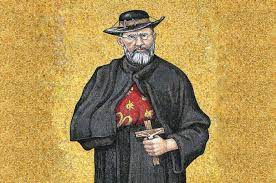
I find my consolation in the one and only companion who will never leave me, that is, our Divine Savior in the Holy Eucharist. . . .It is at the foot of the altar that we find the strength necessary in this isolation of ours. Without the Blessed Sacrament a position like mine would be unbearable. But, having Our Lord at my side, I continue always to be happy and content. . . . Jesus in the Blessed Sacrament is the most tender of friends with souls who seek to please Him. His goodness knows how to proportion itself to the smallest of His creatures as to the greatest of them. Be not afraid then in your solitary conversations, to tell Him of your miseries, your fears, your worries, of those who are dear to you, of your projects, and of your hopes. Do so with confidence and with an open heart.


These are deeply moving words that I pray each of us will come to understand and imitate through our own deepening love of the Eucharistic Lord.


Today, the Church in these United States of America embarks upon a three year Eucharistic Revival, promoted by the Bishops. This first year is the Diocesan phase, followed next year by the parish phase, and followed the year after by the national phase. Our own Diocese of Springfield in Illinois had already been planning a Year of the Eucharist, beginning with the Solemnity of the Immaculate Conception on December 8th. In these days of revival, let us beg the Lord Jesus to help us deepen our love for him in the Eucharist so that we, too, with the Saints, may be satisfied by him of earthly and heavenly desires. Amen.


[1] Catechism of the Catholic Church, 1333.

[2] Saint Augustine of Hippo, On Christian Doctrine, 21.45.

[3] Ibid., City of God, 16.22.

[4] Saint John Chrysostom, Homilies on Genesis, 35.16.

[5] Saint Augustine of Hippo, City of God, 16.22.

[6] cf. Catechism of the Catholic Church, 1333.

[7] Ibid., 1334.

15 May 2022

Homily - The Fifth Sunday of Easter - 15 May 2022

The Fifth Sunday of Easter (C)

Dear brothers and sisters,

At first hearing, it may seem as though we receive two contradictory statements in the Scriptures today. First, Saints Paul and Barnabas tell us – curiously enough, by way of encouragement – that “it is necessary for us to undergo many hardships to enter the kingdom of God” (Acts 14:22). Second, Saint John tells us that God “will wipe away every tear from their eyes” (Revelation 21:4). The first saying is disarming and striking; the second saying is comforting and desirous. Can it be that the Beloved Disciple contradicts what the Apostle to the Gentiles says?

When considering such a question, it is good for us to remember that the Sacred Scriptures do not compete against each other. Rather, taken in their entirety, the Sacred Scriptures form a great harmony. It is for us to attune our ears to their hymn so that we might hear it properly.

When Saints Paul and Barnabas remind us that it is necessary for us to undergo many hardships to enter the kingdom of God, they say this as a matter of fact. This is a central fact of the Christian life. Even so, the centrality of the Cross in each of our lives is often either rejected or denied – whether implicitly or explicitly – by many Christians today. This rejection of a tenet of discipleship is, in part, what hinders our efforts to evangelize our culture and society that drifts further and further away from Christian life.

If we are to find the harmony between what Paul and Barnabas and John say, we have to consider who the they are to whom Saint John refers. Looking at his words in their full context, we see that they are those found in the holy city, in the new Jerusalem, those who names are found in the book of life at the Last Judgment. Their tears will be wiped away precisely because they endured the time of tribulation, because they underwent hardship, because they remained faithful to Christ Jesus, and for this reason they now live with God. We have the relics of two of these here in this very Cathedral Basilica.

What Paul and Barnabas say, then, about the necessity of hardship and what John says about the final and enduring comfort are not contradictory statements at all, but are instead part of a whole, two sides of the same coin, if you will; both are the fruits of an authentic discipleship. Both are to be found in the faithful adherence to Jesus’ command: “As I have loved you, so you should love one another” (John 13:34).

It should come as no real surprise that our society does not understand what love is. True love is always a willingness to suffer for the beloved; true love always entails a willingness to sacrifice for the beloved; true love always entails a renunciation of self in favor of the beloved. If there is no wiliness to suffer, if there is no willingness to sacrifice, whatever else it may be, it is not love.

Is this not what made the ministry of Saint Damien, of Saint Marianne, and of the Servant of God Joseph Dutton so very fruitful compelling? Did they not each in their own choose to suffer for those they loved, to sacrifice for those entrusted to their care, to renounce themselves in favor of those who needed their assistance? They did not choose the easy way out because they knew “it is necessary for us to undergo many hardships to enter the kingdom of God.” Their lives were fruitful because they lived and loved like Jesus; they willingly suffered for others and made heroic sacrifices for their benefit.

Some today might think that this aspect of love is difficult to discover because so few of us seem to recognize it. But there are always examples of authentic love to be found, and hints of love can be found in perhaps surprising places. We can find one such hint in the Hawaiian language in a word we all know well, though it is famously difficult to translate in English terms.

The word aloha, so I understand, has something of a kaleidoscope of meanings. While its best known meaning is love, it is not simply a romantic or rosy love; it is instead a love that also connotes compassion and patience, which is to say a love that involves suffering, hardships, and sacrifices. It is a love as we encounter and receive in Christ Jesus.

Father Damien, Mother Marianne, and Joseph Dutton each understand this, even if each in their own unique way. Saint Damien famously said, “I make myself a leper with the lepers.”

Saint Damien of Moloka'i

Saint Marianne said, “I am hungry for the work.”

Saint Marianne Cope

And Joseph went to Kalawao on his own accord as a personal penance to atone for his past sins. This heroic trio show us as if through a prism what it means to undergo hardships so as to enter the kingdom of God. They show us what it means to love others as Jesus love them and as he loves each one of us. And in the joy they exhibited in their care of the lepers, they received a foretaste of God wiping away their tears from their eyes; they were comforted by the Lord Jesus because they united themselves to him and loved like him. 

They did so in the extremes of the leper settlement, but you and I do not have to go so far. Joseph Dutton once said to a correspondent who lamented he could join Joseph at Kalaupapa, “One’s Molokai can be anywhere.”

The Servant of God Joseph Dutton

It remains then for us to undergo hardships wherever they come to us out of love for Jesus Christ and out of love for others. It remains for us to unite ourselves to the Lord Jesus and to love like him so to suffer for those we love, to sacrifice for those entrusted to our care, and to renounce ourselves in favor of those who need our assistance. For if we live and love in this way, being united to Christ Jesus, on the last day he will wipe away every tear from our eyes and welcome us into his kingdom. Amen.

03 August 2020

Homily - 2 August 2020 - The Eighteenth Sunday in Ordinary Time - On Father Damien

The Eighteenth Sunday in Ordinary Time (A)

On Saint Joseph Damien de Vuester

Dear brothers and sisters,

“What will separate us from the love of Christ? Will anguish, or distress, or persecution, or famine, or nakedness, or the sword” (Romans 8:35)? Even as he asks these questions, Saint Paul gives the answer: “No, in all these things we conquer overwhelmingly through him who loved us” (Romans 8:37).

Photo: Architect of the Capitol
As you wander through the Capitol complex in Washington, D.C., you will see various statues sent from each of the fifty States to honor important people in those States’ histories. On Friday, a member of the House of Representatives singled out one of these statues which she had the gall to call to claim symbolizes “patriarchy and white supremacist culture.” That statue was sent by the people of Hawaii and represents Saint Damien of Molokai; the other statue from Hawaii is of King Kamehameha I the Great, who united the islands into one kingdom. 

To defame a man of the stature and quality of Father Damien by inferring him to have harbored racist motivations in his heart is simply inexcusable. Even a cursory reading of his life, of the history of the Hawaiian islands, or even a brief conversation with a Hawaiian, leaves one with a very clear understanding of Father Damien’s one and only motivation that laid at the foundation of his missionary endeavors: “the love of God in Christ Jesus our Lord” (Romans 8:39). 

My affection for Father Damien, and my devotion to him, are no secret; in fact, he is my favorite Saint and one I consider a dear friend. He was born Joseph DeVeuster in Tremelo, Belgium on 3 January, 1840 and entered the Congregation of the Sacred Hearts at the age of 19; he took the name Damien, after an early physician and martyr. 

His brother, Pamphile, also a member of the Congregation of the Sacred Hearts, was to leave for the Hawaiian missions in 1863, but he fell seriously ill and was not strong enough for the journey. Damien – always a bit headstrong - promptly wrote to his superiors asking to take his brother’s place. His offer was accepted and he landed in Honolulu in 1864 and died on Molokai 1889 at the age of 49, having spent himself in the service of God and his people. 

Before he left Belgium, Damien wrote to his parents reflecting on the voyage on which he was about to embark: “The sacrifice is great indeed for one who tenderly loves his parents, his family, his brethren, and the land of his birth. But the voice that has called upon us to make a generous sacrifice of all, is the voice of God himself.” He heard the call of the Lord and he knew he had to answer it; he knew, as he said, that “we must choose the state [in life] God has predestined for us, so as to be happy in our next life.” 

For nine years he ministered on the Big Island, building churches with his own hands and meeting the spiritual needs of his people. In one letter, he wrote: “Our poor Islanders are always very happy when they see Kamiano coming, and I, for my part, love them very dearly; I would gladly give my life for them.” Do these words sound like those of racist or a bigot, or of someone mired in a white supremacist culture? Of course not! He went on to say, “All things considered, I am very happy, for, along with all the privations and hardships, God often gives me consolations beyond expectations.” 

In another letter, Damien wrote these words: “It is [Jesus] Who in the midst of trials, contradictions, and sufferings, will cause us to enjoy a happiness of which he who has never experienced it can form no idea.” His chief aim in life was to lead everyone to such an experience of the love of God, to lead them to the happiness that can only be found in God. 

With time, Bishop Maigret became increasingly concerned about the spiritual needs of those who lived in the leper colony on the Kalaupapa Peninsula of the island of Molokai; they were sent there to keep society safe, to be forgotten, and to die. Bishop Maigret, unwillingly to command a priest to go to the settlement – because he knew it would effectively be a death sentence – asked if any of his priests were willing to go; he found four. He decided to have them rotate on a three-month basis, hoping that would keep from contracting the disease. Father Damien agreed to go first and arrived at the colony on 10 May 1873, accompanied by the Bishop. Though the Bishop intended to leave him for there for just three months, Damien would not allow his turn to end, and there he remained, willingly and gladly, where others hesitated to go. 

Upon arriving at Molokai, Bishop Maigret gathered the people together and said to them: 

So far, my children, you have been left alone and uncared for. But you shall be so no longer. Behold, I have brought you one who will be a father to you, and who loves you so much that for your welfare and for the state of your immortal souls, he does not hesitate to become one of you, to live and die with you! 

He had no idea how true his words would prove. 

When he first arrived at the leper colony, Damien was not trusted by the Hawaiian people because they; many others had come for a few weeks or a couple of months; what would this new one do? Damien slowly won them over by eating from their same poi bowls, sharing a pipe with them, and learning and speaking their language. When he was sent to the lepers, he was told to stay several feet away from them, not to touch them, or even to eat food prepared by them, lest he, too, contract the dread disease. (The similarities with our own day are clear.) Those who had gone before him followed this advice, but he ignored it from the very beginning; instead, he bent down to touch and embrace the lepers. He would not dismiss the people so heartlessly. 

Father Damien once said, “I make myself a leper with the lepers to gain all to Jesus Christ.” In these words, he echoes the words of Saint Paul who said that he became “all things to all to save at least some” (I Corinthians 9:22). In doing so Father Damien imitated the love of Christ who gave himself for our salvation. This he did by bringing in a water supply, building their churches and chapels, forming a band, digging their graves and building their coffins, mending their homes and huts, expressing their physical needs to the Board of Health and never taking ‘no’ for an answer, and bandaging their wounds and sores with his own hands. In addition to this, he offered the Mass for them, heard their confessions, witnessed their marriages, assisted them in their last moments in this life, and commended their souls to God. 

After sixteen years, he contracted leprosy himself because of his close work with the lepers, and accepted this Cross as a true disciple. He said, “Having no doubts about the true nature of the disease, I am calm, resigned, and very happy in the midst of my people. God certainly knows what is best for my sanctification and I gladly repeat, ‘Thy will be done.’” He knew that his sufferings would lead him to grow in holiness if he offered them for his people with the sufferings of Christ. 

He found that his “greatest pleasure is to serve the Lord in his poor children rejected by other people.” He devoted all of his efforts to the lepers of Molokai, often ignoring his own needs against the advice of others; he spent himself in their service. He was no racist, no bigot, no white supremacist, as everyone in his own day knew very well. After the Princess Liliuokalani, then Regent of the Kingdom of Hawaii, visit the leper colony to experience the sufferings of her people and to witness and support Father Damien’s ministry, she made him a Knight Commander of the Royal Order of Kalakaua, the highest honor of the Hawaiian Kingdom. She would never bestow such an honor on one who did not love her people; rather, she gave him the highest he could because of his devotion to her people. 

At an altar built by Saint Damien

Father Damien’s example shines brightly before me, and, by God’s grace and his intercession, I pray that I will be able to imitate his zeal for souls, his tireless dedication, and his acceptance of suffering with both joy and gratitude for the salvation of others. 

We might wonder how he was able to serve so faithfully those who were rejected and reviled. 

I find my consolation in the one and only companion who will never leave me, that is, our Divine Savior in the Holy Eucharist. . . .It is at the foot of the altar that we find the strength necessary in this isolation of ours. Without the Blessed Sacrament a position like mine would be unbearable. But, having Our Lord at my side, I continue always to be happy and content….


Jesus in the Blessed Sacrament is the most tender of friends… Be not afraid then in your solitary conversations, to tell Him of your miseries, your fears, your worries, of those who are dear to you, of your projects, and of your hopes. Do so with confidence and with an open heart. 

It is in the Eucharist that the love of God in Christ Jesus is given to us every time we attend the Holy Mass; it is through the Eucharist that “the hand of the Lord feeds us” and through which “he answers all our needs” (cf. Psalm 145:16). Damien knew that, through the Eucharist, he would conquer overwhelmingly; we need to realize this anew in our day.

The Representative’s comments about Father Damien are a stark reminder to us of the importance of voting with our consciences, of the morality of entering into the ballot box. It is not enough to cast a vote for someone who agrees with me on this or that issue; rather, we must elect men and women of proven quality, or proven character, of proven virtue, men and women who understand actual history and the true motivations of the human heart, men and women who make calm decisions and not rash judgments. There is no need to defame those who are most honorable; rather, what we need to do is to imitate such men and women. Simply imagine for a moment how much different our society would be if all imitated even a fraction of the selflessness of Father Damien! 

In his own day, Father Damien was frequently insulted by members of the government of Hawaii and of the Board of Health, but he never let their slurs stop or hinder his loving care for those exiled from society. May Saint Damien pray for us, teach us how to be the hands of the Lord answering the needs of others, and remind us that no one can separate us from the love of God in Christ Jesus. Amen.

15 April 2020

Pondering Saint Damien and the Pandemic

Detail, stained glass window
Cathedral Basilica of Our Lady of Peace
Honolulu, Hawaii
From the moment I first encountered Saint Joseph Damien de Veuster, SS.CC, he supplanted Saint Francis of Assisi as my favorite Saint. This, of course, is not to diminish the role of the Poverello in my spiritual journey as one of my favorite guides, but is to say instead that something in Father Damien reached more deeply into my soul than did Saint Francis; precisely why that was or what it was that spoke so clearly to me is difficult to say.

At any rate, Father Damien died on this day in the year in 1889, after ministering to the patients with Hansen’s Disease (then called leprosy) on the Kalaupapa Peninsula on the island of Molokai. He was that royal soul, to borrow a phrase from Walter Murray Gibson who answered the call of King David Kalakaua who sought ministers and doctors to attend his subjects suffering from the separating sickness, a call equally supported by Bishop Louis Maigret. Father Damien - at the age of 33 - volunteered to be one of four priests who would each spend three months in the settlement on an annual rotation. Once he arrived on the Kalaupapa Peninsula, Father Damien intended to stay, and stay he did, for the rest of his life.

After eleven years in the settlement, Father Damien contracted the disease that everyone feared, the disease he knew so very well after attending to his parishioners’ every need with such generous and heroic love. He died five years later, having spent sixteen years of his life among those cast out by the rest of society. Not for nothing was he hailed as the Hero of Molokai; he stayed when so many others abandoned those most in need.

In this time of pandemic, I cannot help but ask myself what Father Damien would do today. His Bishop sought volunteers to go and minister among the very ill, and he did not think twice about it; he offered his life and said, “I would gladly give my life for them. I do not spare myself when it is necessary to go on a sick call that takes me twenty to twenty-five miles away.” In the end, he did give his life for them and fulfilled what he said when he first met them: “I make myself a leper with the lepers to gain all to Jesus Christ.”

Reflecting on his example, I cannot help but wonder what we priests ought to be doing today. We today are told by our superiors - who have to had make incredibly difficult decisions which have rent their hearts - to minister when possible, keeping to specific guidelines issued by the medical professionals and the civic government. All of this is done out of great concern for the common good and is a clear expression of Christian charity.

Father Damien was told something similar, and very quickly ignored such precautions so as to take on, as Pope has said, “the smell of the sheep;” he expressed Christian charity from a different angle, which was quite controversial in his own day because he violated the clear instruction of his Bishop and orders of the royal government.

Now, do not take me wrongly; in no way whatever am I suggesting being disobedient to the Bishops or to the civil authorities. Nor am I suggesting that we priests are all called to heroic virtue. Nor am I suggesting even that I am called to heroic virtue. Father Damien clearly was and he ministered accordingly, with great success and love. How is it that we priests today are called to minister? The best we can do, I think, is to keep to the instructions those placed over us by the Lord have issued.

At the moment, effectively separated from my flocks (I am Pastor of two different Parishes), I feel a bit restless as I - like everyone else - seek to determine the best way to respond in the present situation to the needs of my parishioners. I eagerly look forward to the day when I can gather again with them around the altar of the Lord.

Whether what I have said above makes any sense or not, I do not know; it is difficult to adequately express my feelings, because I do not fully grasp them yet myself, even after struggling with them these past many weeks.

Still, I cannot help but return to these wise words of Father Damien: “We must all die... So let us begin from this day to prepare for a happy death. Let us not lose a moment of the little time we still have to live.” Through the intercession of this heroic priest, may the Lord guide each of us in the days ahead until we sing with Father Damien the praises of God.

03 March 2019

Homily - 24 February 2019 - The Seventh Sunday in Ordinary Time

The Seventh Sunday in Ordinary Time (C)

Dear brothers and sisters,

Today, the Lord Jesus gives us, if you will, our marching orders in the Christian life: “love your enemies, do good to those who hate you, bless those who curse you, pray for those who mistreat you” (Luke 6:27-28). If we do this, then everything he says afterwards will follow. Here in these islands, in the lives of Father Damien and of Mother Marianne, we have two outstanding examples of how to keep Jesus’ command to love our enemies; following them, we, too, can become “children of the Most High” (Luke 6:35).

Contrary to so much of our society’s understanding of love, love does not consist so much in feelings or sentiments, as much as it does in the will and in action. Love is the desire for the good of another person, together with a willingness to bring it about. We see this in the Lord’s further subcommands, if you will, to do things to our enemies: we are to do good to them, we are to bless them, and we are to pray for them; in other words, we love our enemies precisely by doing good to them, by blessing them, and by praying for them. In this, we see that love entails actions to bring about the good, even, and especially, at loss to myself. “In the end, in fact, love alone enables us to live, and love is always also suffering: it matures in suffering and provides the strength to suffer for good without taking oneself into account at the actual moment.”[1]

When the Lord tells says to us, “love your enemies,” he is “proposing his model of life to [us] in radical terms.”[2] Because it seems so unnatural for us to love our enemies - we would much rather revile them, slander them, and gossip about them - we have to ask what it means to love our enemies. 

If we take Jesus seriously and give his words careful consideration, we will see that

...Christ's proposal is realistic because it takes into account that in the world there is too much violence, too much injustice, and therefore that this situation cannot be overcome except by countering it with more love, with more goodness. This "more" comes from God: it is his mercy which was made flesh in Jesus and which alone can "tip the balance" of the world from evil to good, starting with that small and decisive "world" which is the human heart.[3]

Is this not what Father Damien and Mother Marianne both set out to do, to tip the balance from evil to good, and is this not, in fact, what they achieved at both Kalawao and at Kalaupapa? Yes, they both sought to love their enemies, such as they were, so that their enemies, too, might become children of the Most High.

When Father Damien arrived at Kalawao in 1873, he found the settlement to be a land of vice and he quickly set about uprooting the sin to plant virtue so that the good could flourish. His actions were not always welcome and he surely thought often about Jesus’ counsel to “do good to those who hate you.” This led him to provide medicines and bandages to the patients, regardless of who they were, and even to build their coffins and dig their graves, all because he loved his enemies and wanted what was good for them.

As news of his mission spread and he made the needs of his mission know, the world responded with great generosity, causing his superiors at the Board of Health and even within his religious community, to become jealous of him. Thinking he sought to make them look bad, they said many uncharitable things about him and to him. And though Father Damien sometimes reacted with justifiable anger, still he remembered to “bless those who curse you,” all because he loved his enemies and wanted what was good for them.

When Mother Marianne and her Sisters arrived at Honolulu in 1883, they were sent to serve at the Kakaako Branch Hospital. For three years, they were refused permission to go to Kalawao because it was deemed women were not made of strong enough stuff to live among the settlement and she remembered to frequently “pray for those who mistreat you,” all because she loved her enemies and wanted what was good for them.

Father Damien and Mother Marianne could have responded to their enemies in any number of ways, in ways that would have perpetuated the violence and the injustice, yet they chose instead to follow Jesus’ radical model of life and transformed that lawless land into a land of love.

Our own enemies may not be as strong or as numerous as theirs, but we surely all have someone with whom it is not easy to get along, someone who always seems to be antagonistic towards us. These two Saints of Hawai’i show us the way forward, they show us how to follow Jesus’ model of life. Indeed, they show us that

Love of one's enemy constitutes the nucleus of the "Christian revolution", a revolution not based on strategies of economic, political or media power: the revolution of love, a love that does not rely ultimately on human resources but is a gift of God which is obtained by trusting solely and unreservedly in his merciful goodness. Here is the newness of the Gospel which silently changes the world! Here is the heroism of the "lowly" who believe in God's love and spread it, even at the cost of their lives.[4]

Let us, then, each look to the example of Father Damien and Mother Marianne and learn from them how to love our enemies and become true children of the Most Hight. Amen.


[1] Pope Benedict XVI, Address to the Clergy of Aosta, 25 July 2005.
[2] Ibid., Angelus Address, 18 February 2007.
[3] Ibid.
[4] Ibid.