Showing posts with label Corpus Christi. Show all posts

10 June 2023

Homily - The Solemnity of the Body and Blood of the Lord - 11 June 2023

The Solemnity of the Body and Blood of the Lord

Dear brothers and sisters,

Moses directs us today to “remember how for forty years now the LORD, your God, has directed all your journeying in the desert” (Deuteronomy 8:2). Although we do not now live in a physical desert, we are not without various deserts of a metaphorical kind.

And there are so many kinds of desert. There is the desert of poverty, the desert of hunger and thirst, the desert of abandonment, of loneliness, of destroyed love. There is the desert of God’s darkness, the emptiness of souls no longer aware of their dignity or the goal of human life. The external deserts in the world are growing, because the internal deserts have become so vast.[1]

It is a great tragedy that so many people today live in one kind or desert or another, or even multiple deserts at the same time. What can we do to help lead them to water, to a place of refreshment?

So many today are thirsting even without realizing it. We must lead them to the source of true water. The Lord Jesus is, of course, the source of this water; he turns deserts into oases. Of him the Scriptures proclaimed, “Out of his heart shall flow rivers of living water” (Isaiah 44:3; 55:1; 58:11; John 7:38). Indeed, before Jesus’ body was taken down from the Cross, “one of the soldiers pierced his side with a spear, and at once there came out blood and water” (John 19:34).

The Fathers of the Church, including our own Saint Augustine, saw this blood and water as a foreshadowing and source of the Sacraments and of the Church. The Greek word we translate as pierced more literally means opened, which led our heavenly patron to say:

A suggestive word was made use of by the evangelist, in not saying pierced, or wounded His side, or anything else, but opened; that thereby, in a sense, the gate of life might be thrown open, from whence have flowed forth the sacraments of the Church, without which there is no entrance to the life which is the true life. That blood was shed for the remission of sins; that water it is that makes up the health-giving cup, and supplies at once the laver of baptism and water for drinking.[2]

Baptism is for us the gateway to eternal life and the Holy Eucharist nourishes this life within us until its final consummation.


At the end of the Holy Mass today we will take the Blessed Sacrament, the Body and Blood of Christ Jesus, into the streets because “the Church as a whole and all her Pastors, like Christ, must set out to lead people out of the desert, towards the place of life, towards friendship with the Son of God, towards the One who gives us life, and life in abundance.”[3] We will follow the Eucharistic King out into the deserts of life inviting all people to know him; we will follow him back to this church where he nourishes us each day.

It is not enough only for us to be here; everyone in our communities should be with us here each Sunday! We must bring Jesus to them; we must bring them to Jesus! We must lead others out of the deserts of their lives to where they can be fed with the best of wheat and receive water from the heart of Christ that we will well up within them to eternal life (cf. Psalm 147:14; John 4:14). This is the very purpose and meaning of the Corpus Christi procession. It reminds us that Christ Jesus desires to be involved in every aspect of our lives, that no part of our lives is to be kept from him.

As we walk the streets with Christ Jesus, our presence may well spark the curiosity of those who see us. This is as it should be, for our presence with the Lord will ask with Saint John Chrysostom: “How many of you say: I should like to see his face, his garments, his shoes. You do see him, you touch him, you eat him. He gives himself to you, not only that you may see him, but also to be your food and nourishment.”

At the end of Mass, our procession will form after the processional crucifix and the candles that accompany. The Cross lifted high before us as a sort of standard, calling us to spiritual combat and inviting all who see it to join us before this banner of the King of heaven and earth (cf. John 12:32). The candles will not only light the way before us, but also honor the Cross of Our Lord, of him who is the “Light of the World” and who calls us to be light in a darkened world (John 8:12; cf. Matthew 5:14).

Incense will be carried after the Cross, not in the usual way but with the thurifer walking backwards, incensing the Blessed Sacrament as he does so. The incense will serve as a mark of honor of Christ the King as well as symbolizing our prayers being presented before him (cf. Malachi 1:11; Psalm 141:2; Revelation 5:8; 8:3-4).

A canopy will be held aloft above the Blessed Sacrament as we walk. From ancient times, the canopy was seen as a symbol of authority and royalty, both of which belong to the Lord Jesus, the Son of God and the Son of David. The canopy also serves to draw attention to where the Blessed Sacrament is and to protect it from anything that might drop upon it.

The Blessed Sacrament will be carried in a monstrance, the name of which comes from the Latin monstrare, meaning “to show.” The monstrance invites all people to look upon their Lord, to love him and worship him and adore him.

You will join the procession following after the Blessed Sacrament. We will become a great jumble of people, members of the one Body of Christ, some walking in an orderly way, some stumbling here and there as they attempt to sing and walk (cf. I Corinthians 10:17). This is as it should be. Jesus does not only come into perfect, neat, and tidy lives; he comes into all of our lives. He is not ashamed to walk among us; neither should we be ashamed to walk with him.

Having received the Body and Blood of the Lord Jesus Christ in a few moments, may we go forth from this Mass with joy, praising him who never leaves us and inviting those who are not yet with him to follow him out of the deserts of lives into eternal pastures and still waters (cf. Psalm 23:2). Amen.


[1] Pope Benedict XVI, Homily, 24 April 2005.

[2] Saint Augustine of Hippo, Tractates on the Gospel of John, 120.2.

[3] Pope Benedict XVI, Homily, 24 April 2005.

19 June 2022

Homily - The Solemnity of the Most Holy Body and Blood of Christ - 19 June 2022

 The Solemnity of the Most Holy Body and Blood of Christ (C)

Dear brothers and sisters,

It should come as no surprise that “at the heart of the Eucharistic celebration are the bread and wine that, by the words of Christ and the invocation of the Holy Spirit, become Christ’s Body and Blood.”[1] The bread and wine are brought to the altar from the offerings of our lives, all in keeping with the Lord Jesus’ command to “do this in memory of me” (Luke 22:19).

Jesus, of course, did not create his offering of bread and wine from whole cloth, as he it were, which he transformed through the power of his words, into his own Body and Blood. We find a foreshadowing, a prefiguration, of this offering of bread and wine in the Old Testament, beginning with the offering of Melchizedek, who was both priest and king of Salem. Saint Augustine recognized this when he called Melchizedek “a type of Christ.”[2] Indeed, Augustine went so far as to say that Melchizedek offered “the sacrifice which is now offered to God by Christians in the whole wide world…”[3]


Melchizedek is a most mysterious figure. His name means “King of Righteousness,” and, although at that time God had only called Abraham, Melchizedek was not a pagan priest, but a priest of God Most High. In fact, the author of the Epistle to the Hebrews describes him as being “without father, mother, or ancestry, without beginning of days or end of life, thus made to resemble the Son of God, he remains a priest forever” (Hebrews 7:3). For this reason, the author goes on to say that Jesus is a “priest forever, according to the order of Melchizedek” (Hebrews 7:17; cf. Psalm 110:4).

What does it mean, though, to say that Melchizedek is without father, mother or ancestry, without beginning of days or end of life? This seems most strange, unless we remember that Melchizedek is a type, a foreshadowing of Christ. Saint John Chrysostom explains what this means, saying,

Just as Melchizedek is said to have no father or mother on account of there being no mention of his parents and to have no family history on account of there being no history for him, so too Christ, on account of his having no mother in heaven or father on earth, is said to have no family history and in fact has none.[4]

Both of these are marvels for us, but it is good for us to marvel at the ways of God.

What does it mean when the Epistle to the Hebrews speaks of Jesus, quoting the Psalm, as being a priest forever, according to the order of Melchizedek? Saint Augustine explains that Jesus is a priest forever, “not after the order of Aaron, for that order was to be taken away when the things shone forth that intimated beforehand by these shadows,” which is to say that the priesthood of Aaron was brought to its fulfillment in the self-offering of Jesus to the Father on the Cross.[5]

Through his offering of bread wine, Melchizedek blessed God on behalf of Abraham and blessed Abraham on behalf of God. His offering of bread and wine presage the Eucharist, by which God blesses us through his priests and we bless God through his priests.[6]

The Old Testament roots of the Eucharist, however, do not end with Melchizedek. Bread and wine

…received a new significance in the context of the Exodus: the unleavened bread that Israel eats every year at Passover commemorates the haste of the departure that liberated them from Egypt; the remembrance of the manna in the desert will always recall to Israel that it lives by the bread of the Word of God; their daily bread is the fruit of the promised land, the pledge of God's faithfulness to his promises


The "cup of blessing" at the end of the Jewish Passover meal adds to the festive joy of wine an eschatological dimension: the messianic expectation of the rebuilding of Jerusalem. When Jesus instituted the Eucharist, he gave a new and definitive meaning to the blessing of the bread and the cup.[7]

The Lord Jesus himself foreshadowed his institution of the Eucharist, as we see in the Gospel proclaimed today. His multiplication of the loaves demonstrates the superabundance of the tremendous gift he gave us and entrusted to his Church at the Last Supper.

From these foreshadowings we see that the Eucharist is given to us as a blessing, as a liberation, as sustenance, and as a promise of the life that is to come. Is it any wonder, then, that the saints have so loved the Eucharist, received such solace from the Eucharist, and spoke so movingly about the Eucharist?

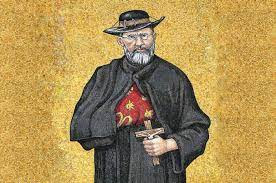
Saint Damien of Moloka‘i, for example, who spent so many years among the lepers of Hawai‘i, said,

I find my consolation in the one and only companion who will never leave me, that is, our Divine Savior in the Holy Eucharist. . . .It is at the foot of the altar that we find the strength necessary in this isolation of ours. Without the Blessed Sacrament a position like mine would be unbearable. But, having Our Lord at my side, I continue always to be happy and content. . . . Jesus in the Blessed Sacrament is the most tender of friends with souls who seek to please Him. His goodness knows how to proportion itself to the smallest of His creatures as to the greatest of them. Be not afraid then in your solitary conversations, to tell Him of your miseries, your fears, your worries, of those who are dear to you, of your projects, and of your hopes. Do so with confidence and with an open heart.


These are deeply moving words that I pray each of us will come to understand and imitate through our own deepening love of the Eucharistic Lord.


Today, the Church in these United States of America embarks upon a three year Eucharistic Revival, promoted by the Bishops. This first year is the Diocesan phase, followed next year by the parish phase, and followed the year after by the national phase. Our own Diocese of Springfield in Illinois had already been planning a Year of the Eucharist, beginning with the Solemnity of the Immaculate Conception on December 8th. In these days of revival, let us beg the Lord Jesus to help us deepen our love for him in the Eucharist so that we, too, with the Saints, may be satisfied by him of earthly and heavenly desires. Amen.


[1] Catechism of the Catholic Church, 1333.

[2] Saint Augustine of Hippo, On Christian Doctrine, 21.45.

[3] Ibid., City of God, 16.22.

[4] Saint John Chrysostom, Homilies on Genesis, 35.16.

[5] Saint Augustine of Hippo, City of God, 16.22.

[6] cf. Catechism of the Catholic Church, 1333.

[7] Ibid., 1334.

19 June 2014

The Eucharist: Christ's Goodness, Humility, Generosity, and Love

Church of St. John the Baptist, Quincy, Illinois
Among all the memorable events of Christ's life, the most worthy of remembrance is that last banquet, the most sacred supper. Here not only the paschal lamb was presented to be eaten but also the immaculate Lamb, who takes away the sins of the world (John 1:29). Under the appearance of bread having all delight and the pleasantness of every taste (Wisdom 16:20), he was given as food. In this banquet the marvelous sweetness of Christ's goodness shone forth when he dined at the same table and on the same plates with those poor disciples and the traitor Judas. The marvelous example of his humility shone forth when, girt with a towel, the King of Glory diligently washed the feet of the fishermen and even of his betrayer. The marvelous richness of his generosity was manifest when he gave to those first priests, and as a consequence to the whole Church and the world, his most sacred body and his true blood as food and drink so that what was soon to be a sacrifice pleasing to God and the priceless price of our redemption would be our viaticum and sustenance. Finally the marvelous outpouring of his love shone forth when, loving his own to the end (John 13:1), he strengthened them in goodness with a gentle exhortation, especially forewarning Peter to be firm in faith and offering to John his breast as a pleasant and sacred place of rest.

O how marvelous are all these things,
how full of sweetness,
but only for that soul
who, having been called to so distinguished a banquet,
runs
with all the ardor of his spirit
so that he may cry out
with the Prophet:
As the stag longs for the springs of water
so my soul longs for your,
O God (Psalm 41:2)

- Saint Bonaventure

15 June 2009

Homily - 14 June 2009

Below is the homily I preached yesterday morning, a reworking of Saturday evening's homily.
The Solemnity of Corpus Christi (B)

“How shall I make a return to the Lord for all the good he has done for me” (Psalm 116:12)? These words of the Psalmist have long resounded in my heart and soul.

My friends, do you know what it is that the Lord has done for you? We cannot come before him grateful hearts, we cannot fully unite ourselves with this Eucharist, with this act of thanksgiving, unless we have recognized the good deeds the Lord has done for us.

The passage from the Book of Exodus, which we heard a few moments ago, occurs after the Lord has given the law to Moses. In giving the law, the Lord gives us the path of life, the fullness of joy in his presence (cf. Psalm 16:11). He has given us these signposts, as it were, that lead to authentic freedom, joy and peace, so that we might always know the way that leads to him.

After giving the law, the Lord sealed his covenant with us by the sprinkling of blood, uniting the people to himself and giving them a means to atone for sins.

The reading from the Epistle to the Hebrews reminds us that the Lord Jesus has established a new covenant with us so that we might “receive the promised eternal inheritance” (Hebrews 9:15).

Saint Mark’s account of the institution of the Eucharist at the Last Supper shows us how Jesus established this new covenant with us. In giving his own Body and Blood in the Eucharist the Lord sealed the new covenant with his own blood, “once for all” (Hebrews 7:27). He gave us the Eucharist as “a pledge of this love, in order never to depart from his own and to make them sharers in his Passover,” and as the memorial of his death and Resurrection so that the grace of his sacrifice might be offered to all people.[1] All of this he accomplished when he said to the Apostles, “Do this in memory of me” (Luke 22:19).

My life, as you know, has not always been easy – at times it has been almost unbearable – but I have always been certain of the Lord’s closeness to me. In times of profound grief, of grave illness, of uncertainty; in times of great joy and gladness and gratitude; I have always known the Lord’s abiding presence in the Eucharist. To the tabernacle I have often come seeking solace and strength, joy and peace, and this I have always found, never leaving disappointed. I have not always received the answers I sought, but I have always been calmed by his love.

It is through the Eucharist, which we celebrate today in a particular way on this Solemnity of the Body and Blood of Christ, that we see most clearly “all the good he has done for [us] (Psalm 116:12). The Eucharist is the Lord’s answer to suffering and pain; he does not simply erase it with a brush of his hand; such would be beneath his dignity and unworthy of his love. Rather, he does the inconceivable: he enters into suffering itself, to suffer with us and for us, to give his all for us. He redeems us with his own blood that we might live in and for him. This is true and authentic love; this is the love that is always present with us through the ministry of his priests who are configured to him in such a way as to act in his person; without their ministry there can be no celebration of the Eucharist.

“How shall I make a return to the Lord for all the good he has done for me?” I knew that the Lord asked one thing of me; the gift of my life. Seeing how he had given himself so freely to me, how could I refuse to give myself freely to him?

In the Scriptures I read, “Follow me,” and, “Do this in remembrance of me.” It seemed as though he spoke directly to me. And so I said, “The cup of salvation I will take up, and I will call upon the name of the name of the Lord” (Psalm 116:13). What is this cup of salvation?

It is the same chalice to which he referred when he said to the Apostles James and John, “The chalice that I drink you will drink” (Mark 10:39). Can it be any other than the chalice offered to Christ during his agony in the Garden of Gethsemane (cf. Mark 14:36)? It is his cup of suffering, the cup of his blood, the blood of the new and everlasting covenant. It is the cup of his love, by which he anticipated his death on the Cross. It is this cup that I offered to take up, both for my own sanctification and for that of others, in keeping with his will.

I sensed that the Lord wanted to use me to make his presence known in the sacraments and there was no other response I could offer.

He continues to call men to share in his priestly ministry, to take up the cup of salvation, and, indeed, we need such priests. We need men of courage and faith to heed his command to make bring the Eucharist to every part of the world. If those whom he calls would answer in faith and offer themselves for his service, I daresay we would have no parish without a priest.

On Friday, Holy Mother Church will observe the Solemnity of the Sacred Heart of Jesus, which is intimately connected with the Eucharist. It is from his pierced heart that “blood and water” flowed, symbolizing Baptism and the Eucharist (John 19:34).

On the same day, Pope Benedict XVI will open a special Year for Priests, coinciding with the 150th anniversary of the death of Saint John Mary Vianney, the patron saint of parish priests. This special year, which is meant to encourage priests to strive for spiritual perfection, will conclude one year from Friday.

If you love the Eucharist, my friends, if you cherish this priceless treasure which the Lord has left to his Church, pray for your priests, that we might grow daily in holiness and allow the Lord to mold our hearts ever more closely to his own. Pray that we will recognize more and more that “God is the only treasure which ultimately people desire to find in a priest.”[2] Pray, then, that we will be holy and bring the Eucharist to you with reverence and love, that we will allows keep our vows to the Lord in the presence of his people (cf. Psalm 116:18).

Pray, too, that more young men will hear the call of the Lord and take up the cup of salvation in his service. Pray that young men will open their hearts to the Lord, recognize his goodness toward them and respond with generous hearts that his abiding presence may be brought to all people.

Let each of us approach our Eucharistic Lord this day with humble adoration, grateful for his goodness to us, that we might know the fullness of his life and love. Amen.

[1] The Catechism of the Catholic Church, 1337; cf. 1363-1364.
[2] Pope Benedict XVI, Address to the Congregation for Clergy, 16 March 2009.

13 June 2009

Homily - 14 June 2009

Here is the homily I preached this evening. I'm not quite happy with it yet and I'm thinking of focusing more on the Psalm in the morning.

The Solemnity of Corpus Christi (B)

The readings present for us today two covenants, the first a foreshadowing and the second the fulfillment of the first. The first was sealed with the blood of bulls; the second with that of the Son of God. Why were these covenants sealed in this way?

It was on Mount Sinai, after the experience of the Exodus from Egypt and after receiving the law from the Lord, that the people answered Moses and the Lord, saying, “We will do everything that the Lord has told us” (Exodus 24:3). They remembered the good deeds he had done for them and responded in kind.

Moses then “took the blood and sprinkled it on the people saying, ‘This is the blood of the covenant that the Lord has made with you in accordance with all these words of his’” (Exodus 24:8). It was the blood that sealed the covenant between God and men.

The Lord then called Moses up the mountain and, after instructing him in the worship of God, gave him the tablets of the Ten Commandments “written with the finger of God” (Exodus 31:18).

Why is this covenant sealed with the sprinkling of blood upon the altar and people? To Moses the Lord said, “For the life of the flesh is in the blood; and I have given it for you upon the altar to make atonement for your souls; for it is the blood that makes atonement, by reason of the life” (Leviticus 17:11).

Nothing more valuable could be given to God than blood, yet the blood of bulls and sheep lacked the power to fully atone for all sins and so had to be offered time and again.

It is against this background that the Lord Jesus gathered in the Upper Room with his Apostles to celebrate the Passover, the Exodus from Egypt. He gave the cup to them, saying, “This is my blood of the covenant, which will be shed for many” (Mark 14:24). With his own blood he seals the new covenant, “once for all,” and gives himself to us that we “may receive the promised eternal inheritance (Hebrews 7:27; 9:15).

In giving us the Eucharist as our food and drink – his very own Body and Blood, Soul and Divinity – the Lord Jesus anticipated his death on the Cross and gave each of us a share in it, not only in his death but also in his resurrection. For this reason he says, “I am the living bread that came down from heaven; whoever eats this bread will live forever” (John 6:51).

In the Eucharist, he has given us “a pledge of this love, in order never to depart from his own and to make them sharers in his Passover,” and as the memorial of his death and Resurrection so that the grace of his sacrifice might be offered to all people.[1] All of this he accomplished when he said to the Apostles, “Do this in memory of me” (Luke 22:19).

Recognizing all that the Lord had done for Israel through the Exodus, the Psalmist asked, “How shall I make a return to the Lord for all the good he has done for me” (Psalm 116:12)? The Apostles, too, asked this question and answered, saying, “The cup of salvation I will take up and I will call upon the name of the Lord” (Psalm 116:13).

The question of the Psalmist is one that has long resounded in my heart: “How shall I make a return to the Lord for all the good he has done for me?” There is precious little I can offer in gratitude to the Lord that compares with his goodness.

My life has not always been easy – at times it has been almost unbearable – but I have always been certain of the Lord’s closeness to me. In times of profound grief, of grave illness, of uncertainty; in times of great joy and gladness and gratitude; I have always known the Lord’s abiding presence in the Eucharist. To the tabernacle I have often come seeking solace and strength, joy and peace, and this I have always found.

The Most Blessed Sacrament of the Altar shows us the tremendous love of God. It is the Lord’s own answer to suffering and pain; he does not simply erase suffering with a brush of his hand; such would be beneath his dignity and unworthy of his love. Rather, he does the inconceivable: he enters into suffering itself, to suffer with us and for us, to give his all for us. He redeems us with his own blood that we might live in and for him. This is true and authentic love; this is the love that is always present with us through the ministry of his priests who are configured to him in such a way as to act in his person; without their ministry there can be no celebration of the Eucharist.

“How shall I make a return to the Lord for all the good he has done for me?” I knew that the Lord asked one thing of me; the gift of my life. Seeing how he had given himself so freely to me, how could I refuse to give myself freely to him?

I heard him say, “Follow me” and “Do this in remembrance of me.” “The cup of salvation I will take up,” I said, “and I will call upon the name of the name of the Lord” (Psalm 116:13). I sensed that the Lord wanted to use me to make his presence known in the sacraments and there was no other response I could offer.

He continues to call men to share in his priestly ministry and, indeed, we need such priests. We need men of courage and faith to heed his command to make bring the Eucharist to every part of the world. If those whom he calls would answer in faith and offer themselves for his service, I daresay we would have no parish without a priest.

On Friday, Holy Mother Church will observe the Solemnity of the Sacred Heart of Jesus, which is intimately connected with the Eucharist. On the same day, Pope Benedict XVI will open a special Year for Priests, coinciding with the 150th anniversary of the death of Saint John Mary Vianney, the patron saint of parish priests. This special year, which is meant to encourage priests to strive for spiritual perfection, will conclude one year from Friday.

If you love the Eucharist, if you cherish this great treasure which the Lord has left to his Church, pray for your priests, that we might grow daily in holiness and allow the Lord to mold our hearts ever more closely to his own. Pray that we will recognize more and more that “God is the only treasure which ultimately people desire to find in a priest.” Pray, then, that we will be holy and bring the Eucharist to you with reverence and love, that we will allows keep our vows to the Lord in the presence of his people (cf. Psalm 116:18).

Pray, too, that more young men will hear the call of the Lord and take up the cup of salvation in his service. Pray that young men will open their hearts to the Lord, recognize his goodness toward them and respond with generous hearts.

Let each of us this day approach our Eucharistic Lord with humble adoration, grateful for his goodness to us, that we might know the fullness of life and love. Amen.

[1] The Catechism of the Catholic Church, 1337; cf. 1363-1364.

26 May 2008

Homily - 25 May 2008 - Corpus Christi

“Do not forget the Lord, your God” (Deuteronomy 8:11). These words of Moses need to resound in our ears every day, for we are often quite forgetful of the Lord.

Remembering the Lord of course entails remembering also everything that he has done for us. To remember the Lord is to keep our hearts and minds fixed upon him, to cry out daily to him, “Alleluia!”

We remember the Lord each time we enter a church and genuflect before our Eucharistic King present in the tabernacle. To bend the knee before the Lord is to adore him in true humility, in faith and in love, believing the words which he himself spoke: “I am the living bread come down from heaven; whoever eats this bread will live forever” (John 6:51).

We must be ever cautious that our external actions are not performed in vain. As we fall down before the Lord externally, we must adore him internally, otherwise our worship is in vain. The Lord seeks those who worship him “in spirit and in truth” (John 4:23). We ought, then, to enter the church quietly and reverently, conscious of whose presence it is that we are entering, and we ought to leave in the same way, grateful for this tremendous gift.

There is no finer way to adore the Lord, to remember him, than to gaze in love upon the Eucharist, his very Body and Blood.

Some count us fools for believing that bread and wine are literally changed into the Body and Blood of Christ, and not a mere symbol. Even some among us who have tasted the Bread of Angels have abandoned the Church of Christ and wandered away on paths uncertain.

It has always been thus. Even some who first heard Jesus’ words, “unless you eat the flesh of the Son of Man and drink his blood, you do not have life within you” (John 6:53), abandoned him. They thought he was mad and questioned what he meant, thinking he was speaking with exaggeration. But Jesus did not relent.

He did not turn to symbolic language but rather to more vivid, more descriptive language. He insisted upon that which he had spoken: “my flesh is true food and my blood true drink” (John 6:55). Many could not believe this and abandoned him, saying, “This saying is hard; who can accept it” (John 6:60)?

Jesus does not run after them trying to clarify what he meant; he already made it perfectly clear. Instead, he simply asks, “Does this shock you? …The words I have spoken to you are spirit and life. But there are some of you who do not believe”(John 6:61-64).

It has always been thus. Even some in the time of our beloved patron, Saint Anthony of Padua, found these words of Jesus too difficult to believe. When he was preaching in Rimini, there was a certain heretic with whom Saint Anthony spoke about the Eucharist.

The man was impressed by Saint Anthony’s holiness and learning but nonetheless could not believe that what appeared to be bread and wine was, in reality, the true Body and Blood of Christ. At one point the heretic said to the Saint:

Very well, let’s drop the discussion and see the deeds. If you, Anthony, manage to show me through a miracle performed in front of everyone that this is the body of Christ, I will renounce every heresy and submit myself to the obedience of faith.[1]
Saint Anthony promised to do so. The heretic then gave the framework for the miracle, saying:

I will shut up my donkey for three days until it is all but starved. Three days hence I will bring it out in front of all these people. I will show it its fodder. You stand in front of the animal holding what you claim is the body of Christ. If the animal, starving, ignores the fodder and instead approaches that God Who you say is to be adored by every creature, I will truly believe in the faith of the Church.[2]
Saint Anthony agreed to this and on the appointed day the people gathered to see what might take place.

The heretic, true to his word, brought his starved donkey and placed its food near it. After celebrating Mass in a nearby church, Saint Anthony brought the Eucharist before the people and silently placed it before the donkey in the sight of everyone.

He then said to the donkey, so that everyone gathered could hear:

In the virtue and in the name of your Creator, whom I, even though I am so unworthy, truly hold in my hands, I tell and command you, o animal, to immediately and humbly draw near and offer Him the veneration due Him. Thus these evil heretics will be persuaded that every creature is subject to their Creator, and that priests regularly hold Him in their hands upon the altar.[3]
After Saint Anthony said this, the heretic offered the donkey its food, but it would not eat. The donkey, ignoring the food, recognized its Lord – whom we so often ignore – and bent its head and knelt before the Eucharist. After adoring the Body and Blood of the Lord, the donkey ate its food. This donkey recognized the One who rode that other donkey into Jerusalem (cf. Matthew 21:1-11).

Thus, through the prayer of Saint Anthony and through the miracle that the Lord worked through him, the heretic came to believe in the Eucharist, in the Real Presence of the Lord Jesus Christ.

As it was in the time of the Apostles and in the time of Saint Anthony, so it is today. Too many fail to give the Blessed Eucharist, the Body and Blood of Christ, the adoration and veneration it is due. Too often do we fail to be like that donkey!

Too many among us do not believe in the Real Presence of the Lord in the Eucharist. Too many have tried to tell Jesus what he meant to say rather than take him at his word. Not recognizing what she truly is, too many have abandoned the Church looking for something else that will satisfy their longings, looking for something that will entertain them. They failed to see and to believe that it is the Eucharist, the Body and Blood of Christ himself, that satisfies our deepest longings by uniting us with the Lord.

It must be said that of all of the teachings of Jesus, the Eucharist is perhaps the most difficult to accept. Yet, who am I to judge the words of the Master? Who am I to say that Jesus was mistaken when he spoke so very clearly? Who am I to leave him who died for me? Is it not possible that one who created all things out of nothing by the word he spoke could change something that exists into something else by the words he speaks?

During this Sesquicentennial year, we are given a profound opportunity to renew our faith in the Eucharistic Lord and to approach him in the Sacrament of the Altar with greater vigor and devotion.

When the crowds began to leave, Jesus did not stop them; he did not force them to stay with him but, in his love, he allowed them to choose their way. Afterwards, he gathered the Apostles and asked them, “Do also want to leave” (John 6:68)? Peter answered wisely: “Master, to whom shall we go? You have the words of eternal life” (John 6:69).

Jesus, our Master, will feed us and satisfy all of our hunger. He knows the longings of our hearts and so he can satisfy them for it is truly he whom we desire and he gives himself to us as our food and drink! The donkey recognized his Lord in the Eucharist, but how often do we? Let us not forget the Lord, our God!

Let us be like that donkey and come before the Lord with humble hearts. Let us follow after Saint Anthony and see in the Eucharist our Lord and God. Let us ever seek to be worthy of him whom we receive. By receiving with joy the Eucharistic Lord, may we come to live with him forever. Amen.

[1] Arnaldo de Serranno, The Book on St. Anthony’s Miracles, Jude Winkler, OFM Conv., trans. and Virgilio Gamboso, ed. (Padua, Italy: Messaggero Di Sant’ Antonio – Editrice, 2004), I.3.
[2] Ibid.
[3] Ibid.