Showing posts with label Eucharistic Revival. Show all posts

07 December 2022

Homily - On the Immaculate Conception and the Year of the Eucharist

The Solemnity of the Immaculate Conception

Opening of the Diocesan Year of the Eucharist

Dear brothers and sisters,

As we celebrate this great solemnity of the Blessed Virgin Mary under her title of the Immaculate Conception, we, as a Diocesan Church, are entering into a Year of the Eucharist. This Year of the Eucharist is intended, in part, to commemorate the one hundredth anniversary of the translation of the seat of the Diocese from Alton to Springfield. But, more importantly, it is Bishop Paprocki’s desire that this Year of the Eucharist will strengthen the faithful for humble and courageous evangelical witness in our communities.

It is fitting that we begin this Year of the Eucharist today because, as Pope Saint John Paul II said, “If we wish to rediscover in all its richness the profound relationship between the Church and the Eucharist, we cannot neglect Mary, Mother and model of the Church.”[1] Indeed, “Mary can guide us towards this most holy sacrament, because she herself has a profound relationship with it.”[2]

It is true to say we do not see Mary’s relationship with the Eucharist explicitly stated in the Sacred Scriptures, but it can certainly be deduced from what we find in them. The Evangelists do not tell us Mary was present at the Last Supper but, as a devout Jew, why would she not have been present at the Passover celebrated by her Son? Even if she were not, we know she was present at the early celebrations of the Mass. For example, we know that, after the Ascension of her Son into heaven, the Apostles gathered together for prayer, “together with the women and Mary the mother of Jesus” and that when the early Church gathered, “they held steadfastly to the apostles’ teaching and fellowship, to the breaking of bread and to the prayers” (Acts 1:14; 2:42).

There is, however, a more profound way we can discern the Eucharistic devotion of the Immaculate Conception. The Lord Jesus issued a great command at the Last Supper, one which the Church has never failed to keep: “Do this in memory of me” (Luke 22:19). This word, “do,” is an important one and has a particular meaning we may easily overlook. “In most languages, the word, ‘do, make’ has a wide range of meanings; one of its frequent uses in the Old Testament means to offer sacrifice, as appears in many texts.”[3] As an attentive reader of the Scriptures, Mary would have known this.

When we hear Jesus’ command to “do this in memory of me,” how can we not also hear Mary’s command to “do whatever he tells you” (John 2:5)?

With the same maternal concern which she showed at the wedding feast of Cana, Mary seems to say to us: “Do not waver; trust in the words of my Son. If he was able to change water into wine, he can also turn bread and wine into his body and blood, and through this mystery bestow on believers the living memorial of his Passover, thus becoming the ‘bread of life.’”[4]

Mary’s command always leads us to the command of her Son.

Perhaps even more profoundly, it is not unreasonable to say that “Mary lived her Eucharistic faith even before the institution of the Eucharist, by the very fact that she offered her virginal womb for the Incarnation of God’s Word.”[5] Indeed, Mary was preserved from every stain of original sin from the moment of her conception because God knew she would consent to conceive the Son of God in her womb. As Mary’s obedient faith allowed her to share in the Redemption of her Son even before his death of the Cross, so, too, did she live a Eucharistic faith before the Last Supper.

The great mystery of Christmas, which we will celebrate in a few weeks, is, of course, intimately connected with the mystery of the Annunciation. As we heard in the Gospel today, that was when the Archangel Gabriel told Mary she would conceive the “Son of the Most High” “in the physical reality of his body and blood, thus anticipating within herself what to some degree happens sacramentally in every believer who receives, under the signs of bread and wine, the Lord’s body and blood” (Luke 1:32).[6] Whenever we gather to worship the Eucharistic Lord, “we are asked to believe that the same Jesus Christ, Son of God and Son of Mary, becomes present in his full humanity and divinity under the signs of bread and wine.”[7]

Mary is, for each of us, not only “an advocate of grace,” but also “a model of holiness,” in fact, the greatest model of holiness after her Son.[8] In this Year of the Eucharist, may the Immaculate Conception, patroness of this Diocese, pray for us and teach us anew that the Lord Jesus gave us the Eucharist so that, like Mary’s, our lives might become nothing less than a continual hymn of praise to God in, with, and through, her Son.[9] Amen.


[1] Pope Saint John Paul II, Ecclesia de Eucharistia, 53.

[2] Ibid.

[3] Mitch Pacwa, S.J., The Eucharist: A Bible Study Guide for Catholics (Huntington, Indiana: Our Sunday Visitor, Inc., 2013), 38.

[4] Pope Saint John Paul II, Ecclesia de Eucharistia, 54.

[5] Ibid., 55.

[6] Ibid.

[7] Ibid.

[8] Roman Missal, Preface for the Solemnity of the Immaculate Conception.

[9] Cf. Pope Saint John Paul II, Ecclesia de Eucharistia, 58.

19 June 2022

Homily - The Solemnity of the Most Holy Body and Blood of Christ - 19 June 2022

 The Solemnity of the Most Holy Body and Blood of Christ (C)

Dear brothers and sisters,

It should come as no surprise that “at the heart of the Eucharistic celebration are the bread and wine that, by the words of Christ and the invocation of the Holy Spirit, become Christ’s Body and Blood.”[1] The bread and wine are brought to the altar from the offerings of our lives, all in keeping with the Lord Jesus’ command to “do this in memory of me” (Luke 22:19).

Jesus, of course, did not create his offering of bread and wine from whole cloth, as he it were, which he transformed through the power of his words, into his own Body and Blood. We find a foreshadowing, a prefiguration, of this offering of bread and wine in the Old Testament, beginning with the offering of Melchizedek, who was both priest and king of Salem. Saint Augustine recognized this when he called Melchizedek “a type of Christ.”[2] Indeed, Augustine went so far as to say that Melchizedek offered “the sacrifice which is now offered to God by Christians in the whole wide world…”[3]


Melchizedek is a most mysterious figure. His name means “King of Righteousness,” and, although at that time God had only called Abraham, Melchizedek was not a pagan priest, but a priest of God Most High. In fact, the author of the Epistle to the Hebrews describes him as being “without father, mother, or ancestry, without beginning of days or end of life, thus made to resemble the Son of God, he remains a priest forever” (Hebrews 7:3). For this reason, the author goes on to say that Jesus is a “priest forever, according to the order of Melchizedek” (Hebrews 7:17; cf. Psalm 110:4).

What does it mean, though, to say that Melchizedek is without father, mother or ancestry, without beginning of days or end of life? This seems most strange, unless we remember that Melchizedek is a type, a foreshadowing of Christ. Saint John Chrysostom explains what this means, saying,

Just as Melchizedek is said to have no father or mother on account of there being no mention of his parents and to have no family history on account of there being no history for him, so too Christ, on account of his having no mother in heaven or father on earth, is said to have no family history and in fact has none.[4]

Both of these are marvels for us, but it is good for us to marvel at the ways of God.

What does it mean when the Epistle to the Hebrews speaks of Jesus, quoting the Psalm, as being a priest forever, according to the order of Melchizedek? Saint Augustine explains that Jesus is a priest forever, “not after the order of Aaron, for that order was to be taken away when the things shone forth that intimated beforehand by these shadows,” which is to say that the priesthood of Aaron was brought to its fulfillment in the self-offering of Jesus to the Father on the Cross.[5]

Through his offering of bread wine, Melchizedek blessed God on behalf of Abraham and blessed Abraham on behalf of God. His offering of bread and wine presage the Eucharist, by which God blesses us through his priests and we bless God through his priests.[6]

The Old Testament roots of the Eucharist, however, do not end with Melchizedek. Bread and wine

…received a new significance in the context of the Exodus: the unleavened bread that Israel eats every year at Passover commemorates the haste of the departure that liberated them from Egypt; the remembrance of the manna in the desert will always recall to Israel that it lives by the bread of the Word of God; their daily bread is the fruit of the promised land, the pledge of God's faithfulness to his promises


The "cup of blessing" at the end of the Jewish Passover meal adds to the festive joy of wine an eschatological dimension: the messianic expectation of the rebuilding of Jerusalem. When Jesus instituted the Eucharist, he gave a new and definitive meaning to the blessing of the bread and the cup.[7]

The Lord Jesus himself foreshadowed his institution of the Eucharist, as we see in the Gospel proclaimed today. His multiplication of the loaves demonstrates the superabundance of the tremendous gift he gave us and entrusted to his Church at the Last Supper.

From these foreshadowings we see that the Eucharist is given to us as a blessing, as a liberation, as sustenance, and as a promise of the life that is to come. Is it any wonder, then, that the saints have so loved the Eucharist, received such solace from the Eucharist, and spoke so movingly about the Eucharist?

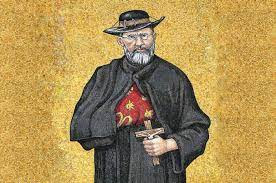
Saint Damien of Moloka‘i, for example, who spent so many years among the lepers of Hawai‘i, said,

I find my consolation in the one and only companion who will never leave me, that is, our Divine Savior in the Holy Eucharist. . . .It is at the foot of the altar that we find the strength necessary in this isolation of ours. Without the Blessed Sacrament a position like mine would be unbearable. But, having Our Lord at my side, I continue always to be happy and content. . . . Jesus in the Blessed Sacrament is the most tender of friends with souls who seek to please Him. His goodness knows how to proportion itself to the smallest of His creatures as to the greatest of them. Be not afraid then in your solitary conversations, to tell Him of your miseries, your fears, your worries, of those who are dear to you, of your projects, and of your hopes. Do so with confidence and with an open heart.


These are deeply moving words that I pray each of us will come to understand and imitate through our own deepening love of the Eucharistic Lord.


Today, the Church in these United States of America embarks upon a three year Eucharistic Revival, promoted by the Bishops. This first year is the Diocesan phase, followed next year by the parish phase, and followed the year after by the national phase. Our own Diocese of Springfield in Illinois had already been planning a Year of the Eucharist, beginning with the Solemnity of the Immaculate Conception on December 8th. In these days of revival, let us beg the Lord Jesus to help us deepen our love for him in the Eucharist so that we, too, with the Saints, may be satisfied by him of earthly and heavenly desires. Amen.


[1] Catechism of the Catholic Church, 1333.

[2] Saint Augustine of Hippo, On Christian Doctrine, 21.45.

[3] Ibid., City of God, 16.22.

[4] Saint John Chrysostom, Homilies on Genesis, 35.16.

[5] Saint Augustine of Hippo, City of God, 16.22.

[6] cf. Catechism of the Catholic Church, 1333.

[7] Ibid., 1334.