Showing posts with label The Hobbit. Show all posts

11 January 2015

Did Frodo foresee Peter Jackson's changes to The Hobbit?

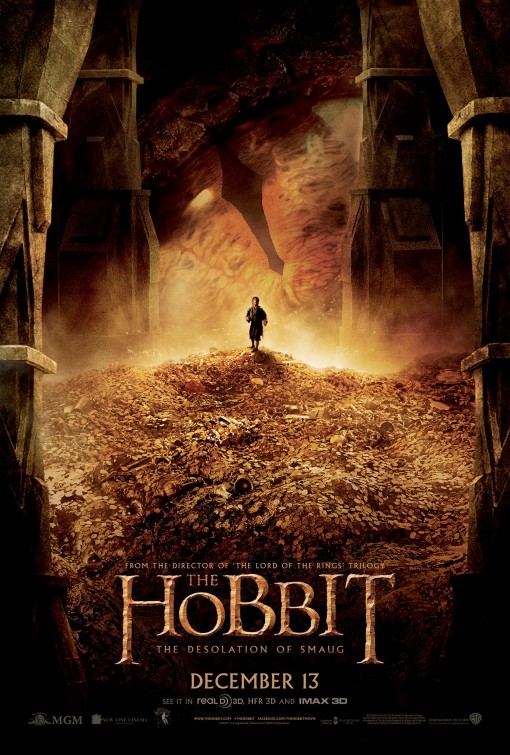
One of the priests living here at the Casa Santa Maria is working his way through J.R.R. epic work, The Lord of the Rings. We've had a few conversations about the brilliance of Tolkien's writings and the importance of his faith and he knows well my thoughts regarding Peter Jackson's cinematic adaption of The Hobbit, especially the changes made in The Hobbit: The Desolation of Smaug.

For this reason, the priest sent an e-mail alerting me to something Frodo says to Gloin - an "amusing line," as he called it - about halfway through the chapter titled "Many Meetings" in Book II of The Fellowship of the Ring:
'I will come and see them [the words of the Dwarves in Dale and under the Mountain], if ever I can,' said Frodo. 'How surprised Bilbo would have been to see all the changes in the Desolation of Smaug!'
Was Frodo something of a prophet?

05 October 2014

Another Reason Why I Love the Internet: Tolkien singing "Chip the Glasses and Crack the Plates"

The Internet surprises me almost every day. This morning it did so on Facebook by suggesting I might like a recording of J.R.R. Tolkien singing a portion of his "Chip the Glasses and Crack the Plates," a song he put in the mouths of the dwarves at Bag End:


I have to say: The Internet was right.

28 April 2014

Thoughts on the title change of Jackons' third Hobbit movie

Sir Peter Jackson recently announced that the third installment of his cinematic adaptation of J.R.R. Tolkien's The Hobbit will no longer be subtitled There and Back Again but The Battle of the Five Armies. Shaun Gunner of The Tolkien Society agrees with this change, as do I (though I think it should be The Battle of Five Armies, without the second unnecessary "the"), and suggests it is partly for the sake of profits, which is likely true.

I knew the The Hobbit: The Desolation of Smaug did well in theaters but not as well as The Hobbit: An Unexpected Journey. Gunner, though, notes something rather important to the movie studio that I had not known before:
This is particularly salient in light of the fact that the second Hobbit film grossed $67 million less than the first (highly unusual in itself), that both films failed to take more at the box office than The Return of the King (and that’s not even factoring in inflation), and that The Desolation of Smaug fell behind Iron Man 3, Frozen and Despicable Me 2 in box office takings for 2013.

Here we have to ask what Gunner did not: Why were the revenues from The Desolation of Smaug so much less than An Unexpected Journey? It cannot be because Tolkien fans no were Tolkien fans; rather, I submit ticket sales were so low because they are more Tolkien fans than Jackson fans.

I am happy to say that I am part of the reason The Desolation of Smaug did not do as well as An Unexpected Journey; the first movie I saw four times in the theater (in a growing attempt to determine if I liked it, which I partly did, given that it is not Tolkien's The Hobbit)  and the second only twice, so greatly did I dislike it; what is more, I own An Unexpected Journey on DVD/Blu Ray, but I have not even considered buying The Desolation of Smaug because it so little resembles the work of the subcreator of Middle-earth.

If the studios, as Gunner suggests, are concerned about increasing their profits, which I'm sure they are, they would do well to convince Jackson to do what he can to repair much of the harm he and his writers did to the story in the many and unnecessary departures from the actual text. The changes, as I wrote in my review, feel forced and contrived and do help but hinder the story. These changes are the reason I only saw the movie twice and never considered buying it.

There is some small hope that The Battle of the Five Armies will more closely resemble the actual story, though it will be impossible to correct the many departures and additions made in the film. If Jackson and company are concerned about their revenue from the third installment, they would do well to heed this advice.

When The Hobbit: The Battle of the Five Armies is released in theatres, I will go see it, more out of some bizarre curiosity than anything else; I have no real confidence in the third installment. However, if it it proves better than the second installment, I may say it more than once.

14 December 2013

A review of The Desolation of Smaug: Middle-earth no longer feels real

Thursday evening, with some trepidation, I watched The Hobbit: The Desolation of Smaug (in English, with Italian subtitles).  If memory serves, the last movie I saw in the theaters before The Desolation of Smaug was The Hobbit: An Unexpected Journey.

Since The Hobbit is my favorite of Tolkien's works, my excitement at the release of An Unexpected Journey was very high, admittedly too high.  Having left An Unexpected Journey both frustrated and angry, I went to see The Desolation of Smaug with one caveat continually running through my mind: This is Jackson's The Hobbit, not Tolkien's.  This remains undoubtedly true for The Hobbit: The Desolation of Smaug; it is Jackon's, not Tolkien's.

The many - and drastic - departures from, and additions to, the story of Tolkien this time did not anger me, in no small part because I had prepared myself and fully expected to become angry (if you love the book, you should do the same); I'm glad I prepared myself so, because I left The Desolation of Smaug feeling somewhere in between disappointment and ambivalence.  I'm not still not sure which it is.

As I ponder my reactions to the film, two thoughts return again and again.  First, it seems to me that Jackson has tried far too hard to directly connect The Hobbit to The Lord of the Rings.  The Desolation of Smaug, when not filled with ridiculous fight scenes, is much darker and more menacing the Tolkien's book, and not for the better.  Much of the menace seems forced, in no small part because it is not present in the book.

Second, when you read the book you know that you are reading fantasy but it feels as though it actually happened, that you are reading a bit of history.  Tolkien's style of writing draws you - gently and with great skill - further and deeper into the story and you feel a personal connection with the characters.  The Desolation of Smaug lacks both this feeling of reality and the personal involement with the story, which results in Middle-earth no longer feeling real.

POTENTIAL SPOILER ALERT:

There is no grace or dignity about the elves of Mirkwood.  Though Tolkien described them as "more dangerous and less wise" than their kin, which the movie notes, he also said they "are not a wicked people," but in The Desolation of Smaug Thranduil seems a wicked king.

The innuendo between Fili and Tauriel does nothing whatever to advance the story, except to drag it further away from the text, and is entirely unnecessary.

This loss is achieved in no small way through the battle sequences.  On the one hand, you have Legolas balancing himself on the heads of two dwarves in two barrels moving in the small rapids of a river as orcs shoot arrows at him and throw themselves at him, yet he never loses his balance.  On the other hand, you have Tauriel - who is herself a complete fiction - single-highhandedly going after a army of orcs without receiving so much as a scratch.  It's all too much and, frankly, borders on the unbelievable and reminded me far too much of Hidden Tiger, Crouching Dragon, which I thought immensely stupid.  If the unbelievability weren't enough, the scene with Bombur in the barrel was simply cartoonish and ridiculous, though enjoyed by the Italian audience.


I was pleasantly surprised to find that the many changes visible in the various trailers were not as horrible as I expected them to be; however, the unforeseen changers in Lake Town and under the Lonely Mountain are so far removed from anything that Tolkien wrote that as I left the theater I actually wondered: Did even 50% of The Desolation of Smaug come from Tolkien?  I don't think so.

To make matters worse, the immense alterations from the text do not actually increase the suspense of the plot, nor are they necessary for dramatic emphasis, as the writers argued with their changes to the text of The Lord of the Rings, most of which I am able to see their point when it comes to a movie version; however, I cannot understand the changes they have chosen to make here.

IT IS NOT ALL BAD

So as not to end on a negative note, I have three positive takeaways from the film.  First, the juvenile humor, so present in An Unexpected Journey is mostly gone from The Desolation of Smaug, with the exception of the innuendo between the elf and the dwarf.

Second, the dragon Smaug has been magnificently rendered and is the best dragon I have ever seen in a movie; he is most impressive and is alone worth the cost of a ticket.

Third, once again, Howard Shore has brilliantly composed the soundtrack of the film and will certainly make our ears glad once again with the forthcoming soundtrack to There And Back Again.

23 November 2012

A few books recalled

Some of you will remember that a short time ago I bought a book simply because the subtitle made me laugh: The Hobbit and Philosophy: For When You've Lost Your Dwarves, Your Wizard, and Your Way.

Despite a promising - and enjoyable - introduction cleverly peppered with many allusions and puns,  the rest of the book really has very little to do with such situations as when you've lost your dwarves, your wizard, or your way.

The book is written by a number of philosophers, nearly all of whom somehow seem not to have noticed that Tolkien's was not only Catholic, but that his faith very much shaped his conception of Middle Earth.  Too much of the book focuses on Taoism and not on Catholicism and so misses the real insights contained with Tolkien's subcreation.

Frankly, I don't really recommend this book to anyone seeking to delve more deeply into Middle Earth.

While I'm reviewing books, let me make a brief mention of two books that the Chancellor, knowing of my love of The Hobbit and The Lord of the Rings, kindly gave to me recently.

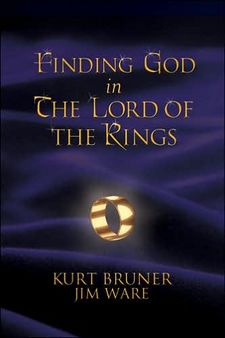
The first is Finding God in the Hobbit by Jim Ware and the second is Finding God in The Lord of the Rings by Kurt Bruner and Jim Ware.

While these took books deal with Christian themes, they also seem to have missed - or perhaps chose to ignore - Tolkien's Catholic faith one.  Bruner and Ware are Christian, but to which they denomination they adhere they give little indication, except for one reference to "Jehovah".

These short books can each be read in the space of an hour.  In both books, the chapters form reflections on a line or two from Tolkien's work.  Beginning first with a recap of the situation surrounding the brief quotation, Bruner and Ware follow the recap with a sort of mini homily and conclude with a "reflection" fit a church marquee.

These two books are not bad, but they are very simple and won't really help anyone delve more deeply in the many insights Tolkien offers us.

Better, I suggest, to stick with Matthew Dickerson's A Hobbit Journey: Discovering the Enchantment of J.R.R. Tolkien's Middle-earth.  Of the books I have read looking at the Christian and philosophical underpinnings of Tolkien's work, it is the best and more insightful.

30 October 2012

Two books on The Hobbit

J.R.R. Tolkien's dislike of allegory is legendary.  In his foreword to the second edition of The Fellowship of the Ring: Being the First Part of the Lord of the Rings, Tolkien wrote:
But I cordially dislike allegory in all its manifestations, and always have done so since I grew old and wary enough to detect its presence.  I much prefer history, true or feigned, with its varied applicability to the thought and experience of readers.
He wrote these words after a great many people were trying to make a one-to-one connection between the reality of our physical world and the world of Middle-earth, making such claims as "the ring is the nuclear bomb" or "the anger of the Ents is against industrialization."

These many years later, some wonder what the difficulty is with such claims.  To these questions, Tolkien responds:
I think that many confuse 'applicability' with 'allegory'; but the one resides in the freedom of the reader, and the other in the purposed domination of the author.
What is more, Tolkien rather bluntly states, "As for any inner meaning or 'message', it has in the intention of the author none.  It is neither allegorical nor topical.  As the story grew it put down roots (into the past) and threw out unexpected branches."  He did not write an allegory, but a feigned history.

Nevertheless, every reader is naturally drawn to connect to the world of Middle-earth and the adventures of hobbits, wizards, men, elves, and dwarfs.  This one Tolkien means by "applicability"; each reader is free to apply the tales to his own day and to read out of them - or into them - what he wishes.

This week I have happily read two new books exploring Middle-earth, both of which seek to apply the lessons of The Hobbit and The Lord of the Rings to our own day.

In a letter written to Father Robert Murray, S.J., who noted a "positive compatibility with the order of Grace" in The Lord of the Rings, Tolkien wrote that "The Lord of the Rings is of course a fundamentally religious and Catholic work; unconsciously so at first, but consciously so in the revision."

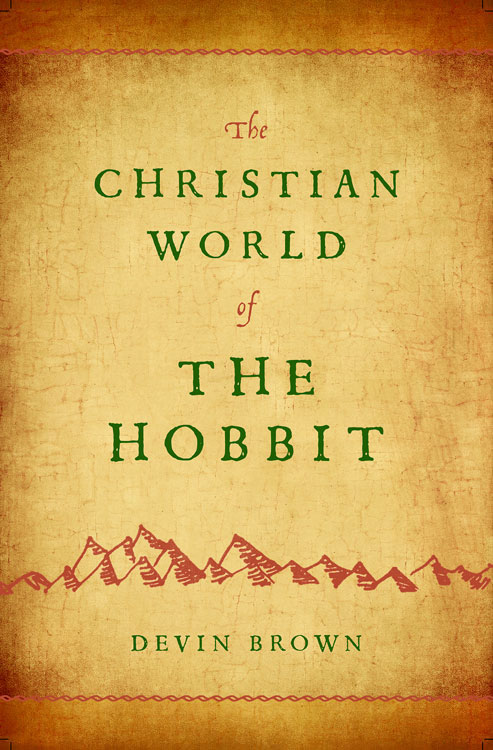
Though he spent only a small amount of time writing about Tolkien's Catholic faith, Devin Brown took this simple statement as the launching point of his The Christian World of The Hobbit.  The book itself is easily suited to a popular audience, even to those who - for whatever unfathomable reason - have not yet read The Hobbit.

In five chapters, Brown leads his readers in a consideration of the workings of grace and morality in The Hobbit, with a particular - and intriguing - focus on the growth of Bilbo Baggins from the moment he left his comfortable Hobbit hole to the moment he returned.

Brown summarizes his thesis in the final chapter of the book, saying,
The Hobbit is both a children's tale and something more.  The Providence, purpose, and morality in The Hobbit go against the grain of the modern mind-set.  In The Hobbit, Tolkien brings his readers into a world filled with meaning and purpose where they find stark contrasts between right and wrong.  The same audience who might scoff at the Christian worldview in a different context find themselves embracing it in The Hobbit.
I suspect he is quite right.

For those looking for a more scholarly exploration of The Hobbit, Matthew Dickerson's A Hobbit Journey: Discovering the Enchantment of J.R.R. Tolkien's Middle-earth provides a great deal of food for thought.

Both books are good, but I enjoyed Dickerson's much more, in no small part because it delves deeper into the morality of Middle-earth.  Exploring such important - and timely - issues as torture and war, freedom and responsibility, Dickerson's oft-repeated refrain is that for Tolkien, a military victory is less important than a moral victory.

In his introduction, Dickerson writes,
This book explores some of those truths that can be glimpsed in Tolkien's very successful works of fantasy literature.  They are truths that are as applicable today as when Tolkien lived and wrote.  The central question this book addresses is, What can we learn from hobbits and from their vision of the Good Life, and how does that apply to our own present situation?  In particular, we will look at the hobbitish pursuit and practice of peace, even in the midst of a world at war.  And we will start with the question of what actions war does or does not justify.
I had a difficult time putting this book down and recommend it highly.

23 June 2011

It's about time!

In case you haven't yet seen this bit of good news, the titles and release dates of Peter Jackson's forthcoming films telling the story of J.R.R. Tolkien's The Hobbit have been announced:

The Hobbit: An Unexpected Journey will be released 14 December, 2012, and
The Hobbit: There And Back Again will be released 13 December, 2013.

Start planning now for the midnight shows!