07 January 2013

Good news on a Monday morning

On his Twitter account, Thomas Peters (@AmericanPapist) passes on this impressive and happy news:

Bp. Paprocki's letter in defense of marriage read over 87,000 times: scribd.com/doc/118848785/… people listen when bishops speak @diospringfield
Please continue to pray for Bishop Paprocki and for our religious liberty.

06 January 2013

Illinois Stories discusses Father Tolton

At a recent dinner, I was told about a recent episode of WSEC's Illinois Stories I somehow missed on the Servant of God Father Augustus Tolton.

You can watch the thirty minute episode for yourselves:


Father Roy Bauer, who has long studied the life of Father Tolton and done much to promote his cause for beatification and canonization, does a fine job discussing the life of the country's first black priest.  Father Bauer is joined by several other people in a series of interviews with Illinois Stories' Mark McDonald in Quincy's Gardner Museum of Architecture.

05 January 2013

Illinoisans, you're about to lose your religious liberty

After President Obama was re-elected to the Presidency of the United States of America I expressed my disappointment and concerns for the future, saying:
As a student of history, what do I see as I look to the coming months and years?
"Gay marriage" is now legal in nine of the fifty States.  The push for its legalization in other States and on a federal level will not end or slow down.
Here in Illinois, we have seen the effects not of legalized "gay marriage," but of civil unions.  After legalizing same-sex civil unions, the State forced Catholic Charities out of foster care and adoptions.  The same has happened in Boston and will continue to happen with increasing speed in other cities and States.
Laws were enacted some years ago to classify certain attacks as "hate crimes," many of which include attacks on those who take part of the gay subculture.  Though such laws have unfortunately not included attacks against people of faith as hate crimes, I do not deny or dispute the good such laws can do.
New laws, however, will soon be enacted that will classify the teachings of the Church on homosexuality, contraception, abortion, and marriage as "hate speech."  Such laws will be the beginning of a concerted and purposed persecution of the Church; the government will seek to silence the Church by removing her pastors.
Once her pastors are silenced or removed, the rights of the Church and of the faithful will be increasingly curtailed and taken away.  Once the freedom of religion is taken away, every other freedom will also be removed.
I know that many of you agree with my concerns.  At the same time, I know that some of you think my concerns unwarranted, far-fetched, and impossible.  This is America, you say, nothing like that can happen here.  History has heard words such as those before and not been impressed.

To illustrate the validity of my concerns, please take the following items into serious and thoughtful consideration.

A clause in the National Defense Authorization Act provides that no military chaplain can be required to perform a ceremony that would violate his (or her) conscience.  This protection presently applies even to called same-sex "marriages."

President Obama claims this clause - which is in keeping with the First Amendment - is "unnecessary and ill-advised" because, he says, this protection is already granted else in military policies.  Such a claim, however, is unconvincing.

Here in Illinois as the legislature prepares to pass the deceitfully named Religious Freedom and Marriage Fairness Act.  Despite weak assurances from Senator Heather Heans (D-Chicago) - one of the bill's two sponsors - that the act protects religious freedom, it actually does not, as Bishop Paprocki recently explained:


In his questions of Senator Heans, Senator Dale Righter (R-Mattoon) also addressed the serious limits this proposed legislation will impose on religious liberty:


The stripping away of our religious liberty begins with the drive to redefine marriage and make it something it is not and cannot be.

Update: When I posted this earlier this morning I knew there was another story I wanted to tie in but I couldn't find it.  Now I have found it.

Following the Holy Father's address to the Roman Curia, an online petition has been started at the White House to "officially recognize the Roman Catholic Church as a hate group."   

Notwithstanding with the inaccurate casting of the words of Pope Benedict XVI, the petition, launched on Christmas Day, has - as of this writing - 1,775 petitions.  If it receives an additional 23,225 by 24 January 2013, the Administration will respond to the petition.

If you think there is not an active movement to completely remove the Church and those who are her faithful sons and daughters from public life, you are woefully blind to the reality around you.

03 January 2013

Same-sex "marriages" to be voted on as amendment to nursing home bill

The Religious Freedom and Marriage Fairness Act is far more devious and deceptive than I ever imagined.

Today the Illinois Senate Executive Committee will hear the testimony (live feed here) of His Excellency the Most Reverend Thomas John Paprocki concerning the Religious Freedom and Marriage Fairness Act, but this piece of legislation seems not to be an Act in its own right.

Today the Senate is expected to hear and vote on House Bill 5655, the Nursing Home Care Act, which was reassigned to the Executive Committee.

On January 2, 2013, Senator Heather A. Stearns (D-Chicago) proposed an amendment to the Nursing Home Care Act, which, according to the language of the amendment, "may be cited as the Religious Freedom and Marriage Fairness Act."

So...the Religious Freedom and Marriage Fairness Act will be voted on as an amendment to the Nursing Home Care Act.  The way in which Stearns and company is going about this is nothing short of nefarious and deceitful.

It clearly shows that they are not really convinced of the moral rightness of their claims or else they would be proceeding in the full light of day.

I'm really quite dumbfounded at all of this.

Paprocki: A more fraudulent title for this dangerous measure could not be imagined

While in a "lame duck" session, the Illinois Senate is prepared to vote on the so-called Religious Freedom and Marriage Fairness Act (we've seen such language before, and it didn't end well), a piece of legislation which has, thankfully, hit a snag, as the State Journal-Register calls it.

It was only two years ago that Illinois lawmakers passed the so-called Religious Freedom Protection and Civil Union Act, a bill which actually granted no real religious freedom and forced Catholic Charities out of foster care and adoption services.

In response to the proposed legislation, His Excellency the Most Reverend Thomas John Paprocki, Bishop of Springfield in Illinois, has written a two-page letter to be read and/or placed in the bulletins of his parishes this weekend.  The text of his letter follows, with my emphases (original):
Dear Brothers and Sisters in Christ,
Our state's elected lawmakers will soon consider a bill called "The Religious Freedom and Marriage Fairness Act."  A more fraudulent title for this dangerous measure could not be imagined.  The proposed law is, in truth, a grave assault upon both religious liberty and marriage.  All people of goodwill, and especially Christ's faithful committed to my pastoral care in the Diocese of Springfield in Illinois, should resolutely oppose this bill and make their opinions known to their representatives.
 The pending bill would, for the first time in our state's history, redefine marriage to legally recognize same-sex "marriages."  But neither two men nor two women - nor, for that matter, three or more people - can possibly form a marriage.  Our law would be lying if it said they could.
The basic structure of marriage as the exclusive and lasting relationship of a man and a woman, committed to a life which is fulfilled by having children, is given to us in human nature, and thus by nature's God.  Notwithstanding the vanity of human wishes, every society in human history - including every society untouched by Jewish or Christian revelation - has managed to grasp this profound truth about human relationships and happiness: marriage is the union of man and woman.
The bill's sponsors maintain it would simply extend marriage to some people who have long been arbitrarily excluded from it.  They are wrong.  The pending bill would not expand the eligibility-roster for marriage.  It would radically redefine what marriage is - for everybody. 
It would enshrine in our law - and thus in public opinion and practice - three harmful ideas:
  1. What essentially makes a marriage is romantic-emotional union.
  2. Children don't need both a mother and father.
  3. The main purpose of marriage is adult satisfactions.
These ideas would deepen the sexual revolution's harms on all society.  After all, if marriage is an emotional union meant for adult satisfactions, why should it be sexually exclusive?  Or limited to two?  Or pledged to permanence?  If children don't need both their mother and father, why should fathers stick around when romance fades?  As marriage is redefined, it becomes harder for people to see the point of these profoundly important marital norms, to live by them, and to encourage others to do the same.  The resulting instability hurts spouses, but also - and especially - children, who do best when reared by their committed mother and father.
Indeed, children's need - and right - to be reared by the mother and father whose union brought them into being explains why our law has recognized marriage as a conjugal partnership - the union of husband and wife - at all.  Our lawmakers have understood that marriage is naturally oriented to procreation, to family.  Of course, marriage also includes a committed, intimate relationship of a sort which some same-sex coulples (or multiple lovers in groups of three or more) could imitate.   But our law never recognized and supported marriage in order to regulate intimacy for its own sake.  The reason marriage is recognized in civil law at all (as ordinary friendships, or other sacraments, are not) is specific to the committed, intimate relationships of people of opposite-sex couples: they are by nature oriented to having children.  Their love-making acts are life-giving acts.
Same-sex relationships lack this unique predicate of state recognition and support.  Even the most ideologically blinded legislator cannot change this natural fact: the sexual acts of a same-sex couple (regardless of how one views them morally) are simply not of the type that yield the gift of new life.  So they cannot extend a union of hearts by a true bodily union.  They cannot turn a friendship into the one-flesh union of marriage.  They are not marital. This is not just a Christian idea, but one common to every major religious tradition and our civilization's great philosophical traditions, beginning with ancient Greece and Rome.
The pending bill is not only a dangerous social experiment about marriage.  It is also a lethal attack upon religious liberty.  This so-called "religious freedom" would not stop the state from obligating the Knights of Columbus to make their halls available for same-sex "weddings."  It would not stop the state from requiring Catholic grade schools to hire teachers who are legally "married" to someone of the same sex.  This bill would not protect Catholic hospitals, charities, or colleges, which exclude those so "married" from senior leadership positions.  Nor would it protect me, the Bishop of Springfield, if I refused to employ someone in a same-sex "marriage" who applied to the Diocese for a position meant to serve my ministry as your bishop.  This "religious freedom" law does nothing at all to protect the consciences of people in business, or who work for the government.  We saw the harmful consequences of deceptive titles all too painfully last year when the so-called "Religious Freedom Protection and Civil Union Act" forced Catholic Charities out of foster care and adoption services in Illinois.
These threats do not raise a question about drafting a better law, one with more extensive conscience protections.  There is no possible way - none whatsoever - for those who believe that marriage is exclusively the union of husband and wife to avoid legal penalties and harsh discriminatory treatment if the bill becomes law.  Why should we expect it be otherwise?  After all, we would be people who, according to the thinking behind the bill, hold onto an "unfair" view of marriage.  The state would have equated our view with bigotry - which it uses the law to marginalize in every way short of criminal punishment.
The only way to protect religious liberty, and to preserve marriage, is to defeat this perilous proposal.  Please make sure our elected representatives understand that and know that they will be held to account. 
Sincerely yours in Christ,
/s/ Most Reverend Thomas John Paprocki
Bishop of Springfield in Illinois
We can be certain of this: If this bill passes and is signed into law, it will only be a matter of time - and not a long one - before our belief that marriage can only exist between a man and a woman will be criminalized.
Please, contact your representatives and pray for Bishop Paprocki.

02 January 2013

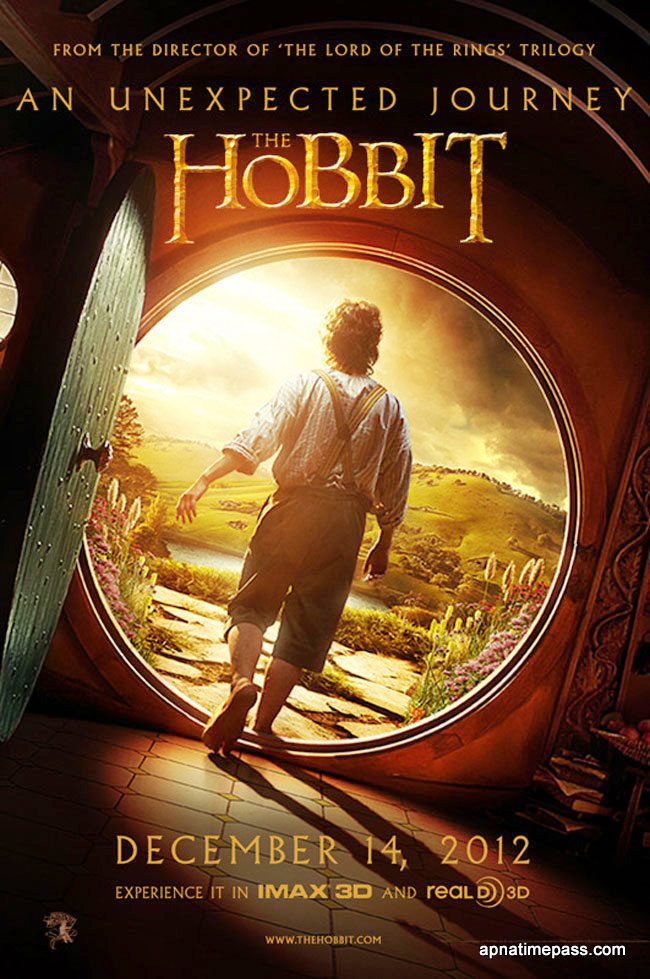
A Review of The Hobbit: An Unexpected Journey

Over the past several weeks many of you have asked my opinion of Peter Jackson's recently released The Hobbit: An Unexpected Journey.

Naturally, I saw the film at the opening show and spent most of the movie both frustrated and angry.  Consequently, I have thus far refrained from offering my thoughts because I realized fairly quickly that my expectations were perhaps too high.  This is a common problem with me and I'm told I would be much happier if I simply lowered my expectations of myself and of others (but that isn't likely to happen).

Be that as it may, I wanted to wait until I saw the film a second time, with my expectations lowered, before offering a review of the first of Jackson's three-part installment of the journey of Bilbo Baggins.

Let me begin by saying that if you have not read J.R.R. Tolkien's The Hobbit, or at least did not read it attentively, you will very much enjoy An Unexpected Journey (unless you somehow missed the fact that this is only part one of three).  The acting, the costumes and sets, the CGI, and the cinematography all combine in a glorious fashion.  Let me also say that the soundtrack composed by Howard Shore is, once again, superb.

Jackson's An Unexpected Journey has a decidedly different feel than his trilogy of the Lord of the Rings.  Precisely what this different feel is, I cannot say, except that it feels somehow heavier and more serious.

Whereas the first part of Tolkien's book has a certain whimsical feel, Jackson's movie is missing this same whimsy.  Attempts are made to insert it in different spots throughout the film, though they don't seem as effective as Tolkien's original and feel somewhat forced.

For whatever reason, Jackson and his team made several changes to the story that, to my mind, do not help the movie but will only serve to frustrate Tolkien fans.  While I acknowledge the team did the same with the Lord of the Rings, the changes to The Hobbit are more noticeable to me - and more substantial - perhaps because it is my favorite of Tolkien's books.  I probably shouldn't have re-read the book the week the movie was released (I clearly didn't learn my lesson with Prince Caspian).

For instance, in the book, Bilbo is surprised and flustered when the Dwarves begin arriving, but in the movie he seems angry from the very moment the first dwarf arrives.  Tolkien writes of Bilbo, "He had a horrible thought that the cakes might run short, and then he - as the host: he knew his duty and stuck to it however painful - he might have to go without."  This sense of honor is somewhat lacking in the depiction of Bilbo in the film.

Several scenes in the movie were significantly altered from those in book: the trolls (how they are turned to stone), for one, and the wargs (which makes Bilbo more heroic than he was at that moment), for another, and the arrival of Thorin (which doesn't really have any impact), for a third.

In terms of the flow of a movie, particularly for those not familiar with the book, I can understand why such changes were deemed appropriate (though I do not like them).  One change I do not understand is the lack of colored hoods belonging to the dwarves (Tolkien goes to great length to point them out).

Some scenes in the film seem to have been shot for no other reason than to impress audiences watching in 3-D (the encounter with the stone giants and the escape from the tunnels of the Great Goblin, come to mind).

All that being said, I did enjoy the movie on the second viewing and expect I'll enjoy it all the more with a third viewing.

By far, the best scene in the film was Riddles in the Dark (though a riddle was curiously omitted). The CGI begind Gollum is a visual treat, stunning and captivating, and the way the riddles were asked and answered was simply brilliant, a job very well done.

Some have said the movie is too long.  I do not think it is too long, but an intermission would be helpful; movie theatre seats aren't the most comfortable things around, but then, as Tolkien would say, "adventures are not all pony-rides in May sunshine."

While The Hobbit: An Unexpected Journey isn't what I had hoped it would be - perhaps unreasonably - it is a good film and I look forward to watching The Hobbit: The Desolation of Smaug and The Hobbit: There and Back Again.

The movie, as someone has said, is not Tolkien's The Hobbit, but rather Jackson's The Hobbit.  Be that as it may, Jackson's film is leading me once again back into the book, which is no small gift or treat.

01 January 2013

Homily - 1 January 2013


The Solemnity of the Blessed Virgin Mary, the Mother of God

Dear brothers and Sisters,

Saint Francis of Assisi loved the Blessing of Aaron, which was proclaimed to us in the first reading from the Book of Numbers.  In September of 1224, Brother Leo, one of Saint Francis’ closest collaborators, found himself very much ill at ease with some sort of spiritual temptation.  He longed to ask Saint Francis, who was making a solitary retreat at the time, for a few words from Scripture to comfort him and ease his temptation.

By the grace of God, Saint Francis became aware of Brother Leo’s desire and called for him to bring paper and ink.  On one side, Saint Francis wrote his Praises of God and on the other side he wrote the Blessing of Aaron, which he concluded, “May the Lord bless you, Brother Leo.”  Saint Francis then told Brother Leo to “take this little piece of paper and safeguard it diligently until the day you die.”[1]  Upon receiving the parchment Brother Leo’s temptation immediately went away and many miracles were worked through the parchment.  To this day, it is kept in the Basilica of St. Francis in Assisi.

Saint Francis gave to Brother Leo a blessing for peace.  Do you and I not also desire the same blessing?  We know that, as Pope Benedict XVI observed in his message for this 46th World Day of Peace, “In every person the desire for peace is an essential aspiration which coincides in a certain way with the desire for a full, happy, and successful human life.”[2]  Is this not why we have come today, to beg from the Lord the blessing of peace upon the New Year?

The peace for which we long is to be found where Brother Leo found peace: in the face of God; the Lord turned his face toward him and he found peace.  In the midst of these Christmas days we recall the words the Lord addressed to the Apostle Philip: “Whoever has seen me has seen the Father” (John 14:9).  So it is that today we make the words of the Psalmist our own: “May he let his face shine upon us” (Psalm 67:2).  At the conclusion of the Octave of Christmas as we celebrate this  Solemnity of the Blessed Virgin Mary, the Mother of God, we, too, wish to see the “infant lying in the manger,” to see the face of God himself (Luke 2:16).

We know that Mary welcomes us to the manger so that we may look with her in wonder upon her Holy Child who is our peace (cf. Ephesians 2:14).  She shows us her Son and urges us to open ourselves completely to him, to welcome the gift of faith he gives, and to trust in him.


 In the Child of Bethlehem, we see the strength of God.  He is strong enough to become small.  The infant Son invites us, from the manger, to open ourselves to him, to receive the gift of his love, and to give him the gift of our love.  Standing or kneeling before him, we are free to love him or to reject him; the choice is ours.  If we love him, we receive peace; if we reject him, we reject peace.

The more we open ourselves to him and put our trust in him, by his grace he helps us “to live every situation of life in peace and in the assurance of his faithfulness and of his love.”[3]  It was in his abiding presence that Brother Leo found his peace and if we turn to him we, too, will find our peace.

We often think of the Birth of the Savior as a calm and serene moment, a silent night, as it were.  But stresses must surely have abounded that night as Mary and Joseph sought a place to stay and for the Child to be born.  It will not be long before they must flee with the Child to escape the jealous wrath of King Herod.  Yet in all of this, Mary and Joseph themselves seem to be calm and at peace.  How is this possible?

Not very long ago Pope Benedict XVI reflected on this very question.  In answer, he said:

There is an underlying attitude Mary assumes in the face of what happens in her life.  At the Annunciation she is disturbed by hearing the angel’s words – it is the fear a person feels when touched by the closeness of God – but it is not the attitude of those who are afraid in front of what God may ask.  Mary reflects, she ponders the meaning of this greeting (cf. Luke 1:29).  The Greek word used in the Gospel to define this “reflection”, “dielogizeto”, evokes the root of the word “dialogue”.  This means that Mary comes into intimate dialogue with the Word of God that has been announced, she does not consider it superficially, but pauses, she lets it penetrate her mind and her heart to understand what the Lord wants from her, the announcement’s meaning.  We find another hint of Mary’s interior attitude in front of the action of God, again in the Gospel of St. Luke, at the time of the birth of Jesus, after the adoration of the shepherds.  Luke affirms that Mary “treasured all these words and pondered them in her heart” (Luke 2:19), in Greek the term is symballon, we could say that she “held together”, “put together” in her heart all the events that were happening; she placed each single element, every word, every fact within the whole and compared it, guarded it, recognizing that every comes from the will of God.  Mary does not stop at a first superficial understanding of what happens in her life, but is able to look deeper, she allows herself to be questioned by the events, processes them, discerns them, and gains that understanding that only faith can provide.  It is the profound humility of the obedient faith of Mary, who welcomes into herself even what she doe not understand of the action of God, leaving it to God to open her mind and heart.[4]

Is this not why we have come to the altar of God today at the close of an old year and the beginning of a new year?  We long for peace and we know in the depths of our hearts that we will only find it in the Son of Mary.

If Mary is the Mother of Jesus and we are members of his Body, which is the Church, then Mary is also our Mother, and we would do well to follow her example (cf. Colossians 1:18).  We, too, must seek to place the events of the past year within the whole of our lives.  We must not stop at a superficial glance back over the year, but must truly spend time prayerfully considering, delving deep in the events and the words, questioning them and allowing them to question us.  We, too, must seek, with true sincerity, the understanding that only faith can give.

This will require us to be still, to be silent, to spend time with her Son and to truly be open to him.  We must open every aspect of our lives to him and beg him to turn his face toward us, even as we turn our faces toward him.  If we live in the light of his countenance we will indeed know peace, even in the midst of the turmoil of this world. This is the lesson we learn from Mary; may it be a lesson we learn well.

In this New Year, may the Lord turn his toward us.  May he bless us and give us peace, that we, with the shepherd, may glorify him and make known the message of his peace (cf. Luke 2:20, 17).  Amen.


[1] Thomas of Celano, Second Life II.22.
[2] Pope Benedict XVI, Message for the 46th World Day of Peace.
[3] Pope Benedict XVI, General Audience Address, 19 December 2012.
[4] Pope Benedict XVI, General Audience Address, 19 December 2012.

Join the Pope in prayer

The Holy See has released the prayer intentions of Pope Benedict XVI for the month of January.  Please, join your prayers to those of the Holy Father:


General Intention: That in this Year of Faith Christians may deepen their knowledge of the mystery of Christ and witness joyfully to the gift of faith in him.

Mission Intention: That the Christian communities of the Middle East, often discriminated against, may receive from the Holy Spirit the strength of fidelity and perseverance.

31 December 2012

What is wrong with the world?

It is said that in reply to the editorial question of a British newspaper, "What's wrong with the world today?" G. K. Chesterton wrote in reply:
Dear Sir,
I am.
Yours, G.K. Chesterton
Whether he actually wrote such a response is not certain, that it is certainly in keeping with his humor and wit.  Regardless of its historical veracity, it is a point well made and too little considered.

From the vantage point of most sacristies, priests very often cannot see what is transpiring in the sanctuary.  Such is the case with the sacristy of the Cathedral of the Immaculate Conception.

Before Mass this morning it seemed to be taking the server an unusually long amount of time to light the candles.  I stepped out of the sacristy - where no one else could see me - to see what became of him and saw him at work with two of the six candles lit.  Thinking nothing of it, I stepped back into the sacristy.

After another space of time and no sign of the return of the server, I again stepped out to check on his progress.  He was gone and four candles remained unlit.  What became of him at that moment I do not know.

I returned to the sacristy, grabbed a book of matches, walked through the sanctuary to the candles and proceeded to light the remaining four candles (which stand taller than the server and can be difficult to light).  As I lit the candles the server did not step back into the sanctuary and I didn't ask after Mass what became of him.

Now, as the server attempted - to the best of his ability - to light the candles, so far as I can tell, not one of the 75 to 100 people in the Cathedral who no doubt watched him struggle in vain to light the candles came forward to offer their assistance in lighting the candles that gave him so much trouble.

This, I submit, is what is wrong with the world.

It may seem a simple thing, but how much love and concern would have been shown the server had someone stepped up to help?  Love is found in the details of everyday life.

Today, as we close out a calendar year and begin a new one, I pose to you this question for your personal consideration and prayer: "Would I have helped the server?"

If your answer - if my answer - comes, in all honesty, in the negative, then, I assert, you - and I - are what is wrong with the world.

If our answer comes in the negative, let us this very day implore the Lord to so mold our hearts after his own that in this new year his love would be made known through our spontaneous, simple,  daily acts of concern, even if they be as humble as helping to light a candle.

29 December 2012

Baby Jesus likes a hymn

Blessed Pope John Paul II used to say, "There are no coincidences, only Providence."

Our annual Christmas gathering with our seminarians and priests began Thursday afternoon and concluded yesterday morning.  As always, it was an enjoyable time and marked with divine grace.

Just before Vespers on Thursday evening, I suggested to the Bishop that we sing Of the Father's Love Begotten for the hymn.  He was unfamiliar with it and asked if I could begin it, which I was glad to be able to do.

As he and I made our to the doors of the chapel, the Director of the Office for Vocations made a brief welcome and began to announce what song we would sing for the hymn. Not having spoken with him about prior to this point (and hadn't spoken with the Bishop about it, either), you can imagine my surprise when he announced that we would sing Of the Father's Love Begotten.

Because the Christ-Child seems to enjoy the hymn so much, I offer it to you today for your enjoyment:


24 December 2012

Illinois legislators to vote on same-sex "marriage"

On December 1, 2010, the Illinois House of Representatives approved SB 1716, the so-called Religious Freedom Protection and Civil Union Act even though all of the "protections" granted to civil unions were already legally available to those who sought them; all that was needed to obtain them was a little simple paperwork.

The next day the Illinois Senate approved the same legislation, which Governor Quinn signed into law on January 31, 2011.

When the law passed we were told it would not impact religious organizations, yet it was the same legislation that forced Catholic Charities our of their work with foster care and adoptions.

If you recall, the Religious Freedom Protection and Civil Union Act - which has not actually granted any religious freedom but took it away - was passed in a "lame duck" session, with at least once Senator (Deanna Demuzio) changing her mind the morning of the vote, from against the bill to support of it; she had already lost her bid for re-election and so had nothing to lose (this was the only way the bill would pass).

Now, rather quietly and quickly (just as before) the Illinois House of Representatives is preparing to vote on HR 5170 - sponsored by two democrats from Chicago - which aims to legalize same-sex "marriage".  The vote is likely to take place in another lame duck session, January 2-8, 2013.

If the sponsors and supporters of this legislation are so convinced of the moral rightness - as they no doubt claim - why do they not propose the legislation when their re-election is at stake?

HR 5170 is called the Religious Freedom and Marriage Fairness Act.  As before, if you think the legislation will actually grant any freedom of religion, you are foolish and blind to the lessons of the past.

The Catholic Conference of Illinois has created a web site to help people of good will oppose the proposed legislation and to defend the reality of marriage.

What must be remembered is that marriage existed before the Catholic Church and before any State.  Therefore the State has no right or authority to change or alter the definition of marriage.  It really is that simple.

Yesterday the Chicago Tribune ran a story noting that more than 250 clergy - mostly from Chicago - support the Religious Freedom and Marriage Fairness Act.  The article quotes a statement from these clergy that reads, in part, "We believe all Illinois couples should have the same civil protections and urge our public officials to support measures to achieve equality."  This statement alone shows the ignorance of these clergy when it comes to the law.  The Religious Freedom Protection and Civil Union Act has already granted the same civil protections now demanded.  

What the article does not say is how many clergy oppose the legislation.

Please, contact your Illinois Representative and Senator and ask them to oppose the Religious Freedom and Marriage Fairness Act, or any similar legislation.

23 December 2012

Passing on the news

From time to time I stumble on a news article that I think Bishop Paprocki would be interested in.  Most of these articles are online so I print them for him and leave them in his box here at the Cathedral rectory.

Every now and again Bishop Paprocki stumbles on a news article that he thinks I would be interested in.  Most of these articles are in physical newspapers so he leaves them for me in my box here at the Cathedral rectory.

When I returned to the Cathedral this afternoon, he left this article in my box:


This is simply one of the many reasons I'm glad to have Bishop Paprocki as our Bishop.

Advent hospitality

As the last violet candle is lit around our wreaths on this Fourth Sunday of Advent, we hear Saint Luke's account of the Blessed Virgin Mary's visit to Elizabeth who is now sixth months pregnant.

Today, after the public recitation of the Angelus, Pope Benedict XVI reflected on the mystery of the Visitation and what it means for us, saying:
The scene of the Visitation also expresses the beauty of hospitality: where there is mutual welcome, listening, making room for the other, God is present with the joy that comes from him. Let us imitate Mary in the Christmas season, visiting those who are in difficulty, especially the sick, prisoners, the elderly and children. And let us also imitate Elizabeth who welcomes the guest as God himself: unless we desire him we will never know the Lord, unless we expect him, we will never meet him, unless we seek him, we will never find him. With the same joy as Mary, who hastens to Elizabeth (cf. Luke 1:39), we too go out to meet the Lord who comes.
In these last two days before the celebration of the Birth of the only Savior of all mankind we will have many opportunities to visit those who are in one difficulty or another.  As we go about our final preparations, let us do so with joy as we anticipate the coming Feast.

Credit where credit is due

In the past I have criticized several pieces Nicole Winfield has submitted to the Associated Press because of the distortions presented in her writing.

With this backdrop I was quite surprised yesterday to read Winfield's fair report in her AP article titled "Pope stresses family values as gay marriage gains".

What particularly surprised was Winfield's summary of teachings of the Church about homosexuality.  She writes:
Church teaching holds that homosexual acts are "intrinsically disordered," though it stresses that gays should be treated with compassion and dignity.
I don't spend a lot of time reading secular news stories about the Church, but this is the first time I remember seeing a reporter mention the second half.

Although it would have been good to have this mentioned earlier than half-way through the article, I commend Ms. Winfield for an improvement in her coverage of the Church.

19 December 2012

Well here comes Christmas

As I would reckon the passage of time, this Advent season seems to have flown by all too quickly leaving me some bereft of the usual increased joy and hope that the season brings.

With the various stresses and busyness of the past few weeks, Christmas seems to have just popped up and is now just around the corner.  Indeed, it caught me quite by surprise - somehow - on Monday that Christmas is next week already (I hope you aren't caught quite as unawares as I was).

In a letter written to his Michael on 19 December 1962, J.R.R. Tolkien wrote:
Well here comes Christmas!  That astonishing thing that no 'commercialism' can in fact defile - unless you let it.  I hope, my dearest, that it will bring you some rest and refreshment in every way, & I shall remember you in communion (as always but especially) and wish that I had all my family beside me in the ancient patriarchal way!
Yes, indeed: Here comes Christmas, less than a week away.  Am I ready to celebrate it with the proper joy and enthusiasm the great solemnity deserves?  Not yet, but I hope soon to be.  I want to recover the simple Christmas joy of my youth, the sheer wonder of it all.  Are you ready?

That important phrase from Tolkien's letter - unless you let it - is one that each of us should dwell on in the coming days.  The stresses and busyness - the shopping and wrapping and writing and baking and cleaning and decorating and visiting and shoveling (soon to come) and what not - need not distract us or weigh us down - unless we let them.

If we keep our focus we will be able to truly sing with the Psalmist: "O God, you have taught me from my youth, and till the present I proclaim your wondrous deeds" (Psalm 71:17).

16 December 2012

The Pope is with us

In the midst of the unspeakable tragedy that occurred Friday morning in Newtown, Connecticut, His Holiness Pope Benedict XVI spoke directly to American pilgrims in Rome today following his Angelus address.  In said:
I greet all the English-speaking pilgrims and visitors present at today’s Angelus. I was deeply saddened by Friday’s senseless violence in Newtown, Connecticut. I assure the families of the victims, especially those who lost a child, of my closeness in prayer. May the God of consolation touch their hearts and ease their pain. During this Advent Season, let us dedicate ourselves more fervently to prayer and to acts of peace. Upon those affected by this tragedy, and upon each of you, I invoke God’s abundant blessings!
You can listen to his words here.

These words of the Holy Father come after the following telegram was sent by His Eminence Tarcisio Cardinal Bertone, Secretary of State, to the Diocese of Bridgeport:
The Holy Father was promptly informed of the shooting at Sandy Hook Elementary School in Newtown and he has asked me to convey his heartfelt grief and the assurance of this closeness in prayer to the victims and their families, and to all affected by the shocking event. In the aftermath of this senseless tragedy he asks God, our Father, to console all those who mourn and to sustain the entire community with the spiritual strength which triumphs over violence by the power of forgiveness, hope and reconciling love.
In our confusion and pain, the closeness of the Holy Father, and of many men and women of good will, both those within and without the communion of the Church, are a source of comfort.
Eternal rest grant unto them, O Lord, and let perpetual light shine upon them.  May they rest in peace!

12 December 2012

The Pope's first tweet

Today the Holy Father Pope Benedict XVI sent his first message via Twitter to nearly one million "followers."  He said, with characteristic humility and simplicity:
"Dear friends, I am pleased to get in touch with you through Twitter. Thank you for your generous response. I bless all of you from my heart."
You, too, can follow the Pope on Twitter @Pontifex.  Later today he will answer a few questions that have been posed to him.

The Holy Father's embrace of the new, social media stands against those who claim the Church is "antiquated" and "out of touch."

How much use the Holy Father will make of Twitter remains to be seen, but given his many messages regarding the importance of the new media and his desire to speak to the entire world - both believers and nonbelievers alike - it seems likely enough it will be frequent.

11 December 2012

What to get your priest for Christmas


Each year it happens that someone asks for suggestions about what gifts would be appropriate to give their priest.  So it is that I once again offer this post, which I have updated slightly from previous years.

N.B.: I am not writing this post as an attempt to receive gifts but as a way of trying to assist people in choosing gifts for their local priest.

I will first offer some thoughts and then make a few suggestions.

First, you have to keep the personality of the priest in mind; not every priest is the same and neither are their interests.

For example, if you want to give your priest a gift certificate to a restaurant, first ask yourself if he goes out to eat. Personally, I rarely go out to eat, both because we have a cook and because it is often difficult to find the time to go out (that, and I like to stay at home, anyway) and, consequently, still have a few certificates given me last year at this time.  Even if your priest does go out to eat, is this a restaurant he either already likes or will like?  You don't want to give him a certificate or card that he won't likely use.

The same might be said with vestments. There are vestments that some priests wear that I'll never touch and there are some vestments that I wear that he'll never touch.

Second, various artworks and knick-knacks are always nice, but keep in mind that the rectory only has so many shelves and blank spots on a wall. At the same time, the more things a priest collects the more things he has to move. Some things priests don't mind moving, other things they do.

Third, homemade holiday treats (cookies, pies, cakes, fruits, etc.) are delicious and always welcome, but check with the secretaries to see how much has already come in. At this time of the year the kitchen counter is most always overflowing with goodies that cannot be eaten because of the sheer quantity.

Now to the suggestions. Some of these are things that I wouldn't mind having myself and some have come from conversations with others priests (I won't tell you which is which):
  • Gas cards
  • Gift cards for oil changes or tire rotations
  • Gift certificates to book stores (Amazon.com, Barnes & Noble, Ignatius Press, etc.)
  • An IOU for baked goods later in the year (just don't forget!)
  • Gift certificates to religious goods stores (both local and on-line)
  • Gift certificates to his favorite restaurant
  • Car wash tokens
  • See if the priest has a wishlist on Amazon.com, Ignatius.com, or other web sites
  • Make a donation in the priest's name to Catholic Charities, Catholic Relief Services, or Peter's Pence
  • Offer a gift for a particular situation in the parish
  • Cash never hurts, either
The above list is certainly not exhaustive and is not meant to discourage you from giving your priest a physical gift. If the list is helpful, use it; if not, ignore it :)

When still in doubt, always check with the secretary to see if she has any ideas. Priests often comment to their secretaries on a variety of issues and you never know what he might have mentioned quite in passing the other day. Astute secretaries are aware of these things.

Brother priests, if there's something missing from this list please leave a comment.  Moderation is enabled.  I will add your suggestion to the list without posting your comment.

10 December 2012

Congratulations, Bishop Vann!

Very shortly His Excellency the Most Reverend Kevin W. Vann will be installed as the fourth Bishop of Orange.

Bishop Vann is a priest of the Diocese of Springfield in Illinois and until recently was the Bishop of Fort Worth.

For those wishing to follow along, Rocco has put up a link to the worship aid and the ceremonies will be live-streamed.

Congratulations, Your Excellency!

The Advent of The Hobbit

Early Friday morning a great length of waiting and anticipation will finally come to an end.  As I think of a late dinner gathering with friends followed by a short journey to the movie theatre, a excitement builds within and - quite contrary to my usual demeanor - is ready to burst forth.

I refer, of course, to the theatrical release of Peter Jackon's The Hobbit: An Unexpected Journey:


This first of three movies will be followed next December by The Hobbit: The Desolation of Smaug and in the summer of 2014 by The Hobbit: There and Back Again.

If memory serves, I first read The Hobbit when I was ten years old and fell in love with Middle-earth, and especially the Shire.  I remember wanting to live in a hobbit hole; when I saw Peter Jackon's The Lord of the Rings: The Fellowship of the Ring and his deciption of a hobbit hole, that desire only increased.

I very much enjoyed Howard Shore's musical compositions and especially those dealing with Hobbiton.  After The Fellowship of the Ring I hoped he would release an album of music from the Shire.  He never did, but he's back with his conductor's baton for the next three movies.

Over the past several weeks I have watched several video clips and read books and articles about The Hobbit.  I have listened the new soundtrack, read Appendix A of the The Lord of the Rings, looked into The Silmarian and have begun to re-read The Hobbit.  I've even had my tickets for about a month now.  You could say I'm ready; I've been ready for a while.

As my anticipation for this film only continues to grow, I cannot help but remember that this is what these Advent days are to be about.  How much greater should my excitement and eagerness be for the return of Christ the King than for the release of The Hobbit?

This morning the Prophet Isaiah cried out:
Strengthen the hands that are feeble,
make firm the knees that are weak,
Say to those whose hearts are frightened:
Be strong, fear not!
Here is your God,
he comes with vindication;
With divine recompense
he comes to save you.
His cries will intensify over the coming days and to his voice the voices of the other prophets will be added. Journeying each day with the Mass readings, and especially through the Liturgy of the Hours, the Church's anticipation will increasing and come to a point of near bursting until at least we arrive at the great feast of Christmas.

How great is your anticipation for the coming of the Lord?  How great is my anticipation?  When he comes, will find us ready, or will he find us excited about other things?

Let us beg of the Lord the grace to deepen our longing for his coming, so that when he comes in his glory the prophet Isaiah may say of us, "They will meet with joy and gladness, sorrow and mourning will flee."

07 December 2012

The Secretary becomes Prefect

This morning the Holy Father Pope Benedict XVI appointed his long-time Personal Secretary, Monsignor Georg Ganswein Prefect of the Pontifical Household, raising him to the dignity of Archbishop entrusted with Titula See of Urbisaglia (it's in central Italy).  Archbishop-elect Ganswein replaces Cardinal Harvey, who was recently appointed Archpriest of the Basilica of Saint Paul Outside the Walls.

Congratulations, Archbishop-elect Ganswein!

06 December 2012

Yes, Virginia, there is a Santa Claus

...but he may not be who you think he is.

Monsignor Charles Pope points us today an excellent piece by Danny Hakim titled, "Poles Apart: Nicholas of Myra and Jolly Saint Nick."

Saint Nicholas of Myra is, of course, the historical basis for the jolly, fat man we know today as Santa Claus, who sneaks down chimneys and leaves presents for good girls and boys.  In exploring the historical reality of Santa Claus, Hakim notes that,

On the one hand, we have the modern Santa, a porcine, jolly man who resides at the North Pole with a woman known only as Mrs. Claus. He has domesticated a stable of nine deer, and enjoys the cheerful services of a retinue of elfin assistants. He is very, very nice to children.  
On the other hand, we have the ancient Santa. Saint Nicholas. Paintings show a thin man. He
was spare of frame, flinty of eye, pugnacious of spirit. In the Middle Ages, he was known as a
brawling saint. He had no particular sense of humor that we know of. He could be vengeful,
wrathful, an embittered ex- con. According to legend, even after death he horsewhipped
someone. Yes, he became the patron saint of children, but his was a promiscuous sainthood.
Over the years, he was also the patron saint of sailors, whores, moneylenders and thieves. No
doubt, Saint Nick was a good man. A noble man. But a hard man. How did time turn him soft?
I encourage you to read the entire article, which provides a good historical background in an humorous and clever manner.

05 December 2012

Miracles do happen

In a skeptical age such as ours we like to think that miracles do not happen, or at least that they do not happen in our own day.

Leonardo Defilippis of St. Luke Productions recently shared a story - connected to my hometown - through his e-mail newsletter that happened on his tour across the nation for his performance of Maximilian: Saint of Auschwitz:
Every performance brings incredible blessings, but we recently had an experience during our South Dakota tour that bordered on the miraculous. To give you a little background, when I returned home from a tour of the Midwest I discovered that an envelope of money, collected from DVD sales in Quincy, Illinois, was missing. In 32 years of touring, this had never happened before! After much searching, we all gave up, deciding it was truly gone. 
More than a week later we arrived in Sioux Falls, South Dakota. Immediately, the parish priest approached me, and placed in my hand the very same missing envelope. Where had he found it? At the foot of the statue of Our Lady of Fatima in the church, where I had never been! There was no logical explanation! We continue to marvel that through whatever means, God confirms his miraculous power [emphases original]. 
If you haven't yet seen Leonardo enacting one of the lives of the Saints, I highly recommend you do so.  He is a very talented actor and a wonderful man of faith.  I remember his performance of St. John Vianney here in Springfield very well and the time I spent visiting with him.  I look forward to being with him again some day.

04 December 2012

On microphones

Not being assigned to a parish I often find myself celebrating the Holy Mass in a variety of churches.  It means - often early in the morning - remembering the differences in set-up at the churches and slight differnces in how things are done, not the least of which are the sound systems.

In his essay "Drop the Mic" in the current issue of First Things, Kevin White notes that "Catholic clergy and laity seem to accept the use of microphones at mass without question as something good," a presumption with which White disagrees.

Consider this observation:
To a member of the congregation, the prayers, the dialogue, the readings, the sermon, and the parish announcements are all emanations from one and the same source, the nearest loudspeaker.  In my pew, I see the priest look towards me, but I hear his voice coming from another direction, that of the loudspeaker.
This experience has always been disconcerting to me.  White continues:
This disparity between the direction of sight and the direction of sound is a cognitive dissonance typical of some of the contemporary events mentioned above [political rallies, concerts, air ports, etc.].  Yet the priest's face and his electronically magnified voice at least agree in both pointing toward me.  But then there is the further, more jarring dissonance between, on the one hand, his facing me and speaking in my direction, and, on the other hand, his addressing God the Father.  It is not easy to construe a voice relentlessly projected at oneself as meant for someone else.
I quite agree.

Contrary to popular belief, in most churches, microphones are not necessary for the priest and the lectors to be heard by the people.  As one case among many, last week I celebrated Mass in a large church in Springfield and for whatever reason the sound system was not working.  From the chair, from the ambo, and from the altar, I simply projected my voice.  The next day, a man who sat in the last pew of the church commented on the homily I preached.

I would be very happy if the microphones in churches were removed, especially because they aren't always very helpful.  People often will complain that they cannot hear the priest when what they really mean is that they cannot understand him.  He speaks too quickly for the sound system.  The natural sound reverberates and collides with the amplified sound and is jumbled.  Most of our churches were never designed for sound systems and most of the sound systems in our churches were never designed for them.

It should also be remembered that "different parts of the Mass callf or different rhetorical attitudes" and this is often lost in the presence of microphones.

02 December 2012

What to learn more about The Hobbit?

This morning I finished reading Corey Olsen's Explore J.R.R. Tolkien's The Hobbit (Boston: Houghton Mifflin Harcourt, 2012), a book he hopes will engage his readers in a conversation that will help them learn more about the world of Middle-earth.

Olsen summarizes the book thus:
This book brings together the lessons I've learned int he classroom, experiences I've had through my podcast, and the love I've always had for Tolkein's work.  There is nothing I enjoy more than walking slowly through a great book with a group of people, taking the time to notice important details and keep track of themes that often slip by when you read on your own.  I hope that you too will enjoy the journey (4).
I, for one, thoroughly enjoyed the journey and felt quite at home and engaged in the classroom of this book.

One by one, Olsen walks us through all nineteen chapters of The Hobbit: Or There and Back Again, not as though taking us by the hand as one would a small child unfamiliar with Middle-earth, but as a companion and friend.

The style of his writing very much feels like a conversation, a dialogue, to which one listens with bent and eager ear.

Of particular interest to me was Olsen's fifth chapter, titled "The Turning Point", in which he explores with a most insightful analysis of the riddle game played between Gollum and Bilbo.  I do not wish to spoil the surprise for you; suffice it to say that he has opened before me an entirely new way of reading the riddles as if opening a window or door onto a wide horizon.

Through his observations, Olsen shows the interior unity of The Hobbit, a unity that might otherwise be overlooked.  His insights easily lead to a deepening appreciation of the beauty and the brilliance of Tolkien's achievement.

01 December 2012

I should leave better notes for myself

This evening as I enjoy a few episodes of Last of the Summer Wine, I'm working on sorting through a few things that have accumulated on my desk over the past week or so.  It's not the most exciting thing to do on a Saturday night, but it has to be done sometime.

Sorting through the various pieces of paper - most of which are easily decipherable - I found a small square of paper on which I have written the following:
St. Al's
No Mass 6:20 
CTK
No Mass 8:30
Clearly, the above notations refer first to St. Aloysius parish in Springfield and to Christ the King parish in Springfield, but I've no idea at all to what date(s) it refers.  I suppose I'll find out when I show up for Mass and nobody else turns out.

On the other hand, it might refer to a couple of dates that I will not be able to say Mass at those two parishes.  If this is this case, I still don't know to what date(s) it refers.

This could be interesting.  Where's that Easy button?

26 November 2012

In devout and expectant delight, or preparing to prepare

The notion of preparing to prepare may seem a bit odd, but it seems a good idea to me.

The four weeks leading up to the great celebration of the Solemnity of the Nativity of the Lord (a.k.a. Christmas) are known collectively as the Season of Advent.  It is this holy season that we will enter into in six days' time.  Are you ready?

Far too often the season of Advent is overshadowed by our proximate preparations for Christmas: shopping, wrapping, partying, cleaning, writing, baking, shoveling, etc. and the spirit of the season of Advent is lost almost entirely.  Sadly, in some cases it is lost entirely.  This should not be so with us.

What, then, is the spirit of the season of Advent?  We cannot recover it if we do not know what it is that we should be recovering.

The spirit of Advent, if you will, is simple and "has a two-fold character, for it is a time of preparation for the Solemnities of Christmas, in which the First Coming of the Son of God to humanity is remembered, and likewise a time when, by remembrance of this, minds and hearts are led to look forward to Christ's Second Coming at the end of time" (Universal Norms for the Liturgical Year and the Calendar, 39).

What is more, "Advent is a period of devout and expectant delight" (Universal Norms, 39).  I ask you to think back to the four weeks before Christmas last year.  Can you say that they were a time of devout and expectant delight?  If they were, give thanks to God; if they were not, strive to make them so this year.

We must be intentional and purposeful if we are to live the days of Advent in devout and expectant delight.  Permit me, if you will, to make a few suggestions to help each of us live the coming days well:

  1. Finish your shopping this week.  Get it out of the way and complete.  You may need to pick up a few gifts in the days before Christmas, but go when the stores will be less full, so as to avoid unnecessary frustration and distraction.
  2. Wrap a present a day (basically, spread them out) throughout Advent.  The joy of giving can then be heightened and prolonged and even grow within us.
  3. As you wrap your gifts, pray for the person to whom you will give, asking the Lord to fill them with his joy and peace at his Coming.
  4. Don't accept every invitation to holiday parties and gatherings.  Leave time and space with your family and close friends to spend in prayer and spiritual reading.  Ask yourself, will this celebration help me prepare for Christmas or distract me from it's proper celebration?
  5. Find a good book on Advent or Christmas and read it prayerfully through the days of Advent.  In this Year of Faith, this is a particularly good idea.
  6. Put up your Christmas tree - but only with lights - on December 17th, when the O Antiphons begin.  It is on this day that the readings at Mass begin to shift their focus from the Second Coming of the Lord to his birth in Bethlehem.  Don't neglect to use the first part of Advent to prepare for the Last Day.
  7. Put the rest of the ornaments on the tree on December 24th, or perhaps add a few ornaments each day between December 17th and December 25th.
  8. If you insist on putting up your tree early, use it as a Jesse Tree.
  9. Don't forget an Advent calendar to help mark the time and keep you focused.
  10. Don't put out your Nativity set until December 17th, but leave the stable and the manger empty.  Put the Magi on one side of the room and the Mary and Joseph on the other.  Begin moving Mary and Joseph a little each day toward the stable; do so with the Magi beginning with Christmas itself.  The shepherds you can leave milling about the stable watching their sheep.
  11. Go to confession before the Season of Advent begins.  And go again before Christmas.
  12. Find your Advent Candles now (and a wreath, if you don't have one).  I saw a set of candles the other day at Hallmark and at Yankee Candle (it's not always easy to find a set of Advent Candles, and it's not always to find three purple and one pink candle individually).
  13. Write a few Christmas cards each day and pray for those who will receive them.  This will help from feeling overwhelmed by attempting them all at once.
  14. Be sure to celebrate the feast of Saint Nicholas on December 6th.
  15. Remind yourself each day what the Season of Advent is about.
  16. Pray for the grace not to give in to the temptation to consumerism and materialism.
The Lord wants us to celebrate these days of preparation well and if we spend some time in advance preparing for these days of preparation, we will surely be blessed and led deeper into the mystery of the Lord's two Comings.

Oh, and one more thought: the Christmas season begins the evening of December 24th and concludes with the Baptism of the Lord on January 13th.

25 November 2012

Hail, Christ the King!

Hail, Redeemer, King divine!
Priest and Lamb, the throne is thine;
King whose reign shall never cease,
Prince of everlasting peace.

Angels, saints, and nations sing:
"Praised be Jesus Christ, our King;
Lord of earth and sea and sky,
King of love on Calvary."

Christ, thou King of truth and might,
Be to us eternal light,
Till in peace each nation rings
With thy praises, King of Kings.

- P. Brennan, C.SS.R.

Truly, a good King

Being something of a medieval at heart I'm rather fond of J.R.R. Tolkien's political preference, which he described, saying, "My political opinions lean more and more to Anarchy (philosophically understood, meaning abolition of control not whiskered men with bombs) - or to 'unconstitutional' Monarchy."  As someone else has said (I cannot recall who), "Better a good King than a corrupt Republic."

It should then come as no surprise that today's Solemnity of Our Lord Jesus Christ, King of the Universe is one of my favorite liturgical celebrations.  Certainly there is no ruler more worthy of the distinguished title of the "Good King" than Jesus Christ.

I can, however, understand why some would view the notion of kingship with some hesitation or even fear, especially given the present situation in Egypt with President Mohamed Morsi, who seems recently to have set himself up as some sort of king.

When we begin to think of Jesus as this sort of King, we should remember the words he spoke to Pontius Pilate: "My kingdom does not belong to this world" (John 18:36).  Too often we forget that the Kingship of Christ is revealed in his crucifixion.  His kingdom is not established on power, but on love and truth.


The insignia of his reign are not the orb and scepter, but the Cross and the wounds he still bears in his hands, his feet, and in his side, through which he continually invites us to encounter his grace and mercy.

This is why Saint Andrew of Crete calls the Cross "honorable", "because it is both the sign of God's suffering and the trophy of his victory."  It is the trophy of victory, the insignia of a new reign, because "it was the means by which the devil was wounded and death conquered; the barred gates of hell were smashed, and the cross became the one common salvation of the whole world."  In Jesus Christ, King of the Universe, there is nothing to fear, but everything to be honored and adored and worshiped.

In his Message for the 28th World Youth Day, thinking of the great statue of Christ the Redeemer in Rio de Janeiro, Pope Benedict XVI wrote: "Christ's open arms are a sign of his willingness to embrace all those who come to him, and his heart represents his immense love for everyone and for each of you.  Let yourselves be drawn to Christ" (1)!  Looking upon the insignia of his reign, which are manifested in his extended arms, who would not willingly place themselves under his rule?  Who would not pledge themselves to his service?

It was his encounter with the mercy of God that led to Saint Francis of Assisi to declare, "I am the herald of the great King!"  Saint Francis placed himself entirely under the banner of the King of Heaven and Earth and in his faithful service found the joy and peace that each of us seeks each day.

We might well ask, "What does it mean to serve Christ the King?  How do I let him rule over all of my life?"

When he established this liturgical feast in 1952, Pope Pius XI put forth this important reminder:
He must reign in our minds, which should assent with perfect submission and firm belief to revealed truths and to the doctrines of Christ. He must reign in our wills, which should obey the laws and precepts of God. He must reign in our hearts, which should spurn natural desires and love God above all things, and cleave to him alone. He must reign in our bodies and in our members, which should serve as instruments for the interior sanctification of our souls, or to use the words of the Apostle Paul, as instruments of justice unto God (Romans 6:13)" (Quas Primas, 33).
Let us strive each day to be found worthy members of his Kingdom by remembering always the foundation of his reign: love and truth.

24 November 2012

In honor of the day

What is truth?  Pilate was not alone in dismissing this question as unanswerable and irrelevant for his purposes.  Today too, in political argument and in discussion of the foundations of law, it is generally experienced as disturbing.  Yet if man lives without truth, life passes him by; ultimately he surrenders the field to whoever is the stronger.  "Redemption" in the fullest sense can only consist in the truth becoming recognizable.  And it becomes recognizable when God becomes recognizable.  He becomes recognizable in Jesus Christ.  In Christ, God entered the world and set up the criterion of truth in the midst of history.  Truth is outwardly powerless in the world, just as Christ is powerless by the world’s standards: he has no legions; he is crucified.  Yet in his very powerlessness, he is powerful: only thus, again and again, does truth become power.

- Joseph Ratzinger/Pope Benedict XVI