One of my fondest memories of Hawaii occurred a few years ago. As I set out from the Cathedral to watch the sunset along the North Shore, I sad to myself (I often talk to myself, and sometimes even out loud), "I should bring a sweatshirt." But, thinking I know better than myself, I said, "I won't need one; I'm in Hawaii."
I arrived at Lanikai Beach and sat down on the shore; I was wearing shorts and a t-shirt. As the sun lowered slowly toward the water and the wind blew upon me, I found myself not just cold, but actually shivering; I was freezing (in Hawaii). I couldn't bear the thought, though, of pulling myself away before the sun actually set into the sea, so soon as it did I returned to my car.
When I started the ignition the external temperature display revealed the frigid temperature that made me really wish I had listened to myself: 74 degrees Fahrenheit. I knew then that I had become an Hawaiian.
Today I returned to the mainland and am now back in Springfield where it's cold indoors and hot outdoors (more on the return tomorrow, maybe) where I still start to feel a little chilly when the temperature hits about 72 (our humidity apparently makes difference).
I'm to say, though, that I'm not the only one who gets chilly in Hawaii. A few days ago I took a long stroll along Kailua Beach and was humored to see this house:
Notice the chimney.
05 September 2012
02 September 2012
Homily - 2 September 2012
The Twenty-Second Sunday of the Year (B)
Dear
brothers and sisters,
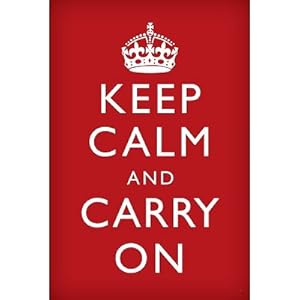
In 1939, the Ministry of Information of the
United Kingdom printed a poster that has recently become rather
well-known. With a simple red background
and a crown, the poster carries these words: “Keep Calm and Carry On.” They were intended to be used in the event of
an invasion of the Sceptered Isle as a means to remind the people to keep their
composure despite the difficulties and setbacks that had befallen them and may
yet still come.
Each of us needs such reminders from time
to time about how we are to live. For
this reason, Moses presented the Law to the Israelites at Mount Sinai, but
these stone tablets proved – all too quickly – to be insufficient reminders
(cf. Deuteronomy 4:1). So it was that
the Lord God announced, “I will place my law within them, and write it upon
their hearts; I will be their God, and they shall be my people” (Jeremiah 31:33).
Saint James refers to this law when he
urges us to “humbly welcome the word that has been placed in you and is able to
save your souls” (James 1:21). In these
words, we hear the echo of the words of Moses: “Observe them carefully, for
this is your wisdom and discernment in the sight of the peoples” (Deuteronomy
4:6).
If we wish to be “truly wise and
intelligent,” we must follow the “light silent sound” of this word speaking
within us (I Kings 19:12). But if we are
to hear this voice, we must be still and silent ourselves. As Monsignor Nicola Bux has recently observed,
“The soul is not for noise and debate but for recollection; the fact that noise
bothers us is a sign of this.”[1]
In the quiet of our hearts we continually hear the
Lord Jesus saying to us, “I give you a new commandment: love one another. As I have loved you, so you also should love
one another” (John 13:34).
The love that Jesus has given to us is no mere
emotion, no passing sentiment. It is
authentic love; it is the desire for the good of the one who is loved and a
willingness to obtain that good for them, even if it means sacrifice. By giving his life on the Cross, the Lord
Jesus has shown us the path on which we are to walk if we wish to arrive at the
Father’s house.
To love, then, as Jesus loves us, we must love
without condition and without reserve; we must hold nothing back and give all
of ourselves for the good of others.
Our beloved Saint Damien shows us the way forward,
he shows us how to love. Father Damien
said, “I would gladly give my life for them.
I do not spare myself when it is necessary to go on a sick call that
takes me twenty to twenty-five miles away.”
Too often we are all too ready to spare ourselves. Through the example of Father Damien, we
learn how to love others more than ourselves and to put their needs before our
own.
Blessed Marianne, too, shows us how to carefully
observe the command of love. She said, “I
do not think of reward; I am working for God, and do so cheerfully.” Too often we desire credit or recognition for
the good we do, and this often leads to much frustration. Through the example of Mother Marianne, we
learn the importance of humility in love.
If we truly seek to love both God and neighbor in
every aspect of life – in matters both important and insignificant – we must,
as the Psalmist sings, do justice and live in the presence of the Lord (cf.
Psalm 15:1).
Justice, simply put, is giving to each
person what is owed to him. Every
person, because he is made in the image and likeness of God, deserves to be
loved and treated with charity, to be welcomed and loved as Christ Jesus
personally welcomes and loves each one of us.
As simple as this is, it is not always easy
to do, as we know all too well. In moments
of frustration, of disappointment and of anger, we too readily cast aside our
love and think too much of ourselves. In
these moments, the Lord Jesus could rightly say of us, “This people honors me
with their lips, but their hearts are far from me,” because we fail to give the
love we have received; we fail to do justice (Mark 7:6; Isaiah 29:13).
Because we do not want to the Lord to speak
these words to us, we should keep ever before us the admonition of Saint James
to “be doers of the word and not hearers only” so that we might simply talk
about living justly but actually live justly (James 1:22). Both Father Damien and Mother Marianne were
doers of the word and not hearers only; you and I must follow in their footsteps,
in humble and total love.
A few days ago I walked past a young man
wearing a t-shirt that read, “Keep Calm and Live Pono.” That simple phrase stuck with me. It is taken, in part, from that poster of the
Ministry of Information and, of course, from the motto of the Kingdom and State
of Hawai‘i: “Ua Mau ke Ea o ka ‘Aina i ka
Pono,” “The life of the land is perpetuated in righteousness”.
Pono is generally translated as either
“righteous” or “righteousness.” Biblically
speaking, to be righteous is to live in right relationship with God and in
right relationship with man, it is to live as one should be living. As you know, pono can also mean goodness and morality and duty and virtue and proper. In short, we might well say that to live pono is to live justly and we know that the
“one who does justice will live in the presence of the Lord.” So it is that we could paraphrase the motto
of Hawai‘i: “The life of the Christian is perpetuated in righteousness” because
the one who lives justly will make their way to the Father’s house.
To live pono
is to live a life of love, a life of aloha;
it is to conform ourselves always to Christ crucified, to love as he has
loved. It is this law that has been
placed within us and that we must observe carefully because it will save our
souls. May the Lord strengthen us in
this holy endeavor and bring us safely into his presence. Amen.
[1] Nicola Bux, Benedict XVI’s Reform: The Liturgy Between Innovation and Tradition
(San Francisco: Ignatius Press, 2012), 149.
29 August 2012
Wanting memories
As I was driving back to Honolulu from my morning hike up Makapu'u, I heard a moving song filled with much aloha, "Wanting Memories" by Kali'i Reichel.
You should listen to it:
This song captures so much of the beauty of the people of these islands.
If you'd like to listen to more Hawaiian music, let me recommend to you Hawaiian 105 KINE.
You should listen to it:
This song captures so much of the beauty of the people of these islands.
If you'd like to listen to more Hawaiian music, let me recommend to you Hawaiian 105 KINE.
Augustine, Damien, and the Hawaiians
The natural beauty of the Hawaiian islands is but one reason among many that keep me coming back to the Land of Aloha each year (and sometimes twice each year, if I can swing it).
As we celebrate today the memorial of the great Saint Augustine of Hippo, Holy Mother Church draws our attention to these words of the Doctor of Grace:
Here in Hawai'i, "from the mountain to the ocean, from the windward to the leeward side," as John Cruz sings, it doesn't seem that the Lord so much shout as whisper. It seems nearly impossible, seeing the beauty of this land, not to be drawn towards the Lord. The lapping waves on the shore draw your thoughts to eternity; the brilliance of the stars leads your thoughts to the heavens; the wind seems a gentle kiss; the mountains recall God's firmness and strength; the many colored flowers of varied shapes and sizes are but gifts of love. It is difficult here to be lost in created things but easy to be led to the Creator; here the fragrance of the Lord is to be found everywhere.
Perhaps this is why the Hawaiians (and here I do not simply mean people living in Hawai'i, but the descendants of the native Hawaiians) are so filled with the spirit of Aloha, the spirit of love and welcome and peace.
The other day I noticed a book written by an Hawaiian who lamented the fact that so many Hawaiians today think Christianity part of their cultural patrimony; indeed, the Hawaiians very quickly adopted Christianity perhaps because of their aloha.
Father Damien described the Hawaiians in these words:
One might well wonder from where this natural friendliness comes. I would suggest it is both part of their blood, but also due very much to the natural beauty in which they live.
Even after only a day or so on the island, I already find myself - each time I return - quickly acclimating to island life and becoming quickly a cultural Hawaiian. By this I mean that I become more patient, less hurried, and more at ease than on the mainland (or elsewhere, for that matter). I am more inclined to talk to strangers here and find Saint Paul's admonition to "pray without ceasing" much easier here because my thoughts are always being led to God by the beauty of Hawai'i.
Yes, here the words of Saint Augustine easily become my own: "You breathed your fragrance on me; I drew in breath and now I pant for you. I have tasted you, and now I hunger and thirst for more."
| Sunset at Hale'iwa Beach Park, 25 August 2012 |
Late have I loved you, O Beauty ever ancient, ever new, late have I loved you! You were within me, but I was outside, and it was there that I searched for you. In my unloveliness I plunged into the lovely things which you created. You were with me, but I was not with you. Created things kept me from you; yet if they had not been in you they would not have been at all. You called, you shouted, and you broke through my deafness. You flashed, you shone, and you dispelled my blindness. You breathed your fragrance on me; I drew in breath and now I pant for you. I have tasted you, and now I hunger and thirst for more. You touched me, and I burned for your peace.As I walked this morning from the Cathedral of Our Lady of Peace to the church of St. Augustine by the Sea, I couldn't help but consider these words from a different perspective. Even if short in distance, it was a pilgrimage.
| From the church of St. Augustine by the Sea, Honolulu, Hawai'i |
| Rainbow over the Honolulu Harbor, 29 August 2012. |
The other day I noticed a book written by an Hawaiian who lamented the fact that so many Hawaiians today think Christianity part of their cultural patrimony; indeed, the Hawaiians very quickly adopted Christianity perhaps because of their aloha.
Father Damien described the Hawaiians in these words:
You could not wish for better people, gentle, pleasant mannered, exceedingly tender-hearted, they neither seek to amass riches, or live in luxury, or dress much, but are most hospitable, and ready to deprive themselves of necessities in order to supply your every want if you have ask a night's shelter from them.Each time I return to this blessed land, I find this description quite apt. Once you meet an Hawaiian, you are quickly part of their ohana, their family, and very often you instantly become an "uncle" or an "auntie". Once you have been welcomed into their homes you are always welcome, even without notice.
One might well wonder from where this natural friendliness comes. I would suggest it is both part of their blood, but also due very much to the natural beauty in which they live.
Even after only a day or so on the island, I already find myself - each time I return - quickly acclimating to island life and becoming quickly a cultural Hawaiian. By this I mean that I become more patient, less hurried, and more at ease than on the mainland (or elsewhere, for that matter). I am more inclined to talk to strangers here and find Saint Paul's admonition to "pray without ceasing" much easier here because my thoughts are always being led to God by the beauty of Hawai'i.
Yes, here the words of Saint Augustine easily become my own: "You breathed your fragrance on me; I drew in breath and now I pant for you. I have tasted you, and now I hunger and thirst for more."
28 August 2012
Cardinal George needs your prayers
On behalf of His Eminence Francis Cardinal George, O.M.I., Archbishop of Chicago, the Archdiocese of Chicago announced today some sad news:
Test results confirmed that the nodule on the liver contained cancerous cells. This nodule and surrounding tissue was removed on August 15, and there does not appear to be cancer in the liver now. While tests also confirmed that the right kidney contains cancer cells, additional testing did not conclude with certainty that there is cancer elsewhere in his body. Cancerous cells in the bloodstream, however, are impossible to detect.Please, pray for Cardinal George.
Based on these medical findings, the Cardinal's doctors have recommended a course of chemotherapy. Beginning Wednesday, September 5, he will undergo six sessions, each session running three weeks. Chemotherapy will be administered the first two weeks of each session and the third week, free of chemotherapy, will allow the immune system to recuperate.
In honor of the day
Just in time for the memorial of Saint Augustine, Cody has a post reflecting on the quest for happiness. Give it a read and leave comment for him.
A book on the beach
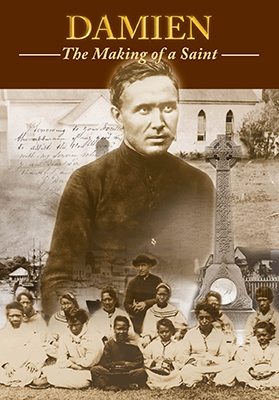
After a full and enjoyable day yesterday, I woke this morning feeling rather tired so I decided to take a quiet afternoon spent in a quiet spot on a quiet beach reading a book I picked up yesterday, Damien: The Making of a Saint.
It is a book unlike any other I ever seen. It has a few pages of commentary by an anonymous editor, but otherwise is composed entirely of excerpts from the writings of Father Damien and those who knew him. Scattered throughout the book are pictures of the Leper Priest and the settlements at Kalawao and Kalaupapa, his artifacts, and some of his letters that have survived.
The excerpts are arranged in a roughly chronological order to tell the story of the Hero of Moloka'i in a unique - and gripping - way.
If you don't yet have a book about Saint Damien de Vuester - and can't find a copy of The Heart of Father Damien by Vital Jourdain, SS.CC - this is the book for you.
It is a book unlike any other I ever seen. It has a few pages of commentary by an anonymous editor, but otherwise is composed entirely of excerpts from the writings of Father Damien and those who knew him. Scattered throughout the book are pictures of the Leper Priest and the settlements at Kalawao and Kalaupapa, his artifacts, and some of his letters that have survived.
The excerpts are arranged in a roughly chronological order to tell the story of the Hero of Moloka'i in a unique - and gripping - way.
If you don't yet have a book about Saint Damien de Vuester - and can't find a copy of The Heart of Father Damien by Vital Jourdain, SS.CC - this is the book for you.
25 August 2012
What to wear when flying
The
Associated Press today has a story about dress codes for airlines – or the lack
thereof - in which it is lamented that some passengers are "lectured"
about the clothing they wear while flying and some are refused entry to the
aircraft (not surprisingly, a woman wearing a shirt with a 4-letter expletive
works for an abortuary).
The
author, David Koenig, complains:
It's not always clear what's appropriate. Airlines don't publish dress codes. There are no rules that spell out the highest hemline or the lowest neckline allowed. That can leave passengers guessing how far to push fashion boundaries. Every once in a while the airline says: Not that far.
If
we remembered modesty and decency in clothing, this would not be an issue at
all. If we respected other people as
much as we demand that they respect us, this would be not an issue at all. If we actually respected ourselves, this
would not be an issue at all.
Frankly, I’m all in favor of the “airline clothing cops” and
wouldn’t mind having other such cops elsewhere, so long as it brings back a
level of decency and mutual respect in society.
I’m tired of seeing people out and about in their pajamas.
20 August 2012
Sunset at Hale'iwa Ali'i Beach Park
Last evening, after an enjoyable morning and afternoon celebrating the 169th anniversary of the dedication of the Cathedral of Our Lady of Peace, I joined a few friends and made several new friends for an Hawai'ian style party at Hale'iwa Ali'i Beach Park.
It was a perfect setting to spend the evening and was surprisingly quiet with lots of space, including both beach and grass. Some of us sat around on the grass talking story (chatting, as we would say on the mainland) about everything under the sun, while others played football, Portugese horseshoes, flew kits, or played in the ocean.
Several honu (Hawaiian sea turtles) came up to shore as the sun was setting:
All in all, it was a great conclusion to a great day.
It was a perfect setting to spend the evening and was surprisingly quiet with lots of space, including both beach and grass. Some of us sat around on the grass talking story (chatting, as we would say on the mainland) about everything under the sun, while others played football, Portugese horseshoes, flew kits, or played in the ocean.
Several honu (Hawaiian sea turtles) came up to shore as the sun was setting:
All in all, it was a great conclusion to a great day.
19 August 2012
The difference perspective makes
Aloha!
Last night I returned the Cathedral of Our Lady of Peace which this weekend celebrates the one hundred and sixty-ninth anniversary of dedication. I'd like to say I planned it this way, but it really is just a matter of coincidence. Then again, Blessed John Paul II used to say there is no such thing as coincidence, only providence.
Earlier this morning I celebrated the 7:30 a.m. Mass and soon I will celebrate the Noon Mass, after which the festivities begin with food and games. It's a celebration I'm very much looking forward to.
This evening I'll join a few friends for luau on the beach, which I'm also looking forward to.
After Mass this morning, several parishioners asked how long I would be staying this time, which brought again to my attention the difference of perspective.
"Seventeen days," I would say. "It's my longest stay yet."
To a person, every one sincerely asked, "Is that all?" Others said something like, "Just a short visit, then." Back on the mainland, a seventeen day trip to Hawaii seems like a long time, but here in the islands it's really only a brief stay.
Someone else came up to visit with me and said, "You're the priest who likes chocolate and pineapple and Dr Pepper, right?" (My reputation precedes me.) To him, the combination of pineapple and chocolate or pineapple and Dr Pepper seemed quite bizarre. His wife, though, loved the combination of pineapple and hamburgers, but back on the mainland most people I'm quite bizarre for even suggesting it.
It's a good reminder that many things in life are a matter of perspective. In some places, you're sane; in other places, you're insane. The trick is knowing where you are.
Last night I returned the Cathedral of Our Lady of Peace which this weekend celebrates the one hundred and sixty-ninth anniversary of dedication. I'd like to say I planned it this way, but it really is just a matter of coincidence. Then again, Blessed John Paul II used to say there is no such thing as coincidence, only providence.
Earlier this morning I celebrated the 7:30 a.m. Mass and soon I will celebrate the Noon Mass, after which the festivities begin with food and games. It's a celebration I'm very much looking forward to.
This evening I'll join a few friends for luau on the beach, which I'm also looking forward to.
After Mass this morning, several parishioners asked how long I would be staying this time, which brought again to my attention the difference of perspective.
"Seventeen days," I would say. "It's my longest stay yet."
To a person, every one sincerely asked, "Is that all?" Others said something like, "Just a short visit, then." Back on the mainland, a seventeen day trip to Hawaii seems like a long time, but here in the islands it's really only a brief stay.
Someone else came up to visit with me and said, "You're the priest who likes chocolate and pineapple and Dr Pepper, right?" (My reputation precedes me.) To him, the combination of pineapple and chocolate or pineapple and Dr Pepper seemed quite bizarre. His wife, though, loved the combination of pineapple and hamburgers, but back on the mainland most people I'm quite bizarre for even suggesting it.
It's a good reminder that many things in life are a matter of perspective. In some places, you're sane; in other places, you're insane. The trick is knowing where you are.
18 August 2012
Don't judge a gift by its package
Every now and again a curious and unexpected package will arrive for me. Some weeks back such a package arrived for me at the Pastoral Center, which was particularly odd because I receive most of my mail at the Cathedral.
Of particular curiousity was the fact that this particular package was rather bear up in the postal system and clearly had seen better days. But, as with so many things, you cannot judge a gift by its packaging.
Inside was a small pillow from the good folks at Klave Centesca embroidered with my coat or arms for use at the back of a chair:
Whether I use it or not in the sacred liturgy remains to be seen. This might be a good solution to my difficulties with the presidential chair at the Cathedral.
Of particular curiousity was the fact that this particular package was rather bear up in the postal system and clearly had seen better days. But, as with so many things, you cannot judge a gift by its packaging.
Inside was a small pillow from the good folks at Klave Centesca embroidered with my coat or arms for use at the back of a chair:
Whether I use it or not in the sacred liturgy remains to be seen. This might be a good solution to my difficulties with the presidential chair at the Cathedral.
10 August 2012
An afternoon in Alton
On Wednesday I traveled with Bishop Paprocki to St. Anthony Hospital in Alton for a Mass and luncheon with the Serra Vocations Club of Madison County. The Serra Club meets at the hospital the second Wednesday of every month, beginning with Mass at 12:05 p.m. If you are in the area and would like to join the Serra Club, I will be happy to put you in contact with the group.
The chapel, I was very happy to see, was filled both with members of the laity and with the Sisters of St. Francis of the Martyr St. George. The fourth degree of the Knights of Columbus provided an honor guard for the Bishop, who was assisted by two deacons. Four priests also concelebrated the Mass the vocations to the priesthood, the diaconate, and the consecrated life.
Bishop Paprocki received a very warm welcome at the luncheon from all in attendance. He used the occasion to speak of the dual importance of prayer and personal invitation in the work of vocations. The group must have enjoyed the Bishop's remarks, which they interrupted with applause at least three times.
As always, the Sisters of St. Francis of the Martyr St. George were very gracious in hosting us.
When the Bishop and I arrived in the Bishop's Conference Room to vest for the Mass, I was surprised to find a small gift for me:
Against my better judgment, I didn't look inside until after the luncheon; one of the Sisters gave me a can of Dr Pepper (I love those Sisters!).
Inside were also two cards from two of the Sisters. The first was from one of the Sister Karolyn, who helped us on the recent Catholic Leadership Institute. I particularly enjoyed the back of the envelope she used:
If you can't make it out, she wrote: "Because otherwise this poor letter never gets good use!"
The second card was from Sr. Alexandra, with whom I have been coordinating for their Feastday celebrations next week:
The next few days for her will be tremendously busy as she sees the final preparations for the Mass in which 13 Sisters will make their final profession, 3 will make their first profession, and two will be received as postulants.
Those making their final profession are:
The chapel, I was very happy to see, was filled both with members of the laity and with the Sisters of St. Francis of the Martyr St. George. The fourth degree of the Knights of Columbus provided an honor guard for the Bishop, who was assisted by two deacons. Four priests also concelebrated the Mass the vocations to the priesthood, the diaconate, and the consecrated life.
Bishop Paprocki received a very warm welcome at the luncheon from all in attendance. He used the occasion to speak of the dual importance of prayer and personal invitation in the work of vocations. The group must have enjoyed the Bishop's remarks, which they interrupted with applause at least three times.
As always, the Sisters of St. Francis of the Martyr St. George were very gracious in hosting us.
When the Bishop and I arrived in the Bishop's Conference Room to vest for the Mass, I was surprised to find a small gift for me:
Against my better judgment, I didn't look inside until after the luncheon; one of the Sisters gave me a can of Dr Pepper (I love those Sisters!).
Inside were also two cards from two of the Sisters. The first was from one of the Sister Karolyn, who helped us on the recent Catholic Leadership Institute. I particularly enjoyed the back of the envelope she used:
If you can't make it out, she wrote: "Because otherwise this poor letter never gets good use!"
The second card was from Sr. Alexandra, with whom I have been coordinating for their Feastday celebrations next week:
The next few days for her will be tremendously busy as she sees the final preparations for the Mass in which 13 Sisters will make their final profession, 3 will make their first profession, and two will be received as postulants.
Those making their final profession are:
Sister M. Mercedes Diaz
Sister M. Christina Lanuzga
Sister M. Ignatia Cooney
Sister Mary George Brown
Sister M. Andrea Goeckner
Sister M. Vianney Ebben
Sister Mary David Tappan
Sister M. Clementia Toalson
Sister Mary Jude Marsella
Sister M. Bridget Martin
Sister Mary Gianna Nazar
Sister M. Catherine Welter
Sister M. Teresa Pandl
Those making their first profession are:
Sister M. Lucy Gantt
Sister Karol Marie Baumgarten
Sister Cordia Marie McKenie
Those being received as postulants are:
Lauren Kissel, who will receive the name Sister M. Gemma
Marilis Pineiro, who will receive the name Sister M. Immanuela
Please keep these Sisters in your prayers as the continue their retreat leading up to the Feastday on Wednesday, which will be a glorious and happy day!
05 August 2012
Homily - 5 August 2012
The Eighteenth
Sunday of the Year (B)
02 August 2012
A new blog
I'm happy today to introduce you to a new blog that launched yesterday: From the Interior Castle. Written by Cody Sandschafer, one of our Diocesan seminarians, this blog, he says, "will primarily consist of my personal reflections upon the wisdom of the words
and lives of the Saints as well as the Sacred Scriptures."Cody is a fine young man whom I've known for many years; he was one of my students at St. Anthony High School in Effingham. Cody possesses an inquisitive mind and an infectious joy that he often uses to delve into the mystery of God and lead others along this path with him.
Go ahead and give his first two posts and read and follow his blog or add it to your reader. I don't think you'll be disappointed in his future posts.
01 August 2012
Of books and people
Whenever I visit a friend - or even someone I haven't met before or don't know very well - I browse through their books. You can learn a lot about someone by the books they keep.
I was reminded of this this morning. The Rector and Vice-Rector of my seminary alma mater were in Springfield today and I the happy opportunity to visit with them.
Both are relatively new in their positions; the rector was one of my professors and I don't know that I'd every actually met the vice-rector before.
The rector would always tell us in class that this book and that book should be on our nightstand. If we actually kept all of the recommended books on our nightstands we would all be buried in books by the morning!
We went to visit the Abraham Lincoln's Springfield home and while browsing Lincoln biograhies in the gift shop, a boyscout asked which biography he should buy.
The rector asked, "Have you read anything about Lincoln before?"
"Not really," came the reply.
"Then you should get Sandburg's multi-volume set," the rector answered. It was a suggestion that was both quite comical and one only a true bibliophile could make; Sandburg's biography comes in 6 volumes!
When we returned to the rectory, the vice-rector, who stayed behind in my sitting room/study, said to me, "I think, after being in your room and looking at your books, I can tell three things about you."
He peaked my curiosity. He first speculated that I have a devotion to the Sacred Heart of Jesus, which is correct. Second, he speculated that I enjoy reading the lives of the saints, which is also correct. And, third, he said, "And you love Hawaii."
How right he was!
I was reminded of this this morning. The Rector and Vice-Rector of my seminary alma mater were in Springfield today and I the happy opportunity to visit with them.
Both are relatively new in their positions; the rector was one of my professors and I don't know that I'd every actually met the vice-rector before.
The rector would always tell us in class that this book and that book should be on our nightstand. If we actually kept all of the recommended books on our nightstands we would all be buried in books by the morning!
We went to visit the Abraham Lincoln's Springfield home and while browsing Lincoln biograhies in the gift shop, a boyscout asked which biography he should buy.
The rector asked, "Have you read anything about Lincoln before?"
"Not really," came the reply.
"Then you should get Sandburg's multi-volume set," the rector answered. It was a suggestion that was both quite comical and one only a true bibliophile could make; Sandburg's biography comes in 6 volumes!
When we returned to the rectory, the vice-rector, who stayed behind in my sitting room/study, said to me, "I think, after being in your room and looking at your books, I can tell three things about you."
He peaked my curiosity. He first speculated that I have a devotion to the Sacred Heart of Jesus, which is correct. Second, he speculated that I enjoy reading the lives of the saints, which is also correct. And, third, he said, "And you love Hawaii."
How right he was!
23 July 2012
Lessons from the young
This week I am attending an Advanced Catholic Training in which we seek to explain certain aspects of the faith to young people. Today I learned too very important lessons from young people.
The first lesson is a reminder of how - in certain ways - I am very much behind the times. I had pulled out my calendar/planner to check on a couple of dates and placed it near a bottle of DrPepper Then. A few minutes later someone said with a note of surprise, "What is that?!"
Thinking he was referring to the DrPepper Ten, I started to explain when he interrupted, saying something like, "No, that book." He then explained that no one these days keeps a paper calendar.
The second lesson concerns the mind of God. I was helping one of the groups prepare for Mass this evening when I reminded the lector to pay attention to the tone of the reading. After explaining that God was challenging his people I was told, "If God were really angry he would have used caps lock."
The first lesson is a reminder of how - in certain ways - I am very much behind the times. I had pulled out my calendar/planner to check on a couple of dates and placed it near a bottle of DrPepper Then. A few minutes later someone said with a note of surprise, "What is that?!"
Thinking he was referring to the DrPepper Ten, I started to explain when he interrupted, saying something like, "No, that book." He then explained that no one these days keeps a paper calendar.
The second lesson concerns the mind of God. I was helping one of the groups prepare for Mass this evening when I reminded the lector to pay attention to the tone of the reading. After explaining that God was challenging his people I was told, "If God were really angry he would have used caps lock."
21 July 2012
Caution: Falling Ice
If you haven't been to confession in a while, you might consider doing so because you just never know when a block of ice might fall from the sky:
If you don't want to know when you'll die, I don't recommend looking up too much; best to be caught off guard.
Worshippers attending Mass at Brentwood Cathedral in Essex had a rude experience when a large block of ice fell through the roof during the Eucharistic Prayer.
Fr James Mackay told BBC Essex: “Last Sunday just gone, I was celebrating Mass and halfway through there was a massive explosion to the west side of the cathedral.
Everything was stopped as we heard this. I turned to my left to see lots of slate and white stuff falling from the roof. After a couple of seconds of shocked pause, I said: ‘Right, let’s crack on.’ And we did.”I often joke with people that we never know when death will come, that we might be struck by a meteor in a few minutes. I suppose the likelihood of being struck by falling objects might be higher than I anticipated.
Fr Mackay said: “It became clear later on that it was actually a block of frozen refuse that dropped from an aeroplane. We could see the damage – it fell straight through the slate… It was a bit of an adventure” [more].
If you don't want to know when you'll die, I don't recommend looking up too much; best to be caught off guard.
12 July 2012
Spiritual wanderlust
In recent months there has been a growing interest in the ancient pilgrimage road to Compostela, Spain, the final resting place of Saint James the Greater, due in no small part to Martin Sheen's The Way:
If you haven't yet seen it, you really showed; it's a very powerful and moving film.
Being one who frequently suffers from a bit of wanderlust, I have often wondered what it might be like to make that pilgrimage across the Spanish countryside. The Way only increased this curiosity.
About the time the film came out a friend gave me Kevin A. Codd's To the Field of Stars: A Pilgrim's Journey to Santiago de Compostela, a very interesting book recounting one priest's journey on this holy road and the lessons he learns on the way, both simple and profound, and the people he encounters.
It is a easy book to read and is broken up into short chapters, each describing one day's journey toward Compostela.
Every pilgrimage, however great the distance, is not so much about the final destination and arrival, but about the journey undertaken by the soul towards God. Every pilgrimage is really meant to help come to a deeper understanding of the final destiny of man, either with God or without him.
After Vatican Council II, there was much talk of the faithful as the "pilgrim people." Certainly, we are the pilgrim people making our way - please, God - toward the Lord even as we cry out to him each day, "Let us see your face, O Lord, and we shall be saved" (Psalm 80:4). But, as Father Codd rightly points out, "Once talk of being 'a pilgrim people' replaced being a people who actually walk as pilgrims we rather lost our way" (23).
Within the pages of the book he transcribes a poem he found along the way. In part, it reads:
In truth, a pilgrimage can be made anywhere, so long as the destination is a sacred place. You can choose to make a pilgrimage to a nearby shrine, a chapel with Eucharistic adoration, your parish church, or the grave of Father Augustine Tolton or one of the saints.
If we allow ourselves to become spiritual pilgrims if not physical pilgrims, we will learn the truth of that medieval phrase, Vocatus atque non vocatus, Deus aderit:
If you haven't yet seen it, you really showed; it's a very powerful and moving film.
Being one who frequently suffers from a bit of wanderlust, I have often wondered what it might be like to make that pilgrimage across the Spanish countryside. The Way only increased this curiosity.
It is a easy book to read and is broken up into short chapters, each describing one day's journey toward Compostela.
Every pilgrimage, however great the distance, is not so much about the final destination and arrival, but about the journey undertaken by the soul towards God. Every pilgrimage is really meant to help come to a deeper understanding of the final destiny of man, either with God or without him.
After Vatican Council II, there was much talk of the faithful as the "pilgrim people." Certainly, we are the pilgrim people making our way - please, God - toward the Lord even as we cry out to him each day, "Let us see your face, O Lord, and we shall be saved" (Psalm 80:4). But, as Father Codd rightly points out, "Once talk of being 'a pilgrim people' replaced being a people who actually walk as pilgrims we rather lost our way" (23).
Within the pages of the book he transcribes a poem he found along the way. In part, it reads:
Pilgrim, who is it who calls you?It is no small feat (pun intended) to actually walk the camino, for the full journey takes some forty days. Nevertheless, my heart desires one day to walk that road that so many others have walked before me.
What unseen power attracts you?
Not the peoples of the camino
Nor their rural customs.
It is not history nor culture
Nor the rooster of the Calzada
Nor the palace of Gaudi
Nor the castle of Ponferrada.
All that is seen in passing,
And it is a joy to see it all,
Is still less than the voice that calls
The feeling that is yet so much deeper (76-77).
In truth, a pilgrimage can be made anywhere, so long as the destination is a sacred place. You can choose to make a pilgrimage to a nearby shrine, a chapel with Eucharistic adoration, your parish church, or the grave of Father Augustine Tolton or one of the saints.
If we allow ourselves to become spiritual pilgrims if not physical pilgrims, we will learn the truth of that medieval phrase, Vocatus atque non vocatus, Deus aderit:
Bidden or unbidden, God is present. That is exactly what I am coming to understand on this road: Like the star above me, seen or unseen, he is here. Felt or unfelt, he is with me. Attended to or not attended to, he is walking with me (142).
10 July 2012
What have you done today?
This morning I undertook the tedious task of printing the participant books for next week's Catholic Leadership Institute:
The whole process of copying the 4,600 pages took right about six hours (I miscalculated in Twitter tweet @daren_j_zehnle).
Tomorrow morning the pages will be bound in between the covers with those plastic spiral things.
If you or someone you know would still like to register for CLI - or for ACT - there is still time to do so, though not much.
The whole process of copying the 4,600 pages took right about six hours (I miscalculated in Twitter tweet @daren_j_zehnle).
Tomorrow morning the pages will be bound in between the covers with those plastic spiral things.
If you or someone you know would still like to register for CLI - or for ACT - there is still time to do so, though not much.
Crosses for Christ
Some weeks ago a few Catholic men in Pittsfield wanted to find a way for them to express their faith in a simple manner while also focusing attention on the importance of Sunday in the life of the Christian.
Their prayer group of twelve men saw an article about white crosses placed on their private property every Sunday. Now every Sunday Pittsfield is filled with white crosses. They named their project Crosses for Chirst and it quickly took on an ecumenical nature.
For a cost of $5, the group will make a cross, paint it white, and install an insert into your yard that can easily be mowed over.
They've put up two instructional videos on YouTube:
Update: To date, 700 homes in Pike County (Illinois) have the crosses in their yards, with an additional 10-20 homes per week.
Their prayer group of twelve men saw an article about white crosses placed on their private property every Sunday. Now every Sunday Pittsfield is filled with white crosses. They named their project Crosses for Chirst and it quickly took on an ecumenical nature.
For a cost of $5, the group will make a cross, paint it white, and install an insert into your yard that can easily be mowed over.
They've put up two instructional videos on YouTube:
Update: To date, 700 homes in Pike County (Illinois) have the crosses in their yards, with an additional 10-20 homes per week.
Subscribe to:
Posts (Atom)