Showing posts with label England. Show all posts

24 March 2020

Islamic State Ongoing Updates - February 2020

Previous Updates: January 2020 | November 2019 | October 2019 | September 2019August 2019 | July 2019 | June 2019 | May 2019 | April 2019 | March 2019 | February 2019 | January 2019 | December 2018 | November 2018 | October 2018 |September 2018 | August 2018 | July 2018 | October 2017 | September 2017 | August 2017 |  July 2017 | June 2017 |  May 2017 | April 2017 | March 2017 | February 2017 | January 2017 | December 2016 | November 2016 | September 2016 | August 2016 | July 2016 | June 2016 | May 2016 | April 2016 | March 2016 | February 2016January 2016 | December 2015 | November 2015 | October 2015 | September 2015 | August 2015 | July 2015June 2015 | May 2015 | April 2015 | March 2015 | February 2015 | January 2015 | December 2014 | November 2014 | October 2014 | April - November 2014 |

21 February 2020

18 February 2020

11 July 2018

Ongoing Islamic State Updates - July 2018

Previous Updates: October 2017September 2017 | August 2017 |  July 2017 | June 2017 |  May 2017 | April 2017 | March 2017 |February 2017 | January 2017 | December 2016 | November 2016 | September 2016 | August 2016 | July 2016 | June 2016 | May 2016 | April 2016 | March 2016 | February 2016January 2016 | December 2015 | November 2015 | October 2015 | September 2015 | August 2015 | July 2015June 2015 | May 2015 | April 2015 | March 2015 | February 2015 | January 2015 | December 2014 | November 2014 | October 2014 | April - November 2014

31 July 2018


30 July 2018


25 July 2018


23 July 2018


20 July 2018
19 July
18 July 2018
17 July 2018
16 July 2018
13 July 2018
11 July 2018
9 July 2018

02 May 2017

Islamic State Ongoing Updates - May 2017

Previous Updates: April 2017 | March 2017 | February 2017January 2017 | December 2016 | November 2016 | September 2016 | August 2016 | July 2016 | June 2016 | May 2016 | April 2016 | March 2016 | February 2016January 2016 | December 2015 | November 2015 | October 2015 | September 2015 | August 2015 | July 2015June 2015 | May 2015 | April 2015 | March 2015 | February 2015 | January 2015 | December 2014 | November 2014 | October 2014 | April - November 2014

31 May 2017
30 May 2017
28 May 2017
27 May 2017
25 May 2017
26 May 2017
24 May 2017
23 May 2017
22 May 2017
13 May 2017
10 May 2017
19 May 2017
18 May 2017
16 May 2017
12 May 2017
9 May 2017
8 May 2017
7 May 2017
5 May 2017
4 May 2017
3 May 2017
2 May 2017

04 June 2016

Travels in England: The Round Table and King Arthur's Grave

A meme has been going round on Facebook over the last few days that several friends have shared with me:

 
Though I am a great fan of King Arthur and the Knights of the Round Table, and I have been since I was a boy, I find this meme to be something of a groaner. The timing of the meme, however, is interesting, because it was only a few days ago that I visited the Great Hall at Winchester to see the Round Table that hangs there.

Part of the beauty and the appeal of the Arthurian legends is the manner in which this body of literature has been - and continues to be - adapted in different times and places for various means and purposes. As the Matter of Britain grew and expanded, new elements were introduced by particular authors.

The Round Table, for instance, perhaps the most politically important element of Arthuriana, was, so far as we can tell, introduced into the corpus in 1155 by Robert Wace in his "translation" of Geoffrey of Monmouth's History of the Kings of Britain. Concerning the Round Table, Wace writes:
Arthur fashioned the Round Table
Of which many tales are told
There sit his knights,
Each one equal to the next:
The sit equally at the Table
And are equally served.
None of them can boast
That he sits ahead of the next.
None has a favored position,
And none is excluded.
Sir Thomas Malory (if memory serves, though it may have been Chrétien de Troyes) would later say instead that the Round Table was not made by King Arthur, but received as a wedding gift from Guinevere's father, King Leodegrance, though the symbolism given to the Round Table by Robert Wace was retained.

Hanging today in the Great Hall at Winchester is a Round Table that, although repainted by order of King Henry VIII around 1516, the table itself dates between 1250 and 1350 and was likely constructed by order of either King Edward I (who sought to make use of the Arthurian Legends to his advantage) or of King Edward II. This Round Table measures some eighteen feet in diameter and weighs 1.3 tons:

 
From Winchester, I made my way to Glastonbury where, in 1191, the monks of Glastonbury Abbey - one of the finest in England - claimed to have discovered the lost (and previously forgotten) grave of King Arthur and Queen Guinevere. 


Gerald of Wales relates what was found in his De Instructione Principis, written about 1223:
However, Arthur’s body, which the fables allege was like a fantastic thing at the end, and as it were moved by the spirit to far away places, and not subject to death, in our own days was discovered at Glastonbury between two stone pyramids erected in the holy cemetery, hidden deep in the ground by a hollow oak and marked with wonderful signs and marvels, and it was moved into the church with honor and committed properly to a marble tomb. Whence a leaden cross with a stone underneath, not above as it usually is in our day, but rather lower nailed on the side, (which I have seen, and in fact I have traced these sculpted letters - not projecting and protruding, but carved into the stone) contains the words: “Here lies buried the famous King Arthur with Guinevere, his second wife, in the isle of Avalon.”
At the time, not everyone accepted the claim of the monks and some viewed it as an utter deception, a belief held by many - though not all - historians and archeologists today. in fact, Graham Phillips claimed last month to have discovered two possible locations for King Arthur's grave in Shropshire (I'm a bit skeptical of his claims, but I haven't yet read his book and my skepticism is greatly increased by looking at the titles of his books).

Several decades later, King Edward I ordered the exhumation of the mortal remains and their re-interment in a marble tomb in the sanctuary of the great abbey on Easter Tuesday in 1278, as Adam of Domerham recounts:
[T]he lord king had the tomb of the famous king Arthur opened. Wherein in two caskets painted with their pictures and arms, were found separately the bones of the said king, and those of Queen Guinevere, which were of marvelous beauty...on the following day...the lord king replaced the bones of the king and the queen those of the queen, each in their own casket, having wrapped them in costly silks. When they had been sealed they ordered the tomb to be placed forthwith in front of the high altar, after the removal of the skulls for the veneration of the people.
After King Henry VIII ordered the "dissolution" of the abbeys in 1536, the Glastonbury Abbey - with the graves - was destroyed in 1539 and the bones lost to history, though the leaden cross discovered with the bones survived. We know John Leland saw it about 1540 and William Camden seems to have used it for an illustration in a work printed in 1607. In the early 1700s, the cross was in the keeping of William Hughes of Wells Cathedral, though what happened to it afterward is uncertain.

02 March 2016

Did Catholics forbid meat to support the fishing industry, or Protestants?

At some point in your life you have probably been told that the only reason Catholics eat fish on Fridays - at least during the season of Lent - is because a medieval pope - who is never named - had family in the fishing industry - which is also never named - and they needed a financial boost. This claim, of course, is false and is made by those ignorant of history.

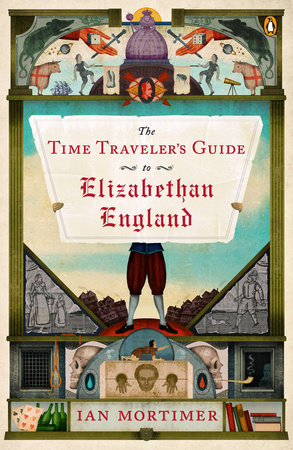
I have recently finished reading Ian Mortimer's enjoyable and educational book, The Time Traveler's Guide to Elizabethan England (New York: Penguin Books, 2012); his The Time Traveler's Guide to Medieval England is also excellent. Loaded with endnotes, his books are well-researched and documented, and written in a readable, intelligent, and humorous fashion; I cannot recommend them enough.

Of particular interest to me is Mortimer's treatment of religion. These days, it can be difficult to find historians who give religion - especially Catholicism - a fair treatment, but Mortimer does so very well.

In his third chapter on "Religion," for example, we find several important - and historically accurate - observations:
  • "In Mary's reign, no fewer than 283 men and women are burned at the stake for maintaining their Protestant beliefs - many of which were called orthodox in Elizabeth's reign. Although Elizabeth's government does not burn as many people as Mary's [N.B.: It was not the Church that killed people, but the state], proscribed views are still enough to get you killed" (61).
  • "What is orthodox in 1558 is sufficient to have you hanged in 1570" (61).
  • "And propaganda is key. Elizabeth makes sure all history books praise her and Protestantism, and reflect Mary's reign in a negative light" (68).
  • "A second act [of Parliament] forbids the importation of [papal] bulls from Rome, as well as crucifixes and rosary beads" (69).
  • "Anyone trying to persuade people to join the Catholic Church is held to be guilty of high treason and executed" (70).
  • "Catholics are not allowed to travel more than five miles from their homes - on pain of forfeiting all their property and estates" (71).
  • "Just thirty-five years see Catholicism change from being the respectable norm to the religion of a persecuted minority" (71).
You will not likely find such clear statements in most history text books, although the statements are entirely true.

Now, then, back to the topic at hand, that of eating fish on Fridays. Before we continue, let it be remembered that Catholics are not required to eat fish on Fridays; rather, they are simply not to eat meat on Fridays (fish is not the only meatless option).

In Mortimer's ninth chapter on "What to Eat and Drink," he includes an informative and useful paragraph about the eating of meat and fish in Elizabethan England, that is, between 17 November 1558 and 24 March 1603 (with my emphases):
Harvest time and fruit picking impose one form of seasonality. Another is entirely artificial. The medieval Church [that is, the Catholic Church] used to restrict the eating of meat on Wednesdays, Fridays, and Saturdays, as well as in Advent and Lent and on the vigils on certain saints' feast days. In 1549 Edward VI [a Protestant] reestablishes Fridays and Saturdays as nonmeat days, as well as Lent and other religious feasts.  In 1563 Elizabeth's [also a Protestant] government imposes fasting on Wednesdays too, including a prohibition on slaughtering animals. There is an important difference compared to pre-Reformation [that is, Catholic] times, however: avoidance of meat is no longer a religious observance but secular law. The purpose of fasting on Wednesdays is specifically to encourage the eating of fish, to support the fishing industry. People therefore respond differently. Some households uphold the old religious fasts during Advent and Lent, as if they are still observing the old religious law; others ignore Advent but observe the Lenten fast. Still others ignore Wednesdays and just fast on Fridays and Saturdays. But be careful if you adopt a partial regime: heavy fines are levied for eating meat on nonmeat days. The standard fine is £3 or three months imprisonment, but in 1561 a London butcher slaughtering three oxen in Lent is find £20. Fines can be levied on the head of a household for every single member who breaks the fast, so if you have lots of servants, make sure they obey the law (215).
Did you catch it? The forbidding of the eating of meat in order to support the fishing industry did not arise from the Catholic Church, but from Elizabeth's Protestant/Anglican government. Prior to this decision of Elizabeth's government, the Catholic Church did not forbid the eating of meat to support the fishing industry; rather, the reason for the forbidding of meat was less temporal, much simpler, and more spiritual.

As John Myre explains in his Liber Festivalis, written in the later 1400s: "For when God, for Adam’s sin, cursed the earth and the land, he cursed not the water; wherefore it is lawful for a man to eat in Lent that which cometh of the water."

In fact, centuries earlier, Saint Isidore of Seville, who died in 636, wrote in his De Ecclesiasticis Officiis, "We are certainly able to eat fish, because the Lord accepted one after the resurrection. Neither the savior nor the apostles have forbidden this" (1.45[44].2). The non-eating of meat and the eating of fish was both a penance and a reminder of God's mercy.

In this Jubilee of Mercy, then, do not forget the second spiritual work of mercy, that of instructing the ignorant.

04 December 2015

What I learned from an evening with the English

This past Tuesday, a friend living at the Venerable English College (VEC) invited me to join him and his confreres for the closing vigil of Martyrs' Day, celebrated each year in commemoration of the forty-four priests from the VEC who were martyred in England between the years 1581 and 1679. This friend had lived with us at the Casa Santa Maria the two previous years and knew this would be an opportunity I would enjoy.

Following an account of the martyrdom of Saint Polydore Plasdan, we prayed a Litany of Saints invoking each of the martyrs from the VEC, after which we venerated a relic of Saint Ralph Sherwin, the first of the College's martyrs, whose relic was placed on the center of the altar together with a relic of Saint Thomas Becket (on the right) and one of King Saint Edmund (on the left):

Photo: Edward Pentin
We concluded the evening of prayer with the singing of the Te Deum, in keeping with custom of the members of the College each time word of the martyrdom of one of their brothers reached them in Rome. The Catholic News Agency's Ann Schneible explains:
Photo: Gianluca Gangemi/CNA
One of the highlights of the evening is the singing of the Te Deum in front of the Martyrs’ Painting, a 16th century image of the Trinity by Durante Alberti which hangs behind the altar. This tradition harkens back to a practice of the seminarians at the time of the Reformation every time news reached them of a former student’s martyrdom.

“If any ever news returned to Rome that one of their brother priests had been put to death in England, the College community would come and gather in front of the painting,” explained VEC vice rector Fr. Mark Harold. “They would sing a hymn of praise to God, Te Deum laudamus,” which is paraphrased in the English hymn “Holy God, we praise thy name”.

“And thus each year in the evening of Dec. 1 the College community gathers in front of this painting and we too in that tradition sing the hymn Te Deum laudamus” [more].
The painting by Duranti Alberti depicts the Blessed Trinity with Saint Thomas Becket and King Saint Edmund, both of whom are English martyrs.

In an article describing the evening of prayer, Edward Pentin quotes one of the priests at the College who reflected on the witness of these martyrs (and whose words sound like those of my friend):
To train for seven years so as to serve the Lord for maybe a couple of years before arrest, torture and an excruciating death — four of them didn't even get to land but were arrested on board ship, put in jail for four years and then hung, drawn and quartered — to have that happen to you would be tough enough. To foresee it happening, worse, but to actively go abroad to train knowing that it was by far the likeliest result was like deliberately walking to the Garden of Gethsemane knowing your betrayer was there [more].
The evening spent with the English in celebration of their martyrs taught me an important lesson: Whenever we hear news of a martyrdom, we should immediately sing of a hymn of praise to God for so great a witness to the power of Christ's love, whether it be the Te Deum itself or another hymn of praise.

03 March 2014

If at first you don't succeed...

...skydiving isn't for you (that's my favorite ending for the phrase and often catches people a bit off guard).

One of the unexpected pleasures of living at the Casa Santa Maria - the American house for priests studying in Rome - is living also with two Englishmen and seven Australians with whom I can have conversations about English history.

A few days ago I saw a t-shirt on  Twitter that I found rather amusing; the Americans in the house did not understand it, but the English and the Australians did:


A descendant of the House of Wessex and son of King Edgar and Queen Ælfthryth, Æthelred was King of England from about 968 until his death on the 23rd of April in 1016. Though the circumstances of his ascension to the throne and his reign, in general, were not very pleasant, I've long enjoyed his name (and that of his mother).

His epithet is a bit unfortunate and is something of a play on his name.  Æthelred means "noble counsel" while unræd means "bad counsel". When first recording around the 1180s, he was not called "the Unready," but as Æthelred Unræd, "Noble counsel, no counsel." As such, it does not so much refer to the King himself as to his counselors.

King Æthelred was the father of King Saint Edward the Confessor.

15 June 2011

How do you shoot yourself in the head with own bow?

That's a very good question, but apparently it has happened before.  From the BBC comes this intriguing article describing "10 strange ways Tudors died:"
New research into accidental deaths in Tudor England reveals the strange way people died, writes Sean Coughlan.


Oxford University historian, Dr Steven Gunn, has been scouring 16th Century coroners' reports and researching accidental deaths in Tudor England.

These reports revealed an intriguing possible link with William Shakespeare's tragic character Ophelia. But they also revealed examples of some strange and sometimes stupid deaths.

1. Bears were part of the Tudor entertainment scene. There were performing bears and there were bears kept for the bloodthirsty attraction of bear-baiting. In a purpose-built bear garden, a bear would be tied to a post in an enclosed pit and would be set upon by hunting dogs. Henry VIII had his own royal arena built in Whitehall.

But sometimes they escaped. A widow called Agnes Rapte was killed by Lord Bergavenny's bear when it broke loose at his house at Birling, Kent in 1563. Another victim, Agnes Owen from Herefordshire, was killed in her bed by a runaway bear. When a bear bit a man to death in Oxford in 1565, the bear wasn't punished but was taken into royal custody. Perhaps because it was worth 26 shillings and 8 pence - about six months' wages for a labourer.

2. Archery was a dangerous pastime, both for participants and spectators. Coroners' reports reveal 56 accidental deaths from people standing too close to the targets or those who decided on just the wrong time to go and collect the fired arrows.

Don't stand too close There were also some bad judgement calls. Thomas Curteys of Bildeston, Suffolk, was practising archery on a fine June evening in 1556, when he took off his hat and invited another bowman called Richard Lyrence to try to hit it with an arrow. No prizes for what happened next.

Coroners even noted the depth of wounds. The unwanted record is held by a Nicholas Wyborne, who was lying down near a target when he was hit by a falling arrow, which pierced him to a depth of six inches.

3. The first time a coroners' court came up against the new-fangled problem of a fatal shooting accident was 1519, when a woman in Welton near Hull was accidentally killed by a handgun.

The perpetrator was a bookbinder from France, called with dazzling Tudor wit, Peter Frenchman. The victim, not understanding this noisy gadget, had walked in front of the gun as it had been fired.

Establishing the gun's place in the social order, in 1557 when the Duke of Norfolk's horse stumbled on a road in Tottenham, his gun went off and shot dead a servant. Showing the marvels of scientific progress, by the 1560s guns were causing more accidental deaths than longbows.

4. How do you shoot yourself in the head with your own bow? In 1552, Henry Pert, gentleman, in Welbeck, Nottinghamshire, drew his bow to its full extent with the aim of shooting straight up into the air.

The arrow lodged in the bow, and while he was leaning over to look, the arrow was released. He died the next day. Of embarrassment.

5. Imagine an episode of Casualty. How could baking a loaf lead to a fatal accident? There's not even a gas oven or an electric gadget to worry about, because neither had been invented.

Elizabeth Bennet, spinster, was baking bread at the house of Matilda Nanfan, widow, at Birtsmorton, Worcestershire, on 29 January 1558. She went to the moat to collect cabbage leaves to put under the loaves she was baking. The fence broke and she fell into the moat and drowned.

6. "John Hypper was 'playinge Christenmas games' on Boxing Day 1563 at about 6pm with divers other parishioners of Houghton, Hampshire in the house of Thomas Purdew of Houghton, husbandman. While playing he involuntarily crushed himself and injured his testicles so that by reason of his old bodily infirmity he became ill and languished until about 3am on 28 December when he died."

If he'd lived, would anyone have believed him? Old bodily infirmity? Testicles crushed in a Christmas game? Pull the other one.

7. Tudor-style mad cow disease took the form of a "madd cow" belonging to William Cheills of Hogsthorpe, Lincolnshire. A man walking through the fields in March 1557 was attacked by the cow, which gored him to death with her horn. The victim's name was Robert Calf.

8. Maypole injuries were not only caused by careering into another country dancer. Thomas Alsopp of Coventry was standing in the former cemetery of the Coventry Greyfriars under a stone wall on 26 April 1558 when a maypole fell over.

It hit the city wall and knocked a stone out of the top of it, which hit him on the left part of his head and penetrated his brain, killing him instantly. What were the chances? What would they have said in the health and safety assessment?

9. A quick shower after work wouldn't usually be a matter of life and death. But the Tudor post-work scrub meant taking advantage of nature's washtub in the nearest pond or river. It tells historians that working people liked to keep themselves clean. Clean, but unlucky.

Looks so simple Thomas Staple, a labourer of Biddenden, Kent, went into Mr Mayne's pond to wash and cool down on 2 June 1558, then suddenly fell into the deepest part and drowned.

In the same summer, John Joplyn and George Lee drowned while washing in rivers at Cambridge and Leicester, one getting trapped by bushes and the other falling into a whirlpool.

10. The occupation of "gong farmer" sounds quite cheerful until you realise it was what the Tudors called people who were paid to clear out the sewage from cesspits.

So what can be said about the drunken Cambridge baker who, while relieving himself, fell backwards into a cesspit on 2 June 1523? He died horribly. What a way to go.