Showing posts with label Heaven. Show all posts

18 February 2020

Homily - 16 February 2020 - The Sixth Sunday in Ordinary Time


The Sixth Sunday in Ordinary Time (A)

Dear brothers and sisters,
           
Today, the Lord Jesus gives us a stern warning: “I tell you,” he says, “unless your righteousness surpasses that of the scribes and pharisees, you will not enter the kingdom of heaven” (Matthew 5:20). When we hear these words in the presence of Saints Damien and Marianne, we might begin to feel as if there is no hope for us; is it possible for us to do what they did, to love as they loved? The answer, of course, is yes; it is possible for us to do what they did and to love as they loved, although in different ways. Indeed, “If you choose you can keep the commandments, they will save you; if you trust in God, you too shall life” (Sirach 15:15).

We know that “death puts an end to human life as the time open to either accepting or rejecting the divine grace manifested in Christ.”[1] This is why the manner in which we live this life is so important, for by it we make our decision for “life or death, good or evil,” which is to say either for or against Christ Jesus (Sirach 15:17). “With death, our life-choice becomes definitive – our life stands before the judge.”[2] This choice can have a multiplicity of forms because each of our lives is different, but the fundamental choice before us remains the same.

There are some people whose lives are so filled with wickedness that any desire for truth and love has been completely snuffed out within them. This is what is meant by the word, “hell,” “the state of definitive self-exclusion from communion with God and the blessed.”[3] But there are also people whose lives are so imbued with love and purity – those like Father Damien and Mother Marianne - that their love for God flows readily to their neighbor. Such holiness of life clearly marks one for heaven, “the ultimate end and fulfillment of the deepest human longings.”[4] But such people are not common, are they? What, then, of the rest of us, who want to live holy lives, who want to keep the commandments, but who fail so often?

We can presume that in the majority of people 
there remains in the depths of their being an ultimate interior openness to truth, to love, to God. In the concrete choices of life, however, it is covered over by ever new compromises with evil – much filth covers purity, but the thirst for purity remains, and it still constantly re-emerges from all that is base and remains present in the soul.[5] 
What, then, becomes of these souls who are open to, and are desirous of, truth and love, but whose lives are also marked with sin? “Will all the impurity they have amassed through life suddenly cease to matter?”[6]

It would go against God’s mercy to cast them into hell, but it would go against his justice for them to enter heaven straight away with such stains covering their souls. The answer is clear: they must first be purified. Thus, we hear the Savior’s warning that “you will not be released until you have paid the last penny” (Matthew 5:26). This process of purification is called purgatory for it is a purgation, a cleansing, of the soul.

We speak of the pain of the fire of Purgatory because Saint Paul tells us we will be saved, “but only as through fire” (I Corinthians 3:15). What is this fire, if not the fire of divine love? The Lord’s “burning flame cuts free our closed-off heart, melting it, and pouring it into a new mold to make it fit for the living organism of his body.”[7] This fire is the encounter with Christ Jesus himself, who is both Judge and Savior, and this encounter with him is the moment of judgment.

Many today are afraid of the notion of judgment “because they confuse judgment with petty calculation and give more room to fear than to a loving trust.”[8] They do not realize that

Before his gaze all falsehood melts away. This encounter with him, as it burns us, transforms us and frees us, allowing us to become fully ourselves. All that we build during our lives can prove to be mere straw, pure bluster, and it collapses.  Yet in the pain of this encounter, when the impurity and sickness of our lives becomes evident to us, there lies salvation. His gaze, the touch of his heart heals us through an undeniably painful transformation “as through fire.” But it is also a blessed pain, in which the holy power of his love sears through us like a flame, enabling us to become totally of ourselves and totally of God. In this way the interrelation between justice and grace also becomes clear: the way we live our lives is not immaterial, but our defilement does not stain us forever if we have at least continued to reach out towards Christ, towards truth and towards love… The pain of love becomes our salvation and our joy.[9]

In all of this, we see that “before man are life and death, good and evil, whichever he chooses shall be given him” (Sirach 15:17). If we want our righteousness to surpass that of the scribes and the pharisees, if we want to enter heaven, then we must do better than them. They kept the commandments on the outside, but not in their hearts; we must do both.

We cannot forget that, in Jesus, every commandment “becomes true as a requirement of love, and all join in a single commandment: love God with all your heart and love your neighbor as yourself. “Love is the fulfilling of the Law”, St Paul writes (Romans 13:10).[10] Dear brothers and sisters, if we keep the commandments out of love for God and neighbor, then one day we, too, like Saints Damien and Marianne, will be plunged into the ocean of infinite love and be “simply overwhelmed with joy.”[11] Amen.


[1] Catechism of the Catholic Church, 1021.
[2] Pope Benedict XVI, Spe salvi, 45.
[3] Catechism of the Catholic Church, 1033.
[4] Ibid., 1024.
[5] Pope Benedict XVI, Spe Salvi, 46.
[6] Ibid.
[7] Ibid., 229.
[8] Joseph Ratzinger, Seek That Which Is Above: Meditations Through the Year, Second Edition. Graham Harrison, trans. (San Francisco, California: Ignatius Press, 2007), 77.
[9] Pope Benedict XVI, Spe salvi, 47.
[10] Ibid., Angelus Address, 13 February 2011
[11] Ibid., Spe Salvi, 12.

28 February 2018

Why is heaven "up"?

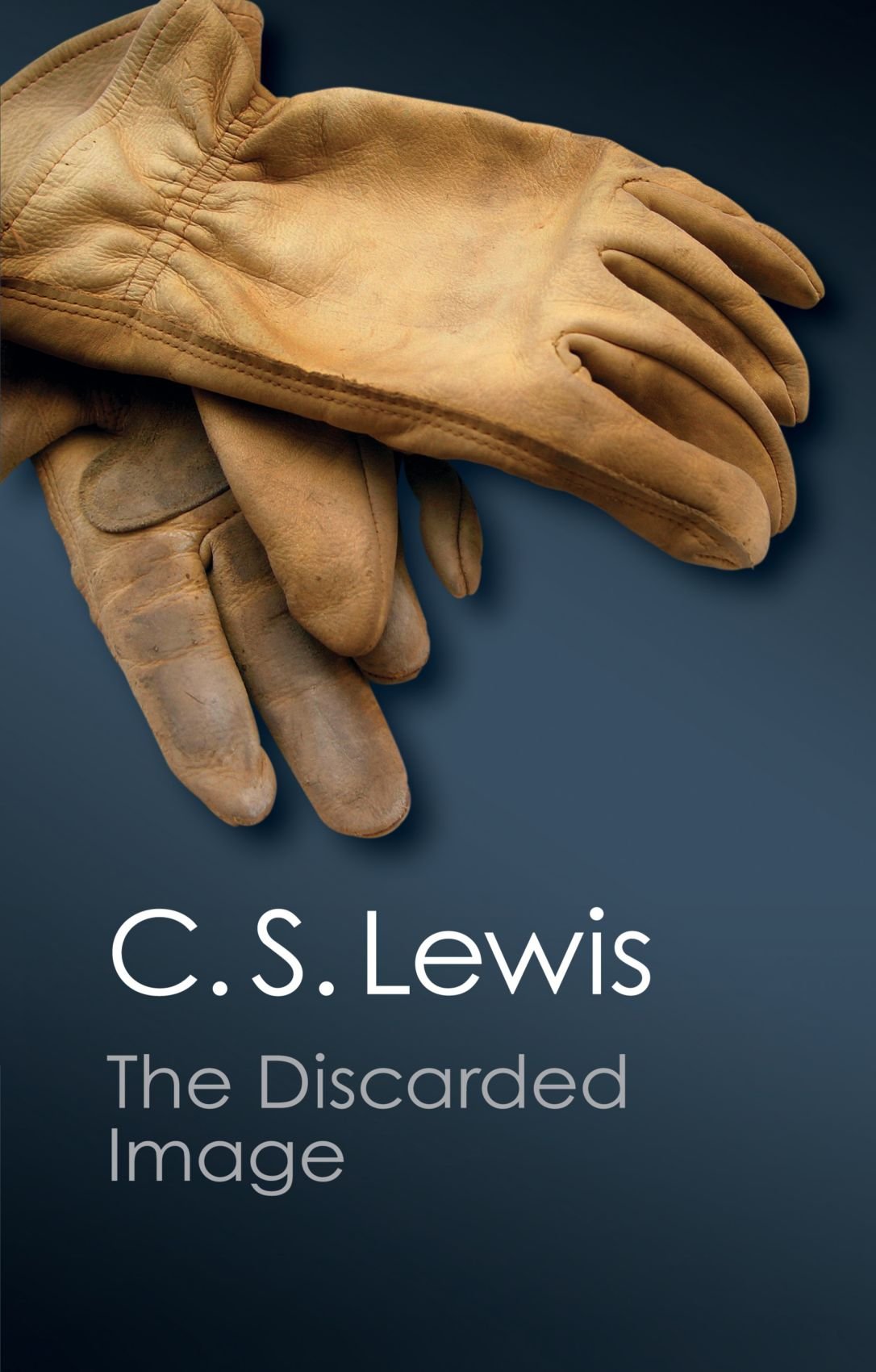
In my reading into all things Tolkien, I repeatedly found references to a little book by C.S. Lewis titled, The Discarded Image: An Introduction to Medieval and Renaissance Literature. The way the various authors mentioned this book intrigued me and so I looked for it in bookstores for more than a year, but never with success. Finally, I decided to simply order it online, and I am glad I did.

This book is a sort of summary of his introductory lectures on the mindset of medieval man, of how he looked upon the world. Lewis describes medieval man as
an organizer, a codifier, a builder of systems. He wanted 'a place for everything and everything in the right place'. Distinction, definition, tabulation were his delight.... There was nothing medieval people liked better, or did better, than sorting out and tidying up. Of all of our modern inventions I suspect that they would most have admired the card index [of happy memory] ([Cambridge University Press, 2013], 10).
It is an excellent and thought-provoking read that overturns the current common misconceptions of the medieval worldview. Take, for example, the medieval view of the universe.

It is a commonplace today to mock the medievals for speaking of heaven as "above" us and hell as "below" us. We find such a notion quaint and childish, altogether lacking in scientific reasoning, but Lewis demonstrates how this modern characterization is quite incorrect.

The medievals based their understanding of the universe on the understanding of the world as handed down by none other than Aristotle, no fool he. As Lewis summarizes:
So far as he could find out, the celestial bodies were permanent; they neither came into existence nor passed away [the first supernova was not observed until A.D. 185]. And the more you studied them, the more perfectly regular their movements seemed to be. Apparently, then, the universe was divided into two regions. The lower region of change and irregularity he called Nature. The upper he called Sky. Thus he can speak of 'Nature and Sky' as two things. But that very changeable phenomenon, the weather, made it clear that the realm of inconstant Nature extended some way above the surface of the Earth. 'Sky' must begin higher up. It seemed reasonable to suppose that regions which differed in every observable respect were made of different stuff. Nature was made of the four elements, earth, water, fire, and air. Air, then (and with air Nature, and with Nature inconstancy) must end before Sky began. Above the air, in true Sky, was a different substance, which he called aether. Thus 'the aether encompases the divine bodies, but immediately below the aetheral and divine nature comes that which is passible, mutable, perishable, and subject to death' [Metaphysics, 1072b]. By the word divine Aristotle introduces a religious element; and the placing of the important frontier (between Sky and Nature, Aether and Air) at the Moon's orbit is a minor detail. But the concept of such a frontier seems to arise far more in response to a scientific research than to a religious need (4-5).
From this conception of the universe, from their understanding of the world, this was  - and remains - a perfectly logical way of describing what was known.

Because this conception was all we could know for centuries, when we discovered more about the nature of the universe we simply continued speaking of heaven as being above us. We view such a notion as infantile only because we do not know medieval man as we should.

01 November 2015

On J.R.R. Tolkien and the saints

What keeps each of us from becoming a saint? What keeps us from hastening after them? What keeps us from imitating their example? The answer, I suspect, is an improper understanding of who the saints are.

The saints - according to those unfamiliar with them - are those who lived perfect lives, who never grew angry or impatient and always acted with wisdom and dignity. Those who think of the saints in this way see them either as guides impossible to follow or as personifications of boredom or obnoxiousness. If this is how a person views the saints, it is no wonder he does strive to join their rank.

But those who read the accounts of their lives know this assumption to be quite false. Rather, the saints are, as J.R.R. Tolkien once described them, "those who have for all their imperfections never finally bowed heart and will to the world or the evil spirit" (Letter to Christopher Tolkien, 30 January 1945).

The choice of words Tolkien employs is really just another way of saying what he hear every year at this time but seldom believe: the saints are like you and me. They were tempted and struggled and sinned and repented. What, then, is the difference?

The saints, we might say, kept the end goal always before them. They knew they would struggle and sin, yet they never lost sight of the merciful love of God because they knew his hand would always catch their repentant hearts and set them back on the narrow way that leads to the Father's house. This is what Tolkien means when he says that they never finally bowed heart and will to the world or the evil spirit; they did not, in the end, keep the focus on themselves but on God.

Having died in the service of God as his friends, the saints have received "the crown of life" (Revelation 2:10). We see the bestowing of these crowns depicted in this manuscript image:

The circle of Johannes von Valenburg, ca. 1299
What I especially like about this image is the smallness of those receiving their crowns from the hands of the Lord as the Blessed Virgin Mary and (presumably) Saint John the Evangelist look on. Jesus even - through his eyes - seems to confer with Saint John as to who is worthy of a crown.

The size of the figures awaiting their crowns, some already hallow-ed, reminds me of some of my favorite words of Tolkien found in his essay "On Fairy Stories," namely, that "in God's kingdom the presence of the greatest does not depress the small. Redeemed man is still man."

Here on earth, we tend to be intimidated by the presence of the greatest, saints though they be, because we are too afraid to fully entrust ourselves into the hand of God. This need not be so! If the saints, with their multi-faceted personalities and, yes, imperfections, could do so, so can we!

The only thing standing in the way is ourselves. Let us, then, stretch out our hand like children to be led along the way the saints, either gently or with prodding, that we, small as we are by comparison, might stand among their company to wear the same crown as they.

13 November 2008

Is there sex in heaven?

Before returning to the weight room in two hours' time to argue again the question, "is there sex in heaven?," I decided to do a bit of research into the question to better answer the students' questions.

I stumbled upon a lecture given by Peter Kreeft at Columbia University some years ago in which he addresses this very question. After a lengthy and excellent consideration of the merits of the question, he concludes:
I think there will probably be millions of more adequate ways to express love than the clumsy ecstasy of fitting two bodies together like pieces of a jigsaw puzzle. Even the most satisfying earthly intercourse between spouses cannot perfectly express all their love. If the possibility of intercourse in Heaven is not actualized, it is only for the same reason earthly lovers do not eat candy during intercourse: there is something much better to do. The question of intercourse in Heaven is like the child's question whether you can eat candy during intercourse: a funny question only from the adult's point of view. Candy is one of children's greatest pleasures; how can they conceive a pleasure so intense that it renders candy irrelevant? Only if you know both can you compare two things, and all those who have tasted both the delights of physical
intercourse with the earthly beloved and the delights of spiritual intercourse with God testify that there is simply no comparison.

This spiritual intercourse with God is the ecstasy hinted at in all earthly intercourse, physical or spiritual. It is the ultimate reason why sexual passion is so strong, so different from other passions, so heavy with suggestions of profound meanings that just elude our grasp. No mere practical needs account for it. No mere animal drive explains it. No animal falls in love, writes profound romantic poetry, or sees sex as a symbol of the ultimate meaning of life because no animal is made in the image of God. Human sexuality is that image, and human sexuality is a foretaste of that self-giving, that losing and finding the self, that oneness-in-manyness that is the heart of the life and joy of the Trinity. That is what we long for; that is why we tremble to stand outside ourselves in the other, to give our whole selves, body and soul: because we are images of God the sexual being. We love the other sex because God loves God.

The entire article is well worth a read.